Average response time: under 24 hours
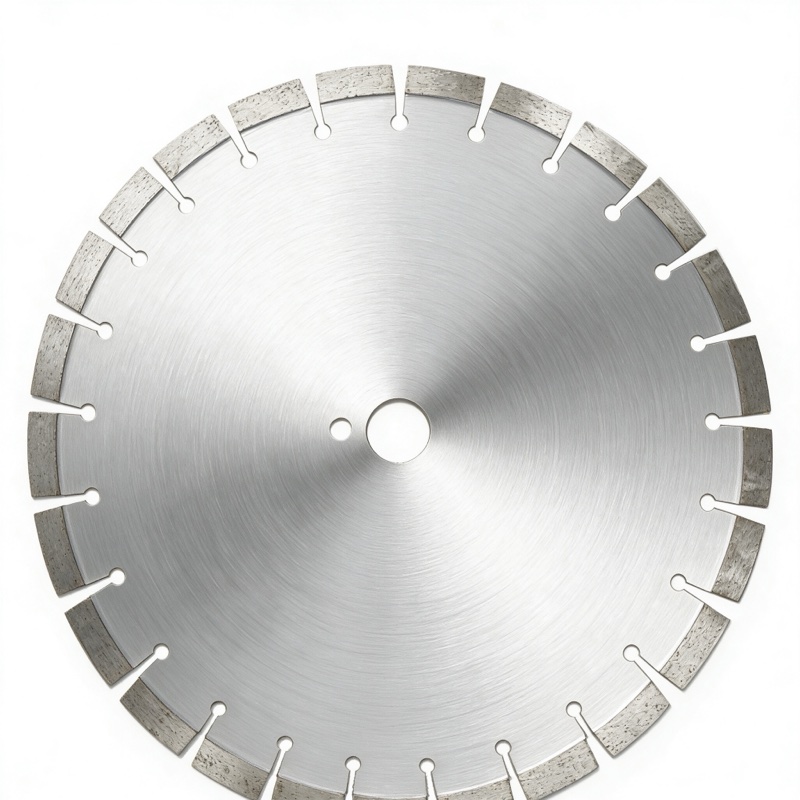
For concrete cutting, a diamond blade wins on cost per cut, speed, dust, and blade life almost every time. A diamond blade such as the laser-welded concrete saw blade cuts 200-500× longer than an abrasive disc and cuts 2-3× faster. An abrasive resin-bonded wheel is cheaper up front but wears out in minutes, throws sparks, and cuts slowly. Choose a diamond blade for any regular concrete, block, paver or masonry work. Reserve abrasive wheels for cutting steel, short one-off cuts on metal, and demolition where you cannot afford to bring a diamond saw.
The sticker price of an abrasive disc is 3-8 dollars; a diamond blade is 40-200 dollars. But a 125 mm abrasive disc cuts 20-40 metres of concrete before it is gone. A comparable diamond blade cuts 1 500-3 000 metres. Doing the math, the abrasive disc costs 0.15-0.30 dollars per metre; the diamond blade costs 0.02-0.06 dollars per metre — 5-10× cheaper on a per-metre basis, before you count the labour time saved.
| Factor | Abrasive disc | Diamond blade |
|---|---|---|
| Up-front cost (125 mm) | $3-8 | $40-120 |
| Life (concrete) | 20-40 m | 1 500-3 000 m |
| Cut rate | Slow, bogs down | 2-3× faster |
| Sparks / heat | Heavy | Minimal |
| Dust | Very high | Lower with water |
| Best for | Steel, short metal cuts | Concrete, masonry, pavers |
An abrasive cut-off wheel is resin-bonded aluminium oxide. It cuts concrete by wearing itself away, exposing fresh grit. On concrete this wear is fast — the wheel shrinks in front of your eyes. It also heats up, glazes, and throws hot grit and sparks, which is a fire hazard on job sites with timber, pallets or dry vegetation. The cut is ragged and often burns the edges. Modern B2B spec sheets for concrete cutting almost universally call for diamond blades.
Abrasive wheels are not obsolete. They remain the right tool for: (1) cutting steel rebar, angle iron, pipe — a diamond blade is inefficient on pure metal; (2) short one-off metal cuts where a diamond blade would be overkill; (3) indoor metalwork where sparks are controlled; (4) emergency demo on a site where you have only a standard angle grinder. Never use an abrasive wheel on a walk-behind flat saw for long concrete runs — the cost and speed penalty is severe.
Once you decide on diamond, choose the right blade for the substrate. For general concrete and block, a laser-welded segmented blade such as the concrete-asphalt laser-welded blade is the workhorse. For smaller handheld saws and light work, a high-frequency welded blade like the HF-welded concrete blade is a cost-effective choice. For pavers and decorative work, a thin-kerf turbo or Arix blade leaves a cleaner edge. Match the bond to your aggregate — hard bond on hard flint, soft bond on soft limestone. Our range of diamond saw blades covers 115 mm to 1000 mm.
Diamond blades cut cooler and throw far fewer sparks than abrasive discs. But they still generate silica dust — use water on a walk-behind saw, or a HEPA vacuum shroud on a handheld angle grinder. Abrasive discs generate both silica dust and hot sparks; they also disintegrate under load, and a shattering abrasive wheel is a known laceration hazard. Diamond blades shatter far less often, but an over-spun or damaged blade can still fail — never exceed the max RPM marked on the blade.
On a B2B crew, the biggest saving from switching to diamond is labour. A diamond blade cuts 2-3× faster, so a two-person crew finishes a day's joint sawing by mid-afternoon instead of overtime. The blade also does not need changing every 20 minutes — on a long job, abrasive discs are being swapped constantly, and the downtime adds up. For a contractor running a crew, the diamond blade pays for itself on the first day.
Yes, but it wears fast. Diamond blades cut through rebar, but they are optimised for concrete. For rebar-only cuts, an abrasive disc or a metal-cutting diamond blade is more efficient.
It is usually the wrong bond for your aggregate, a worn-out blade, or insufficient water. Try grinding a cinder block to expose fresh diamond, and confirm the bond spec with your supplier.
Used correctly, they are safer than abrasive discs — less heat, less spark, less disintegration. But they spin at thousands of RPM; a cracked or over-spun blade can fail. Inspect before use and respect the max RPM.
For steel and metalwork, short one-off cuts, and emergency metal demo. For concrete, block, pavers, stone or masonry — diamond blade every time.
For concrete cutting, the diamond blade is the clear B2B choice: faster, cleaner, safer, and dramatically cheaper per metre. Keep a few abrasive discs on the truck for steel, but your saw budget should go to laser-welded diamond blades matched to your substrates. The up-front sticker shock disappears by the end of the first day's work.
Written and reviewed by JOY TECH — an SGS & BV audited, CE/RoHS certified diamond tools manufacturer founded in 2004, exporting to 50+ countries.
Our factory and QMS are audited by SGS and Bureau Veritas. Products meet CE/RoHS requirements and every piece is 100% inspected before packing.
Verified Certificates
