Average response time: under 24 hours
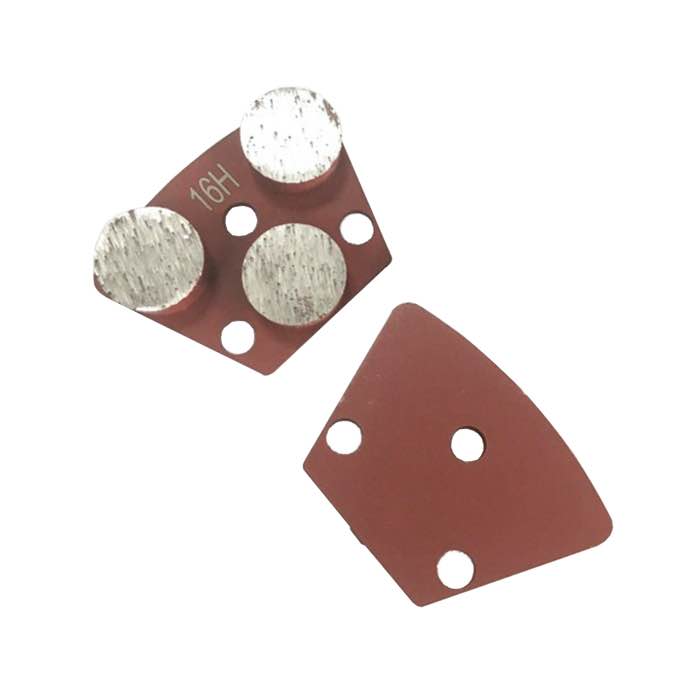
A glazed diamond cup wheel stops cutting because the metal bond around each diamond abrasive has worn smooth instead of wearing away to expose fresh grit. To restore cut rate, dress the segment on a concrete grinding block or an abrasive dressing brick for 30-60 seconds, reduce machine down-pressure, and switch to a softer bond for the concrete hardness you are grinding. If dressing does not bring the wheel back within a minute, the bond is too hard for the aggregate and the segment set must be changed.
A healthy grinding segment exposes fresh diamond particles on its working face, and those particles scratch and shear the concrete. On a glazed wheel, the diamond grains are still buried below a flattened layer of bond, so the wheel rubs instead of cuts. Symptoms are unmistakable: the wheel loads up, the floor pattern fades, sparks drop off, the motor draws lower amperage, and the machine skates over the surface rather than biting. You may also see a shiny, polished band across the segment face.
Glazing is often confused with loading, where concrete paste sticks to the segment and clogs the gaps between diamonds. Loading looks gummy and dark; glazing looks smooth and shiny. Both kill cut rate, but the fix is different: loading comes off with a wire brush or a dressing block, glazing requires opening the bond matrix.
Glazing happens when the bond wears too slowly for the abrasive action. The three usual causes are a bond that is too hard for the concrete, down-pressure that is too light to stress the bond, and wheel speed that is too high. Matching the bond to the concrete hardness is the single most important choice. On soft, abrasive concrete, a hard bronze bond does not wear away, so dull diamonds are never released. With light pressure, the segment face polishes itself instead of refreshing. Running the cup wheel above its rated RPM also flattens the diamonds faster than the bond can expose new ones.
Diamond bonds are graded soft, medium, and hard. A soft bond wears quickly and exposes fresh diamonds fast, which is ideal for hard, dense concrete. A hard bond wears slowly and lasts longer, which is ideal for soft, abrasive concrete. If you run a hard bond on hard concrete, the diamonds cannot fall out and the segment glazes. For most residential and commercial slabs, a medium-bond wheel like the double-row diamond cup wheel hits the middle ground.
Dressing opens the bond matrix and exposes fresh diamonds. Use a concrete dressing brick, a scrap of hard cured concrete, or a specialized abrasive dressing block. Dress for 30-60 seconds, never more than two minutes. Hold the wheel flat against the dressing surface and grind with moderate pressure. You will see a fine slurry and hear the cut rate return. Inspect the segment face after dressing; it should look matte and gritty, not shiny. Repeat the dress test if the face still reflects light.
Do not wait until the wheel stops cutting. Dress the cup wheel once per shift, or after every two hours of continuous grinding, as preventive maintenance. A 30-second dress on a concrete block keeps the segment face open all day. Technicians who dress on schedule report 20-30 percent faster cut rates across a full shift compared with technicians who dress only when the wheel is already glazed.
If you are on the job and cannot swap wheels, try these in order: increase down-pressure slightly to stress the bond and wear it down; grind a patch of harder, more abrasive concrete, which naturally dresses the wheel; slow the RPM if the grinder has variable speed; or switch to a coarser grit for one pass to break the glazed skin. Each of these buys you time until you can change the bond.
Never dress a cup wheel on steel or on a concrete slab with exposed rebar. Steel will shatter the diamonds and send shrapnel; rebar will catch the segment and kick the machine sideways. Wear eye and hearing protection during every dressing operation.
Dressing works only while the segment still has diamond volume left. If the segment is worn down to within 2-3 mm of the steel core, dressing will not bring back cut rate because there are no fresh diamonds left to expose. At that point, replace the wheel or the trapezoid set. A second sign is uneven segment wear: if one side of the cup is polished flat and the other still bites, the wheel is not running true, and balancing the machine or checking the flange will not save it.
Match bond to concrete: hard bond for soft abrasive concrete, soft bond for hard dense concrete. Run the machine at the manufacturer recommended RPM. Keep the disc flat on the floor; a tilted edge polishes one side of the segment. Dress the wheel once per shift as routine maintenance, not only when it has already stopped cutting. JOY TECH stocks medium, soft, and hard bond variants for the same segment shape, so you can swap bonds without changing your holder.
For general-purpose floor grinding, the triple-round-segment trapezoid disc balances cut rate and life on typical commercial slabs. For very soft or overlay-coated floors, a narrower segment with a more aggressive bond clears material faster but wears sooner. Match the shape to the machine holder you already own so you do not need to buy a new adapter.
For a broader range of segment shapes and bonds, browse the grinding category on JOY TECH; a double-S trapezoid disc cuts faster on sticky overlays.
Written and reviewed by JOY TECH — an SGS & BV audited, CE/RoHS certified diamond tools manufacturer founded in 2004, exporting to 50+ countries.
Our factory and QMS are audited by SGS and Bureau Veritas. Products meet CE/RoHS requirements and every piece is 100% inspected before packing.
Verified Certificates
