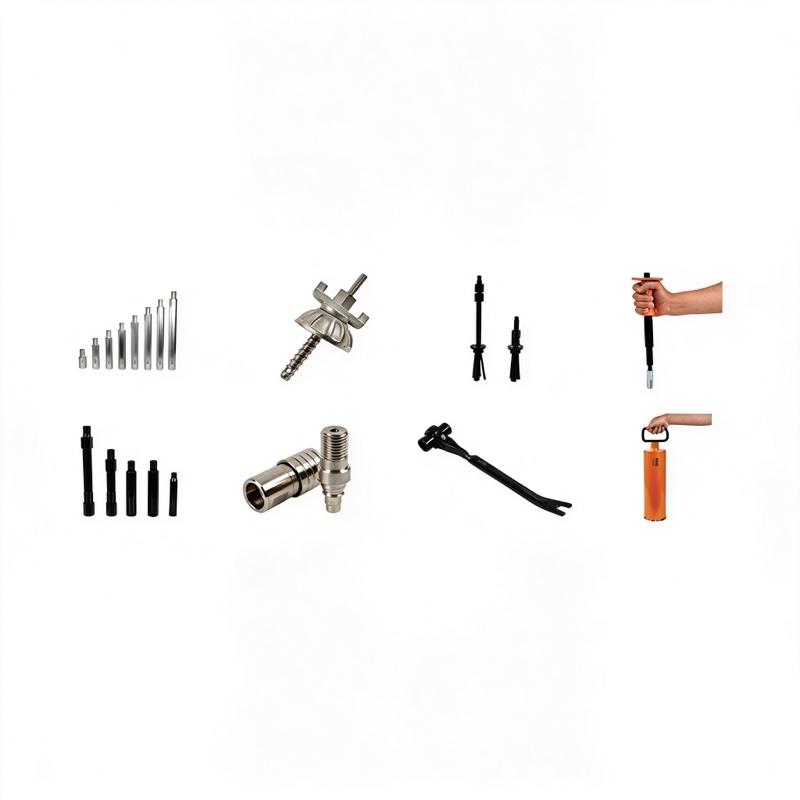
Diamond tools ship as general cargo (not dangerous goods) from China. Express takes 3–7 days, air freight 7–12 days, LCL sea 25–35 days, and FCL sea 30–45 days to most of North America, Europe, and the Middle East. Production lead time is 25–35 days on top. Plan a repeat order every 45–60 days once you are stocked.
| Mode | Cost | Transit to US West | Transit to Europe | Best for |
|---|---|---|---|---|
| DHL/FedEx express | Highest | 3–5 days | 3–6 days | Samples, urgent small orders |
| Air freight | High | 7–10 days | 7–12 days | High-value small orders |
| LCL sea | Low | 25–30 days | 30–38 days | Trial orders < 5 CBM |
| FCL 20GP | Lowest per unit | 18–25 days | 28–35 days | Repeat container orders |
| FCL 40HQ | Lowest per unit | 18–25 days | 28–35 days | Volume stocking |
No. Diamond saw blades, core bits, and grinding discs are solid metal products with no lithium batteries, aerosols, chemicals, or powders. They clear IATA and IMDG as general cargo. The only paperwork is the commercial invoice, packing list, and bill of lading. This makes shipping both cheaper and simpler than power tools or chemicals.
Shipping time is only half the story. Production time at the factory:
Our standard saw blades and core bits are often held in stock for repeat buyers, cutting lead time to a week.
Diamond tools are dense. A 20 ft container holds roughly 8–12 tonnes. A 40 HQ holds 18–22 tonnes but volume fills before weight on light items like polishing pads. Ask the factory for both chargeable weight and CBM so you can choose the cheapest mode. Standard export packing is inner box, outer carton, wooden pallet, and shrink wrap.
If a sea container takes 45 days door-to-door and you sell through stock in 60 days, reorder when you hit 45 days of stock. Never wait for zero — Chinese New Year (late Jan/early Feb) shuts factories for 3 weeks and pushes lead times to 60 days.
Chinese factories run on a calendar that catches importers by surprise. Chinese New Year (late January to early February) closes production for three weeks before and after; order cut-off is usually mid-December. National holidays in October and May also shut lines for a week. If you need stock in March, order in November. Summer is usually smooth, but shipping rates peak in August–September as retailers stock up. Build a 30-day buffer into every reorder, and never let stock fall below what you sell in six weeks. A factory that ships on time is only useful if you order early enough.
Sea air is salty, and even steel blades can spot-rust on a six-week voyage if packing is poor. Ask the factory to wrap each blade in rust-preventive paper, not just cardboard. Cartons should be strapped to a pallet and shrink-wrapped. Core bits should be capped and packed upright. On arrival, open one carton immediately and inspect for moisture marks. If you see damp, unwrap everything and let it dry before storing. Good packing costs a few dollars per pallet and prevents a container of rusty stock.
Track every shipment's actual transit time. Over a year you will learn which sailings are fast and which ports are slow. Use that data to promise customers realistic delivery dates, and to buffer your own reorder timing.
For urgent reorders, air freight on 50 kg of blades costs roughly USD 4 per kg and arrives in a week. It is expensive, but it beats running out of stock for a month.
A: LCL under 2 CBM often costs more per kg than air freight. For trial orders under 100 kg, express is competitive.
A: Rarely. They are steel and tough. Packed flat on pallets, they arrive in perfect condition.
A: Yes, about 0.3% of cargo value. Loss at sea is rare, but a container offload accident wipes out uninsured buyers.
A: The forwarder gives you a bill of lading number and container number. Track on the carrier's site once the vessel departs.
Diamond tools are among the easiest industrial goods to ship: non-hazardous, rugged, and dense. Plan production plus sea transit, reorder on time, and you will never stock out. Contact JOY TECH for a door-to-door freight quote to your warehouse.
