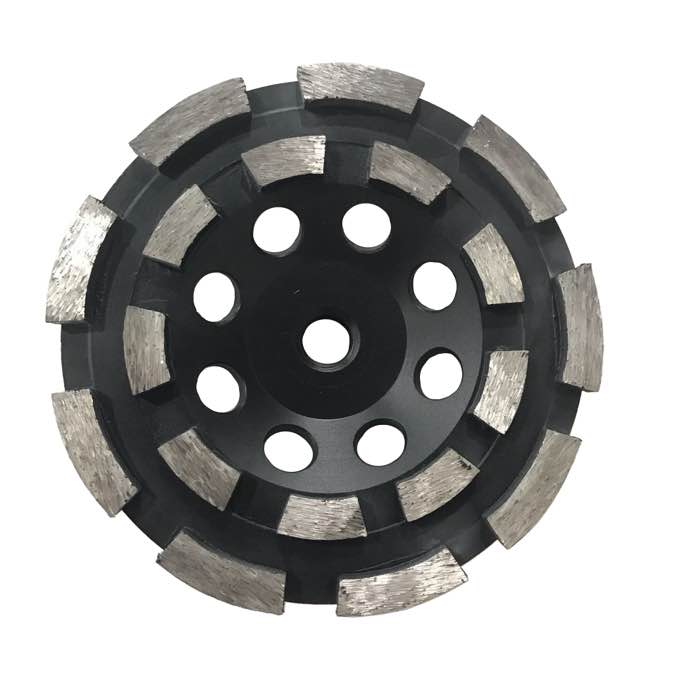
If you are starting in concrete and stone work, buy three diamond tools first: (1) a 125 mm diamond saw blade for angle-grinder cutting, (2) a 125 mm diamond grinding cup wheel for surface smoothing and edge work, and (3) a 1–1/4 in wet diamond core bit for pipe and conduit holes. Together they cover 80% of residential and light commercial jobs. Add a floor grinder and polishing pads once the work volume justifies it.
New contractors overbuy specialty tools before they know what jobs they will actually get. These three fit on tools you likely already own — a 125 mm angle grinder and a basic drill — and pay for themselves on the first job.
A segmented turbo 125 mm (5 in) blade on your angle grinder cuts concrete block, brick, pavers, and small slabs. Look for:
Our range of diamond saw blades covers this with a general-purpose laser-welded option that handles concrete and block.
A cup wheel on the angle grinder smooths high spots, cleans edges, removes glue, and bevels concrete where a floor grinder cannot reach. Choose a double-row or turbo segment for general concrete.
Use it for:
Our double-row cup wheels are the standard starter choice.
Plumbers and electricians will pay you to make holes. A 1–1/4 in (32 mm) wet core bit on a regular drill makes clean holes for pipes and conduits. Start with one diameter and add sizes as customers request them.
Key features:
Our wet diamond core bit is the entry model used by many new coring contractors.
Once you have 2–3 months of work, add: - A 250 mm walk-behind floor grinder if you get floor jobs. - A set of resin polishing pads (50 to 3000 grit). - A wet/dry HEPA vacuum for silica compliance. - Larger core bit diameters (110 mm, 160 mm) for HVAC and vent work.
Once the starter trio is paying for itself, add tools in order of what customers actually ask for. Most new contractors discover they need a 110 mm core bit next, then a 230 mm cup wheel for bigger edges, then a set of PCD pucks for epoxy removal. Resist the urge to buy every diameter at once. Instead, buy the tool the first time a customer asks for it — that proves there is demand. Keep a small van rack organized by size, and label every case. A well-organized kit saves 10 minutes per job looking for the right puck, which adds up to a full day a month. Buy mid-range known brands, not the cheapest on the shelf; the time saved on a tool that cuts properly pays back the difference fast.
Finally, do not skip the safety gear. The three tools above spin fast and throw dust. Buy PPE at the same time as the tools — you will not regret it, and you will avoid the one injury that ends a new business before it starts.
A: A quality 1500 W grinder with a clutch is worth it. Cheap grinders stall and kick back.
A: Yes for handyman and service work. Floor grinding and polishing need dedicated machines.
A: Wet. Dry bits are for shallow blockwork; wet bits handle real concrete.
A: USD 150–250 for blade + cup wheel + core bit, plus the angle grinder and drill you likely own.
You do not need a warehouse of diamond tools to start. One blade, one cup wheel, one core bit covers the majority of entry-level concrete jobs. Add tools as the work demands them. Contact JOY TECH to build your starter kit.
