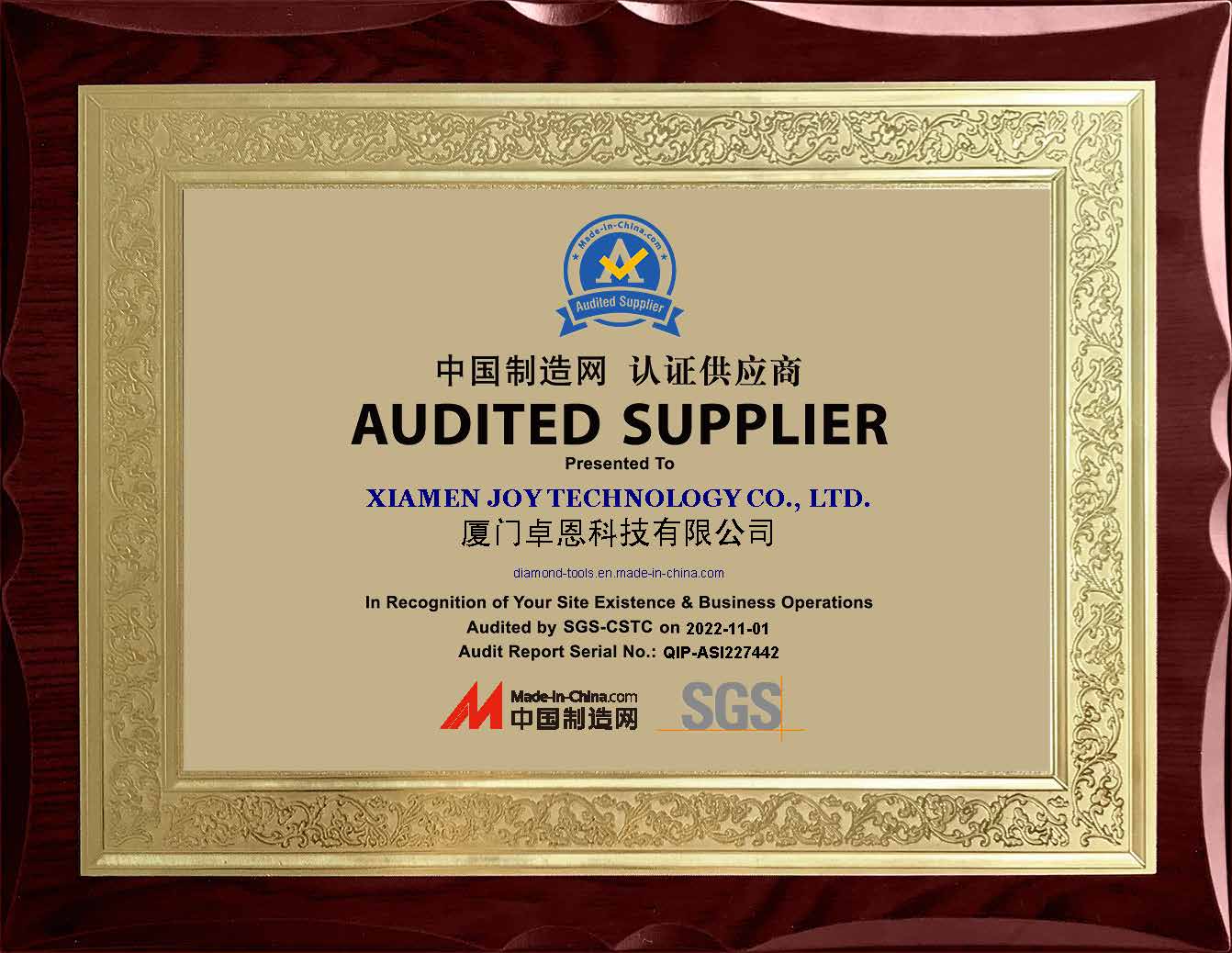
Buying from an audited supplier means a third party has physically verified the factory - its address, workforce, production equipment, quality process and export capacity. An audit report is stronger evidence than a website, and it reduces the risk of dealing with a trading company posing as a factory.
An audit is a snapshot verification of a facility; a certification like ISO 9001 is a management system standard with ongoing surveillance. They complement each other: the audit proves the factory is real, the certification proves its process is disciplined. A supplier with both, plus product marks like CE, is a strong partner.
An audited supplier can be visited, photographed and verified, which means your grinding discs or polishing pads come from a controlled production line rather than a repackaged import. You also get realistic capacity and lead time data, which protects your inventory planning. For OEM orders, the audit confirms the factory can actually produce what it quotes.
A: On average yes - the audit removes the biggest import risk (a fake factory). But you should still test samples and inspect your specific batch.
A: A trading company can be audited as a trading company, but the report will say so. Check that the audited entity is described as a manufacturer with production equipment.
A: They count when the platform uses an independent inspection body and publishes the report. Ask for the underlying report rather than trusting the badge alone.
A: Typically every 12-24 months. Ask for the audit date and prefer recent reports.
An audit report is your cheapest insurance against the biggest import failure - buying from a factory that does not exist. JOY TECH is an audited supplier with published SGS and BV audit reports, ISO 9001 certification, and a production line you can video-call anytime. Request our audit reports with your inquiry.
