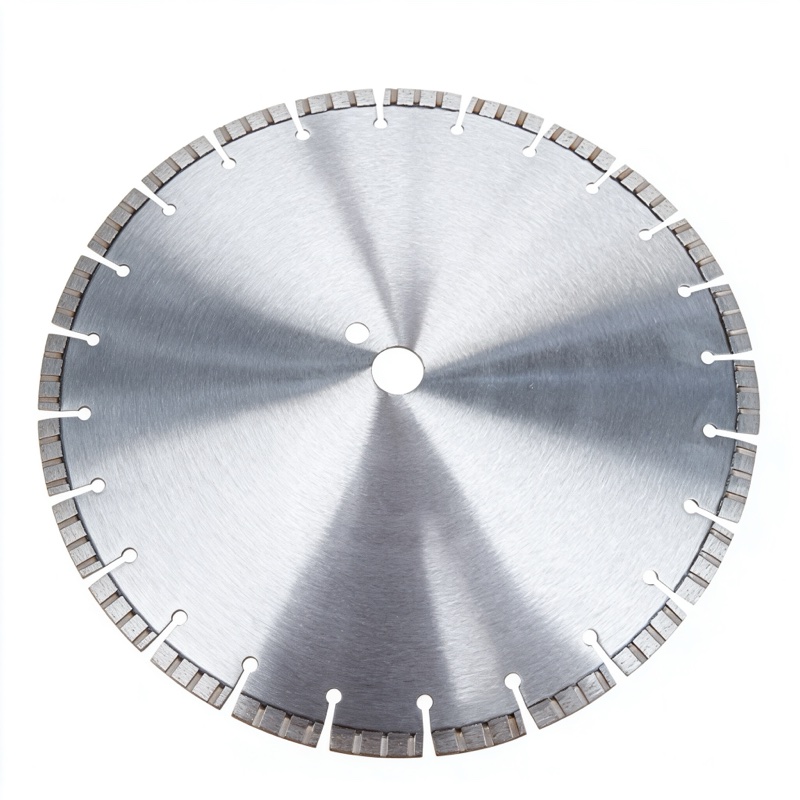
You can dry cut concrete with a laser-welded blade rated for dry use, taking short passes so the blade cools between cuts. Water is required (or strongly preferred) for deep cuts, rebar-heavy concrete, indoor dust control, and blades not rated dry. Dry cutting is fine for scoring and shallow cuts; wet cutting is faster and extends blade life.
Dry-rated diamond blades are laser-welded and use a bond engineered to shed heat. The open segments and wide gullets act like cooling fins, throwing heat and dust away from the rim. As long as you give the blade cool-down intervals, a dry blade can cut concrete without water.
For dry work the Laser Welded Concrete and Asphalt Saw Blade is rated for dry scoring; pair it with a turbo dry blade for grinder work.
Yes, with a dry-rated laser-welded blade, short passes and proper dust protection. The main risks are overheating the blade and inhaling silica dust — both are manageable.
Significantly — often 1.5–2x. Water cools the rim and flushes abrasive slurry, so the bond wears more slowly and the blade cuts faster.
Yes, wet cutting is always acceptable. Dry-rated blades work wet or dry; wet-only blades (like some thin continuous rims) cannot run dry.
Dry cutting is practical for shallow, short cuts with the right blade and cool-down discipline; water becomes necessary for depth, rebar, dust control and blade life. Match the blade to the method and protect your lungs. JOY TECH's laser-welded blades cover both wet and dry concrete cutting.
