Average response time: under 24 hours
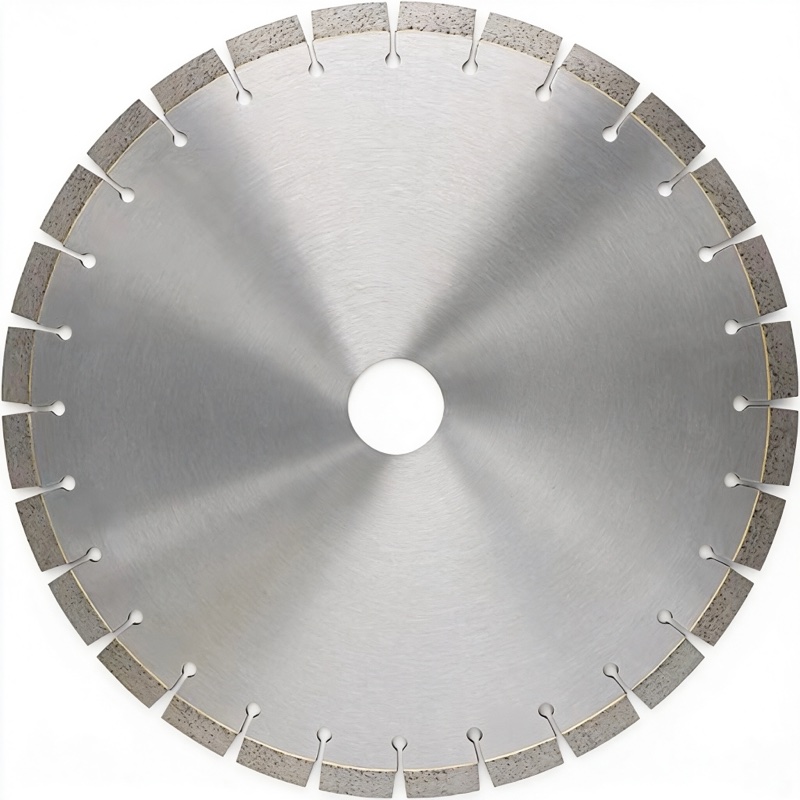
A glazed diamond tool has stopped cutting because the bond matrix has polished over the diamonds, leaving a smooth shiny surface with no sharp grit exposed. To dress it: run the tool on an abrasive dressing block — a piece of soft abrasive concrete, a sandstone block, an old red brick, or a commercial dressing stone — for 30-90 seconds at normal speed with light pressure. The abrasive wears the matrix down faster than it wears the diamond, exposing fresh sharp grit. Done correctly, a glazed blade or grinding plate recovers 80-90% of its original cut; done wrong (too much pressure, too hard a block, running dry at high speed), you strip the segment. For our earlier note on this, see dressing a glazed blade and why grinding tools glaze.
Before you assume the tool is dead, confirm it is glazed:
If instead the segment is cracked, missing teeth, or worn down to 2 mm remaining, dressing will not save it — replace. If the tool is brand new and will not bite, it may need break-in, which is the same process as dressing but shorter.
Glazing is almost always a bond mismatch:
| Dressing material | How to use | Best for |
|---|---|---|
| Soft abrasive concrete / old grinding patch | Run tool on it at normal speed, light pressure, 30-60 s | Grinding plates, cup wheels |
| Sandstone block | Hold against the blade rim at full RPM, 15-30 s | Saw blades, core bits |
| Red clay brick | Press against rotating blade, 10-20 s per side | Saw blades in the field |
| Commercial dressing stone (silicon carbide) | Purchase from tool supplier; follow timing on label | Precision saws, stone fabrication |
| Old asphalt patch | Make a short cut in worn asphalt | Concrete blades glazed on hard cured material |
Do not dress on a hard granite block — that will round off the diamonds further. Do not dress on a steel disc — that destroys the segment. The dressing material must be softer and more abrasive than the bond.
For a metal-bond trapezoid plate or cup wheel that has glazed on hard concrete:
For plate selection and bond matching, see grinding segment selection. Our trapezoid grinding discs are stocked in soft, medium, and hard bonds for this reason.
If you have dressed the tool three times in one shift and it glazes again immediately, stop dressing. You are burning segment height without solving the root cause. The next step is:
A: Yes — this is called break-in, and it is the same process. Run a new blade on a soft abrasive patch for 30 seconds before the first real cut; it exposes the top layer of diamonds and prevents the "new blade slip" that can walk across a smooth slab.
A: Zero times on a correctly matched tool. If you are dressing every hour, the bond is wrong for the substrate. A properly matched blade runs clean until it wears out; dressing is a rescue operation, not a maintenance routine.
A: No. Resin pads do not glaze the same way; they wear down. If a resin pad stops cutting, it is worn out — replace it. Dressing would just abrade the resin body and destroy the pad.
A: No. You are not sharpening the diamonds — diamond is the hardest material on earth and you cannot sharpen it. You are wearing away the bond matrix to expose fresh sharp diamonds that were buried underneath. Think of it as exposing, not sharpening.
Dressing rescues a glazed tool in 60 seconds with a piece of brick or a sandstone block. But if you are dressing every day, the problem is not the glaze — it is the bond choice on the spec sheet. Match bond to substrate the first time, and dressing becomes a rarely-used rescue, not a daily ritual. Order blades in the correct bond for your substrate — send us your concrete hardness and we will spec the right SKU.
Written and reviewed by JOY TECH — an SGS & BV audited, CE/RoHS certified diamond tools manufacturer founded in 2004, exporting to 50+ countries.
Our factory and QMS are audited by SGS and Bureau Veritas. Products meet CE/RoHS requirements and every piece is 100% inspected before packing.
Verified Certificates
