Average response time: under 24 hours
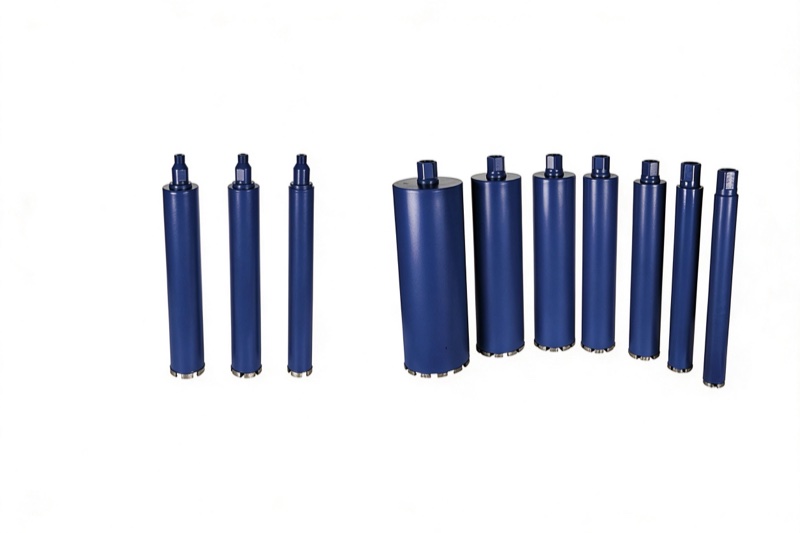
For a one-off 50-150 mm hole in concrete without a core drill, use a heavy-duty SDS-max rotary hammer with a carbide-tipped annular hole saw, or a multi-bit break-out method: drill a ring of small holes around the perimeter and chip out the center with a chisel. Holes up to about 75 mm can be done in an hour with a 10 kg rotary hammer; larger holes are slow and dusty, and a rented diamond core rig is usually faster. Do not try to drill a 150 mm hole with a standard masonry bit; it will bind, burn, and possibly snap.
Once the diameter goes past 25 mm, a standard masonry bit on a hammer drill is out of its depth. The tool shakes, the bit binds, and the dust will not clear. At 50 mm and above, you are in large-hole territory. Options, in order of practicality, are annular hole saw on an SDS-max rotary hammer, multi-bit break-out, and, if you can borrow one, a diamond core drill bit on a drill rig.
A standard bit cuts by percussive fracturing of the concrete directly under the carbide tip. Above 25 mm, the center of the hole has no free face, the dust cannot escape, and the bit wedges. An annular hole saw cuts only the perimeter and removes a core, which is why it works where a solid bit does not. The carbide teeth on an annular saw also last longer because they stay cooler and the dust evacuates through the open center.
An annular, also called a thin-wall or core, SDS hole saw is a carbide-tipped tube with a pilot bit. It cuts a ring and leaves a concrete plug. For a 75 mm hole, use a 10 kg-class SDS-max hammer. Mark the center, start the pilot bit at slow speed, and once the pilot is seated, let the saw cut with light pressure. Pull out every 10-15 mm to clear dust; do not let the saw bind in the kerf. Cut until the plug comes free.
For deeper holes or reinforced slabs, a wet diamond core bit on a small rig cuts cleaner and faster than carbide, but that is the tool you are trying to avoid. Carbide annular saws are fine up to about 200 mm depth; beyond that, switch to a wet rig or accept that the job will take twice as long.
An 8 kg-class SDS-max hammer handles annular saws up to about 75 mm. A 10-12 kg hammer reaches 100 mm. A 15 kg class handles 150 mm but is heavy for one person to hold on a wall. For holes over 100 mm, mount the rig on a stand rather than holding it by hand; the reaction torque will tire you out and the hole will wander.
This is the old-school method and it still works. Drill a ring of 8-10 mm holes around the perimeter of the desired opening, spaced about 15 mm apart, to roughly the target depth. Then drill a second ring halfway between the first ring and the center. Chip out the center with an SDS chisel bit. The result is a rough hole that needs a little cleanup but does not require any specialty bit.
Do not attempt this on structural concrete with rebar. If you hit steel, stop. A rebar-cutting diamond core bit is the right tool for reinforced slabs; the break-out method will just bend the chisel and spark. Scan with a rebar detector before you start.
For a 200 mm-plus opening such as a pipe chase, a vent, or a manway, drill four corner holes with a 25 mm bit, connect them with a chase saw, and break out the center. This is essentially the break-out method scaled up. It is slow, but it gets the job done on a weekend when no core rig is available.
After break-out, the edge is jagged. Run a 25 mm carbide bit around the perimeter to knock off high spots, then chisel any remaining web flush. For a pipe hole, a slight radius on the edge is fine; for a vent or a clean opening, spend the extra ten minutes to square it up. The time to fix the edge is before you anchor anything to it.
Regardless of method, keep the tool cool. Carbide tips soften if they overheat. Pull the bit out every 10 mm to evacuate dust; do not push. If the drill suddenly slows or smells hot, stop and let it cool. Wear hearing protection, a N95 mask, and safety glasses; concrete dust is crystalline silica. A shop vacuum held next to the hole cuts dust exposure dramatically and keeps the work area visible.
If the hole is deeper than 200 mm, the slab is reinforced, or you need more than two holes, rent a diamond core rig. A dry rig like the dry diamond core bit on a handheld rig cuts a 100 mm hole in under 10 minutes where the break-out method would take an hour. For a single shallow hole in a wall, the annular SDS saw is the sweet spot.
Written and reviewed by JOY TECH — an SGS & BV audited, CE/RoHS certified diamond tools manufacturer founded in 2004, exporting to 50+ countries.
Our factory and QMS are audited by SGS and Bureau Veritas. Products meet CE/RoHS requirements and every piece is 100% inspected before packing.
Verified Certificates
