Average response time: under 24 hours
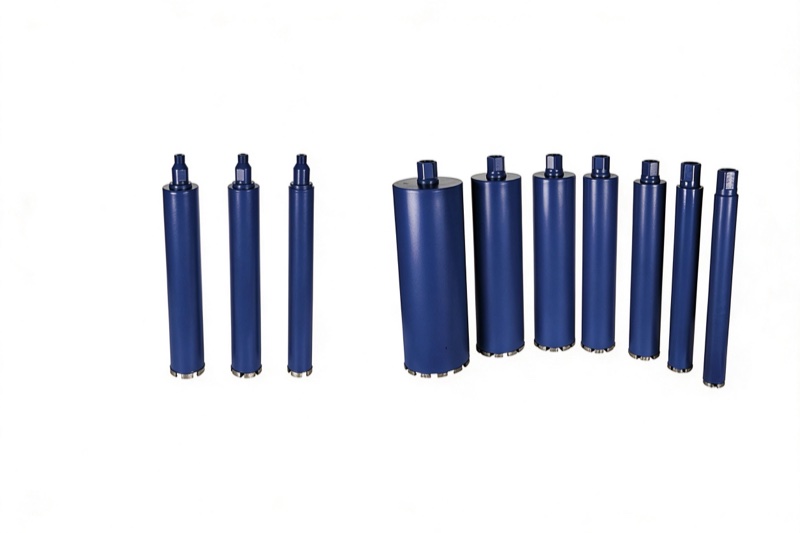
Drill a pipe penetration through a concrete wall with a diamond core bit one size larger than the pipe outside diameter, mounted on a vacuum-anchored or bolted rig, using water swivel feed for cooling and a suction ring to catch slurry. Mark the centre, drill a shallow pilot, then let the rig feed at a steady 200-400 rpm without forcing. Stop before the bit breaks through the far side and finish the breakthrough by hand with the bit partly pulled back, to avoid a rough exit edge. Install a sleeve, then pack the annulus with backer rod and fire-rated sealant.
A pipe penetration needs clearance, not a tight fit. Pick a core bit that is 10-25 mm larger than the pipe outside diameter, depending on the sleeve and the code. For a 100 mm pipe, drill a 125 or 150 mm hole so a sleeve and sealant fit. A tight hole looks neat but leaves no room for the sleeve, and the pipe will rub the concrete and leak. Measure the pipe at its largest point, including insulation if it will be insulated, before you pick the bit.
If you are drilling a wall that contains rebar, use a diamond core bit rated for reinforced concrete; ordinary bits glaze and skid on rebar, and a cheap bit can wander off mark. Check the bit label for reinforced-concrete rating; a general-purpose bit will struggle and leave a ragged hole.
A sleeve is a short tube that passes through the wall and gives the pipe a clean bearing. It keeps the pipe from rubbing on rough concrete, allows the wall to be sealed around it, and lets you pull the pipe later without breaking the wall. Pipes that move with temperature need a sleeve that is larger than the pipe, so the pipe can slide. Do not grout a hot pipe solid into a cold wall; thermal expansion will crack the wall around the hole within a year.
Hand-holding a core rig on a wall gives a crooked hole. Anchor the rig:
For vertical wall work, the wet diamond core bit with a standard water swivel thread keeps cooling steady; wall slurry runs down and soaks the floor without a suction ring, so never skip that step.
Concrete walls almost always have rebar. Drill slowly when you feel the cut change from stone to metal; rebar grabs the bit and can twist the rig. If you hit an unexpected conduit or pipe, stop, let the bit cool, and decide whether to relocate. A 100 mm hole through a wall should take 3-8 minutes; anything longer means you are fighting steel. Once you have cut through rebar, keep the feed light so the segment does not overheat on the metal.
Once the bit is out, the core cylinder often stays wedged in the hole. Twist it loose with a pair of channel locks, or drive a small wedge along the side to free it. Clean the annulus with a wire brush on a drill, then shop-vac the slurry. A clean annulus lets the sleeve sit true and lets the sealant bond; slurry left behind makes the sealant peel within a year.
The exit side is where walls chip. When the drill depth is about 10 mm short of the far face, slow the feed to almost nothing and let the crown finish the cut. If you keep feeding at full pressure, the core drops out and takes a chunk of concrete with it, leaving a rough edge you have to patch. For a neat hole, keep the vacuum on, pull the bit partly back, and let the last millimetres cut at the slowest feed.
Once the core is free, remove it and clean the annulus with a wire brush. Inspect for cracks around the hole; a crack on the exit side means the wall was stressed and the sleeve needs a wider seal. Do not push a jammed bit out by hammering; let it cool and turn it by hand, or you will crack the wall.
Before you pack the annulus, slip the sleeve in and slide the pipe through. Check that the pipe moves freely and that there is equal clearance around it on all sides. If the sleeve binds, the hole is out of round; grind the high spot with a hand core bit or ream it before sealing. A seal that goes in crooked never holds. Leave the backer rod proud by about half its diameter before you tool the sealant, so the sealant has room to compress.
Drop in a sleeve, usually plastic or steel, sized so the pipe passes through with clearance. Pack the gap between sleeve and concrete with backer rod, then seal with fire-rated or waterproof sealant as the penetration requires. Pipes that carry temperature change need a sleeve that allows movement; do not grout a hot pipe solid into a cold wall.
Ask us before drilling if you are unsure of wall thickness or rebar location; a wrong penetration through a structural wall is an expensive fix. For fire-rated walls, the sealant must be rated for the penetration, and the code often requires a listed sleeve system, not a generic plastic tube.
Size the bit 10-25 mm over the pipe, anchor the rig, cool with a controlled water feed, catch the slurry, and slow down before breakthrough. Add a sleeve and a proper seal, and the wall penetration will look like it was built in rather than drilled through.
Written and reviewed by JOY TECH — an SGS & BV audited, CE/RoHS certified diamond tools manufacturer founded in 2004, exporting to 50+ countries.
Our factory and QMS are audited by SGS and Bureau Veritas. Products meet CE/RoHS requirements and every piece is 100% inspected before packing.
Verified Certificates
