Average response time: under 24 hours
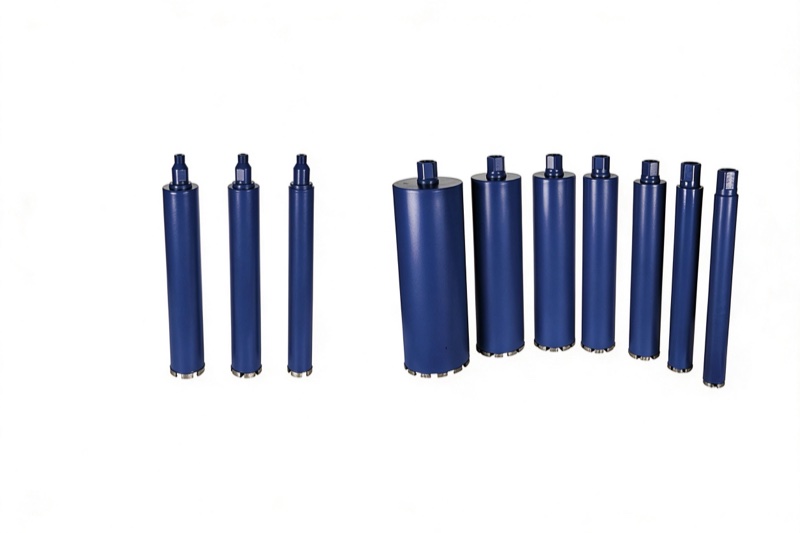
Keep a core hole at least 100 mm, or one hole diameter, away from a free edge when possible. If you must drill closer, use a diamond core bit at low speed with a shallow pilot, slow the feed to the minimum, and back the near edge with a plywood board glued to the concrete. Stop drilling before the bit reaches the far edge and finish the last 10 mm by hand so the crown does not pry the corner off. Most edge break-out happens because the operator feeds at normal pressure, not because the bit is wrong.
Concrete is strong in compression but weak in tension. When a core bit cuts close to a free edge, the stone on the near side has nothing behind it to push against. As the crown rotates, it pries that unsupported bit outward, and a triangular chunk breaks out of the edge. The deeper the hole and the closer the centre, the larger the chunk. This is mechanical, not a fault in the bit, so the fix is procedural.
Edges are even weaker on precast and hollow block, where the shell is a few centimetres thick. A hole that looks safe on a solid wall can blow out the face of a block. Always assume the edge is weaker than the wall itself.
Use the table before you mark the hole:
If the hole is structural, check the drawings before you drill; a core near an edge in a beam or slab may require an engineer's sign-off, and the core bit selection matters less than the structural review.
Start with a small pilot hole, 6-8 mm, dead centre. This keeps the crown from walking sideways into the edge. On a regular floor, a pilot is optional; near an edge, it is mandatory. Use a masonry bit, not a hammer setting, to avoid shaking the corner loose. The pilot also gives you a check: if the pilot itself chips the edge, the distance is too close and you should move the hole.
A backer board gives the near edge something solid to push against. As the crown cuts through the board and into the concrete, the board supports the last millimetres of concrete that would otherwise pry outward. Construction adhesive holds the board flat so it does not slip mid-cut. The board costs a dollar and saves a patch that costs a hundred. Use it every time the hole is within one diameter of an edge.
When the hole has to be close to the edge, change the process:
Glue a 12 mm plywood backer board to the concrete with construction adhesive over the edge zone. Drill through the board and the concrete together; the board supports the unsupported near face and stops small chips from flying. Run the segment core bit at the lower end of the speed range, and feed by hand pressure, not by the rig's auto-feed. When the crown is within 10 mm of the free edge, pull the bit back, keep it spinning, and let it cut slowly without pressure.
If you hear a crack or see a chip appear, stop. Do not keep drilling. Clean the hole, assess the damage, and decide whether to patch the edge and re-drill, or move the hole. A chipped edge on a hidden penetration can be packed with repair mortar; on a visible edge, it usually means relocating the hole. Never use a hammer setting on a near-edge hole; the percussion shakes the corner loose before the bit even cuts.
A small chip under 20 mm on a hidden wall can be patched with structural epoxy mortar, then redrilled after it cures. A chip larger than 20 mm, or any chip on a visible face, is cheaper to relocate the hole than to repair. If the hole already went through and the corner is cracked, support the corner temporarily and consult an engineer before loading the wall. Never assume a cracked edge is cosmetic; concrete can spall further under load.
If a small chip does come out, do not try to hide it with paint. Grind the edges of the chip smooth, blow out the dust, and pack structural epoxy mortar into the void. Tool the mortar flush with the wall, then let it cure 24 hours before drilling nearby. A patched chip that is left rough will catch water and spall again within a year. Mark patched edges on the drawing so future crews know the corner is repaired and not solid concrete.
For a small hole near an edge where water would run everywhere, a dry core bit with a dust shroud is the cleaner choice. Same rules: pilot hole, slow feed, backer board. The dry bit's shorter barrel and lighter rig also put less lateral force on the corner, which is why most electricians drill small near-edge holes dry rather than wet.
Respect edge distance, pilot the hole, back the near face, slow the feed, and stop before the breakthrough. Edges chip because of pressure, not because of the bit, so treat the process as the control and the corner will stay intact. When the hole must be closer than one diameter, plan on patching and on a slower, more careful cut.
Written and reviewed by JOY TECH — an SGS & BV audited, CE/RoHS certified diamond tools manufacturer founded in 2004, exporting to 50+ countries.
Our factory and QMS are audited by SGS and Bureau Veritas. Products meet CE/RoHS requirements and every piece is 100% inspected before packing.
Verified Certificates
