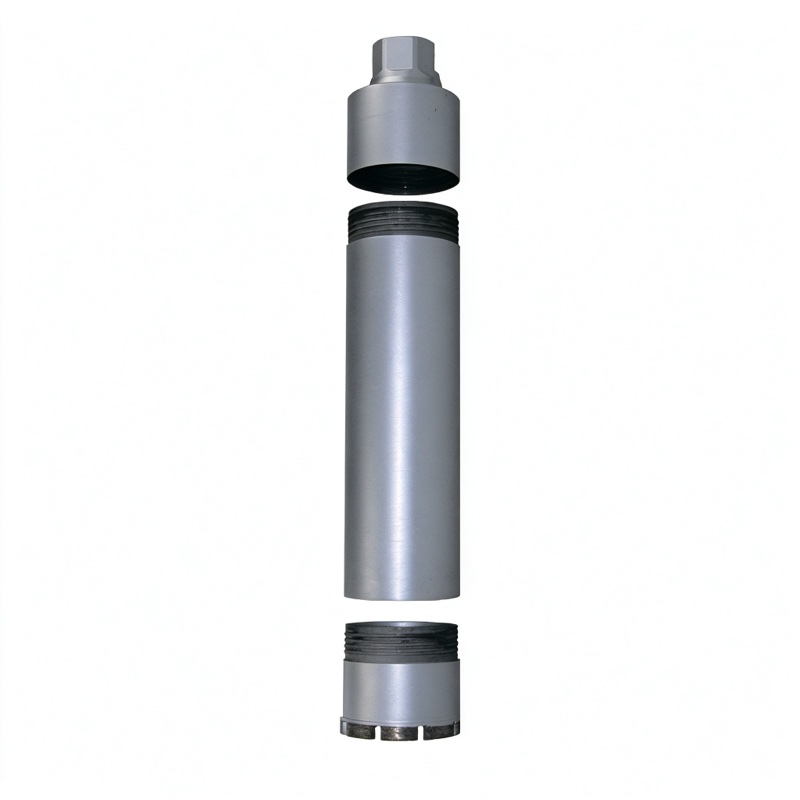
Use dry core bits for soft, abrasive materials like brick, block and aerated concrete, and wet core bits for dense reinforced concrete. Dry bits cut fast on brick but overheat on hard concrete; wet bits stay cool and live long on concrete but are messy and need a water supply.
Dry bits have a softer, more open bond that sheds abrasive dust quickly. They are ideal for:
Run dry bits at higher RPM with a pecking motion so air cools the segment. A diamond dry core bit will drill dozens of brick holes without water.
Wet bits use a denser bond and water to flush slurry. Choose them for:
Water keeps the diamond below the critical temperature, which is why a diamond wet core drill bit can cut hard concrete at high speed without glazing.
| Feature | Dry bit | Wet bit |
|---|---|---|
| Cooling | Air, pecking | Water flush |
| Best material | Brick, block | Reinforced concrete |
| Speed | Higher RPM | Lower RPM, higher torque |
| Dust | High - use vacuum | Slurry - capture with ring |
| Life on hard concrete | Short | Long |
Ask three questions: what material is being drilled, is water available, and is dust acceptable? A contractor drilling mixed brick and light concrete with no water supply should choose dry; a crew doing reinforced concrete cores daily should choose wet and connect a water rig.
A: Yes, on light concrete, but life drops sharply and the bit can glaze. For structural or reinforced concrete, wet is the correct tool.
A: Briefly, at reduced speed, with cooling pauses. Prolonged dry use of a wet bit destroys the segment.
A: Yes - always connect a dust extractor or vacuum to the drill and wear a respirator.
A: Stock both: dry bits for the residential brick market and wet bits for commercial concrete. Most rental fleets carry both sizes.
Match the bit to the material and the water situation. JOY TECH manufactures both dry and wet core bits with bonds tuned for brick or reinforced concrete, in diameters from 20 mm to 200 mm plus accessories - send your material spec and we will recommend the right set.
