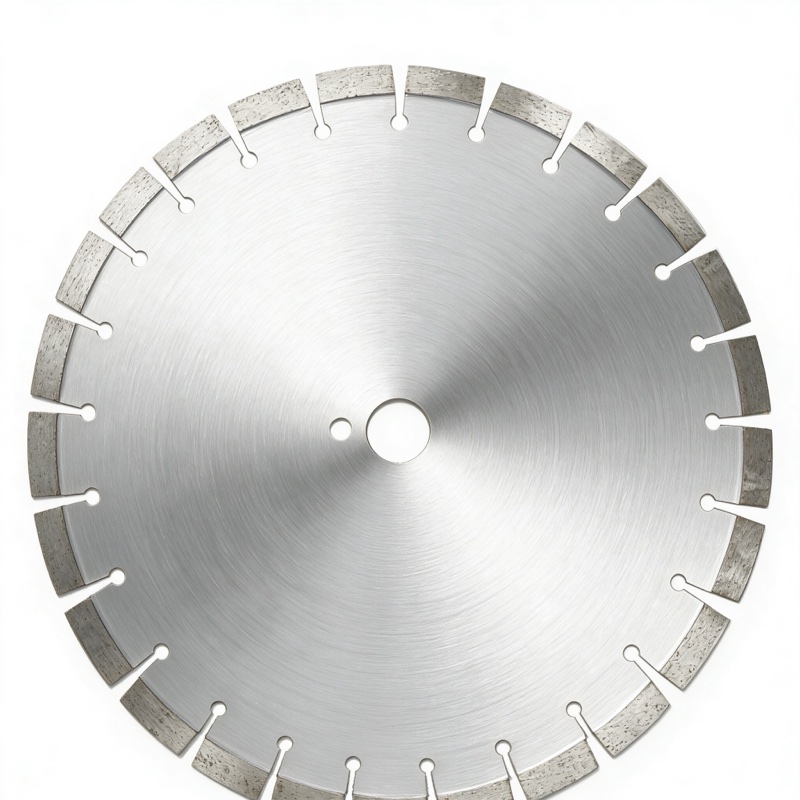
Use a dry-cut diamond blade when there is no water supply on site or you need portability - making intermittent cuts, letting the blade cool between cuts. Use a wet-cut blade with continuous water feed for long, deep cuts and for stone, tile and marble where cooling and dust control matter. Dry blades have wider cooling slots and hardened cores; wet blades run cooler and cut cleaner. Running a wet blade dry will overheat it, while flooding a dry blade can cause thermal shock - but in practice, the rule is simpler: cut dry for convenience on concrete/masonry, cut wet for quality on stone and tile.
Dry-cut blades are built with gullets (wide slots) that pull air through the segment to cool the rim. They are meant to be cut in bursts - about 30-45 seconds of cutting, then a few seconds of free spinning to cool. Forcing a long continuous dry cut overheats the segment bond, glazing the diamonds and turning the rim blue. Dry cutting also creates silica dust, so you need a dust shroud and vacuum or respiratory protection.
Wet cutting pumps water to the blade rim. The water carries away heat and swarf, so the blade cuts faster, lasts longer and produces no dust. It is mandatory for continuous-rim tile and marble blades, and preferred for deep slab cuts and stone fabrication where a clean edge matters. The trade-off is plumbing, slurry cleanup and electrical safety around water.
| Situation | Choose | Why |
|---|---|---|
| Quick concrete cut, no water on site | Dry segmented | Portable, burst cutting |
| Long depth cut, flat saw | Wet laser welded | Heat control, blade life |
| Tile / porcelain / marble | Wet continuous rim | No chipping, no burn |
| Indoor dust-sensitive work | Wet or dry with HEPA | Silica compliance |
For concrete and asphalt flat work, a laser-welded blade such as our wet-capable concrete/asphalt blade handles both wet and dry operation on floor saws. For masonry and general angle-grinder work, the high-frequency welded blade is a versatile dry-cut option.
A blade rated for wet use, run dry for long periods, will overheat - the segment bond softens, diamonds fall out early, and the core can warp or crack. Conversely, deliberately flooding a dry-only blade is not usually recommended because rapid cooling can thermal-shock segments. The safest approach: read the blade label, and when in doubt, wet-cut stone/tile and dry-cut concrete in short bursts.
Every diamond blade carries markings that tell you how to run it: maximum RPM, arbor size, diameter and often a wet/dry symbol. Before mounting a blade, compare the saw no-load speed against the blade maximum - if the saw spins faster than the blade rating, do not use it. Overspeed is a leading cause of segment loss and core failure, and it also overheats the rim even on dry jobs.
When water is required, plumb a steady but not flooded flow directly at the rim. Too little water does not cool; too much floods the cut and can cause slip. On electric saws, always use a GFCI-protected circuit and inspect cords for damage. Treating the label as a spec sheet rather than a formality prevents most wet/dry mistakes.
Dry cutting is acceptable for short outdoor cuts in concrete and masonry where dust is manageable and water is unavailable. Keep cuts short, let the blade air-cool, and wear respiratory protection. For stone, tile or long cuts, choose wet regardless of convenience.
Label blades wet and dry and store them separately. It sounds minor, but grabbing the wrong blade on site is a common and avoidable mistake.
If you are unsure whether a blade is wet-rated, assume it is not and cut dry in short bursts or ask the supplier. Guessing causes failures.
Many modern segmented blades tolerate both, but always check the rating. Some dry-only cores can be damaged by sudden water cooling.
Yes, on stone and tile. Wet flushes swarf and prevents burn marks on the edge.
Cut in short bursts and let the blade free-spin out of the cut to air-cool. Never force a stalled, hot blade.
Dry cutting wins on portability for intermittent concrete cuts; wet cutting wins on finish, blade life and dust for stone, tile and deep work. Match the method to the material and the site. The takeaway is to respect wet and dry ratings. Cool what needs cooling, extract dust when dry, and never run a blade beyond its label. That discipline protects both the blade and the operator. Contact JOY TECH for a quote on dry and wet diamond blades for your saw.
