Average response time: under 24 hours
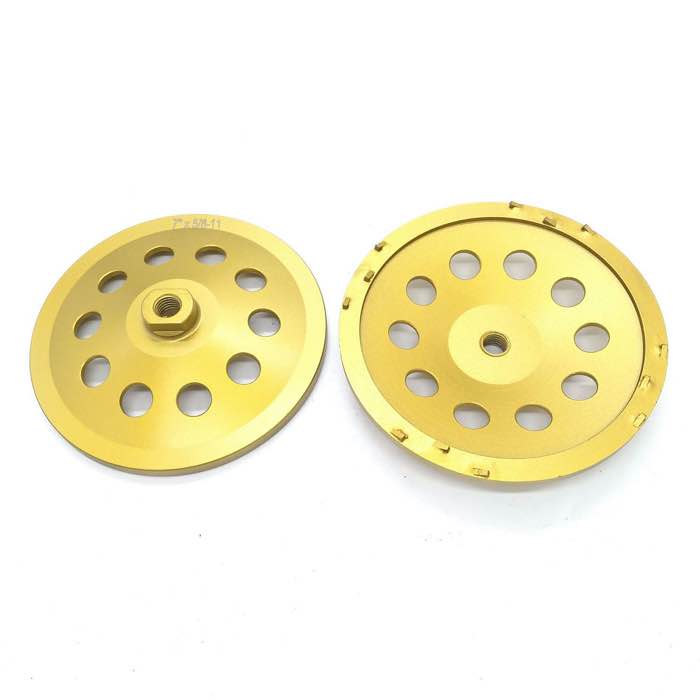
The diamond tool technologies worth watching in 2026 are PCD and hybrid segment formulations, bond selection guided by smart machinery data, recycled-content diamond, and OEM customization for automated floor-prep machines. Buyers should track these because they change both tool life and floor preparation workflow, not just the catalog numbers.
Diamond tool technology is moving because three pressures meet at once. Specifiers want flatter, longer-polished concrete surfaces, so preparation tools must be more consistent. Machinery is getting smarter: planetary grinders, robot-assisted saws and connected monitors feed back data about motor load, RPM and vibration. And sustainability demands are pushing factories toward recycled industrial diamond and thinner steel cores that waste less material. At the same time, project margins are tighter, so tool cost per square meter has become a measured line item instead of a guess. The result is a faster-moving product cycle than this industry has seen in a decade.
| Trend | What it means | Why buyers care |
|---|---|---|
| PCD and hybrid segments | Polycrystalline diamond layers bonded together with sintered metal segments for aggressive coating removal | Strips epoxy, glue and thin-set faster than traditional segments, cutting prep time |
| AI and smart machinery | Connected grinders record load, vibration and dust, and flag when the bond should change | Tool selection becomes data-driven instead of trial and error |
| Diamond recycling and sustainability | Factories blend reclaimed industrial diamond and use thinner recycled-content steel cores, such as 1.4034 spring steel coil | Lower carbon footprint plus more stable pricing as new diamond supply fluctuates |
| Automation and OEM customization | Custom segment shapes, grit sizes and bonds built for specific robotic grinders and OEM machine plates | Machinery makers now co-specify tooling; off-the-shelf no longer fits every fleet |
| Digital tool selection | Online wizards ask about material, machine RPM and desired finish, then recommend grit progression and bond | Reduces the risk of ordering the wrong bond for a job |
Not entirely. PCD excels at removing coatings, glue and soft, sticky residues, while sintered metal segments still grind concrete and stone faster for most dry and wet jobs. The trend is toward hybrid tools that do both.
No. When sorted by grit and graded properly, reclaimed industrial diamond performs comparably inside bonded segments. Either way, ask for the grit spec and the batch test data.
Partially. Grinders can signal that a bond is wearing too fast or too slowly, but the final recommendation still needs a human who knows the material, the desired finish and the machine RPM window.
When you run a dedicated machine fleet on the same material every week. For mixed, one-off jobs, proven standard catalog tools are still the safer and cheaper choice.
The next few years will reward buyers who treat diamond tooling as engineered equipment rather than a commodity. Watch PCD, smarter bonds and digital selection, validate new technologies with samples, and negotiate with factories that can produce them in-house. You can explore current factory-direct ranges across diamond saw blades, diamond grinding discs and resin polishing pads to build a test library for the trends above.
Written and reviewed by JOY TECH — an SGS & BV audited, CE/RoHS certified diamond tools manufacturer founded in 2004, exporting to 50+ countries.
Our factory and QMS are audited by SGS and Bureau Veritas. Products meet CE/RoHS requirements and every piece is 100% inspected before packing.
Verified Certificates
