Average response time: under 24 hours
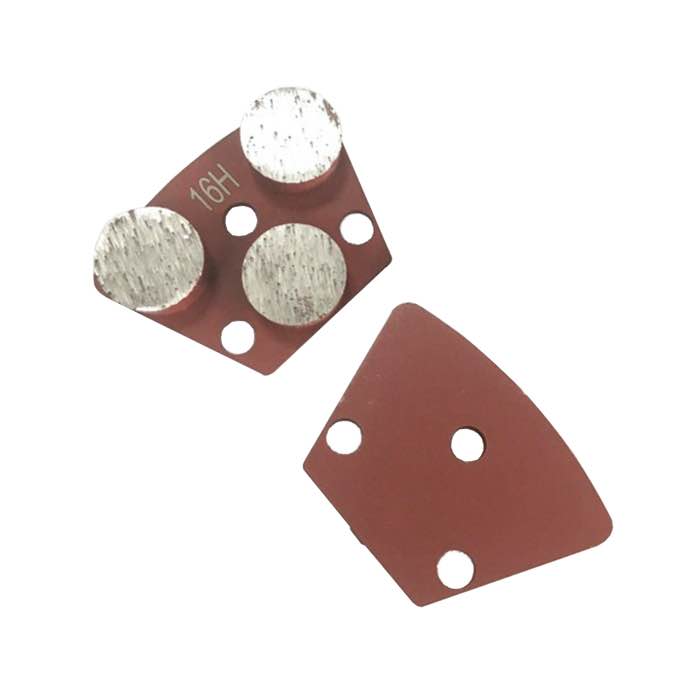
To grind concrete edges without gouging the wall line, keep the diamond tool 10-15 mm off the wall on the main grinder, then finish the strip with a handheld angle grinder or a small edge tool at a shallow 10-15 degree tilt. Use a soft-bond cup wheel or trapezoid disc that cuts fast without grabbing, and take light overlapping passes rather than one heavy bite. Gouging happens when the tool twists sideways into the wall or when the spinning wheel climbs the vertical edge; controlling pressure and tilt prevents both.
A cup wheel spinning at 8,000-11,000 rpm throws energy outward. When the grinder drifts toward the wall, the side of the cup wheel bites into the vertical edge and digs a notch. That notch is hard to repair because the tool has already removed the paste along the wall line. The fix is mechanical: set the main grinder so it cannot reach the wall, and never lean the grinder sideways into the baseboard.
Handheld grinders have a habit of climbing the wall edge when the wheel is tilted too upright. The diamond segments grab the vertical face and yank the grinder forward, leaving a ragged groove. Tilt the grinder to a 10-15 degree leading angle, with the front of the wheel lower, so the tool cuts the horizontal floor and not the vertical wall.
A walk-behind grinder fitted with a triple-round-segment trapezoid disc takes off the bulk of the floor and leaves the edge strip for the handheld tool. Set the disc so it stops 10-15 mm short of the wall. The round segments cut gently along the edge line instead of digging, and the trapezoid shape tracks straight without wandering into the baseboard. If the walk-behind hood has a skirt, trim it back so it does not drag on the wall and push the grinder sideways. Plan the edge strip width by the tooling: a 125 mm cup wheel handles a 100-150 mm strip in two passes, while a 180 mm wheel covers 150-200 mm.
For the last strip, use a double-row cup wheel on a 125 or 180 mm angle grinder. Double-row segments spread the load and reduce grab compared with single-row wheels. Keep the guard on, and run the grinder at full speed so the wheel self-sharpens rather than bogging on the edge. Dress the cup wheel on a concrete block if it looks glazed; a glazed wheel skips along the edge and gouges the line far faster than a fresh wheel.
Follow this order and you will keep the wall line intact on every pass:
Apply only the weight of the grinder, plus a light push. Extra down-pressure is the number one cause of gouging: it forces the segments into the edge and makes the wheel jump. Let the diamond do the work. If the floor is not removing fast enough, change to a coarser grit or a softer bond, do not press harder. Aim for 0.1-0.2 mm per pass on a healthy edge strip. If the strip feels rough under your hand after the coarse grit, drop one grit size and take a light pass before you move to resin; skipping the transition grit leaves a shadow along the wall that shows up under polishing.
If the wall is a finished concrete tilt-up or a tile that you cannot chip, take a test pass on a hidden corner first. When you need tooling that stays gentle along edges but still cuts the slab in the middle, contact the JOY TECH team for a trapezoid and cup-wheel combo matched to your grinder size and slab hardness. The right combo saves hours on a large room and keeps the wall line intact on every pass.
Written and reviewed by JOY TECH — an SGS & BV audited, CE/RoHS certified diamond tools manufacturer founded in 2004, exporting to 50+ countries.
Our factory and QMS are audited by SGS and Bureau Veritas. Products meet CE/RoHS requirements and every piece is 100% inspected before packing.
Verified Certificates
