Average response time: under 24 hours
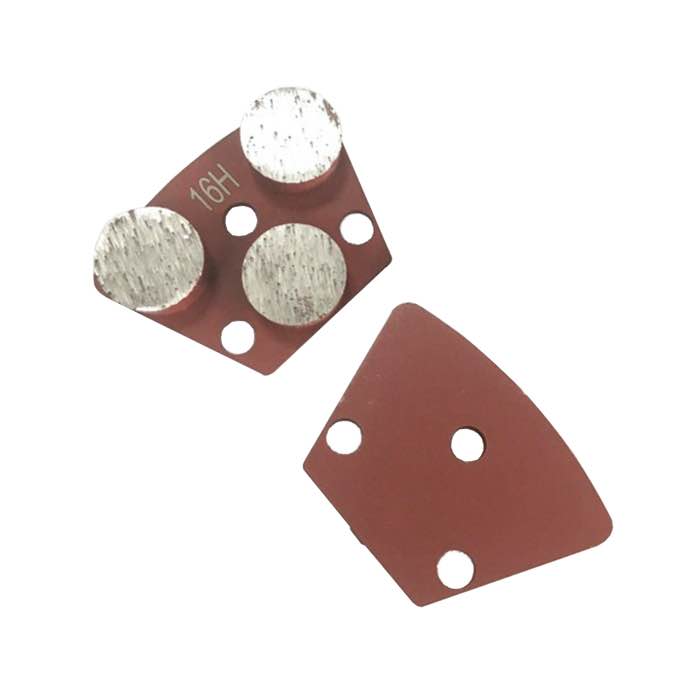
A floor grinder loses cutting speed and throws off dust when supply drops below per-head flow; unfiltered slurry clogs pump and hoses within 80 to 150 operating hours. This guide covers the water tank, per-head flow, slurry settling and separation, pump wear and the maintenance cycle for equipment buyers.
Scope covers single and multi-head walk-behind grinders with tanks 20 to 60 L, recirculating separators and vacuum wet grinding on concrete, stone and screed. Ranges apply to typical conditions; follow the machine manual where it publishes a lower flow or volume.
Water leaves the tank, passes pump and filter screen, splits through hoses to each head and runs along the wheel or block to cool the bond, flush cuttings and hold dust down. Flow below need leaves dry contact: segments glaze, blocks polish instead of cut, and the surface scratches between the 16 and 40 grit steps.
Check points: level above the pump pickup, screen clear, hoses free of kinks, no air lock. A half-empty tank with pump running draws air, pulses flow and leaves uneven wet marks; top up before the level drops below the outlet.
Reference flow runs 1.5 to 3.0 L/min per head on concrete, raised to 2.5 to 4.0 L/min on hard granite or dense screed. A three-head machine at 2.0 L/min per head draws about 6.0 L/min; a 40 L tank supports roughly 6 to 7 minutes of wet work, a 60 L tank about 9 to 10 minutes.
Runtime estimate: usable tank volume in L divided by per-head flow in L/min times head count equals minutes of work. Recirculating systems extend runtime to a 4 to 6 hour shift with one or two top-ups, but returned water must pass separation first; dirty return shortens pump and filter life instead of saving water.
Slurry leaves the head at 1.05 to 1.25 g/cm3 and settles in stages. First basin: coarse grit and chips drop out in 10 to 20 minutes; second: fines settle through a 0.5 to 1.0 mm mesh; third: a 200 to 300 micrometer filter protects the pump inlet. Cakes from the first two basins hold 20 to 30 percent moisture and leave as solid waste.
Recirculation layout: pickup screen at the outlet, settling chamber with baffles, mesh basket that lifts for cleaning, fine cartridge after the chamber. Any bypassed stage pushes fines into the pump; steel or carbide fines score seals and wear impellers.
Slurry pumps run on water with 5 to 15 percent solids by weight; seals last a reference 300 to 600 hours under clean flow, dropping to 120 to 200 hours when fines bypass the filter. Impeller and volute wear shows as low pressure and weak jet; hoses harden or abrade inside, losing 10 to 20 percent of bore before leaking.
Wear triggers: running dry pulls the seal against a dry shaft; settled grit backflow leaves abrasives in the seal zone; a kinked or undersized hose raises pressure and cavitates the pump. Spare stock: seal kit, inlet screen, mesh basket, fine cartridge and short hose section per model.
Rough grinding with metal-bond blocks 16, 20, 30 and 40 runs 1.5 to 2.5 L/min to flush chips; transition and resin honing at 100, 200, 400 and 800 grit runs 2.0 to 3.0 L/min to hold fines in suspension; polishing at 1500 and 3000 grit drops to 1.5 to 2.5 L/min, since flooding softens resin bond and blurs the 60 degree gloss.
Environment check: surface temperature 10 to 30 degrees Celsius and relative humidity under 75 to 80 percent RH for consistent wet work; above that range water evaporates mid-pass and leaves streaks, below it the slab stays cold and water sheets unevenly. Flow rises on hard aggregate and high pressure, drops on soft material where water washes out fines.
| Symptom | Likely cause | Field check | Action |
|---|---|---|---|
| Dry spots mid-pass | Tank low, air in line | Level, hose air lock | Top up, bleed the line |
| Glazed segments, slow cut | Flow too low | Nozzle jet, filter screen | Raise to 1.5 to 3.0 L/min per head |
| Pump pressure drops | Seal wear, inlet clogged | Screen, impeller condition | Clean or replace seal kit |
| Slurry returns dirty | Settling stage bypassed | Baffles, mesh basket | Restore stage order, clean basket |
Daily: after 4 to 6 hours of wet work, drain the tank, rinse settled grit, flush hoses and nozzles 5 to 10 minutes, leave the tank half-open to air. Weekly: inspect screen and basket, measure nozzle flow against 1.5 to 3.0 L/min, check hose bore for abrasion.
Replacement triggers: seal leaks above 1 drop per 10 seconds, weak impeller jet, hose bore reduced 10 to 20 percent, torn or compressed cartridge. Spare kits rotate on a 3 to 5 year shelf, away from wet slurry bins.
Fresh concrete slurry is alkaline, typically pH 11 to 13, and must not go to storm drains, gutters or bare soil. Solid cakes settle, are bagged and handed to licensed waste hauling; residual water is decanted after settling and disposed per local rules. Direct discharge carries cleanup and compliance costs that outrun a basic separator over a season.
For procurement, quote tank volume, seal life and separator stage count with the grinder; a cheap-looking machine without water management adds pump repairs and disposal handling that show up in the first 100 to 150 hours of wet work.
Written and reviewed by JOY TECH — an SGS & BV audited, CE/RoHS certified diamond tools manufacturer founded in 2004, exporting to 50+ countries.
Our factory and QMS are audited by SGS and Bureau Veritas. Products meet CE/RoHS requirements and every piece is 100% inspected before packing.
Verified Certificates
