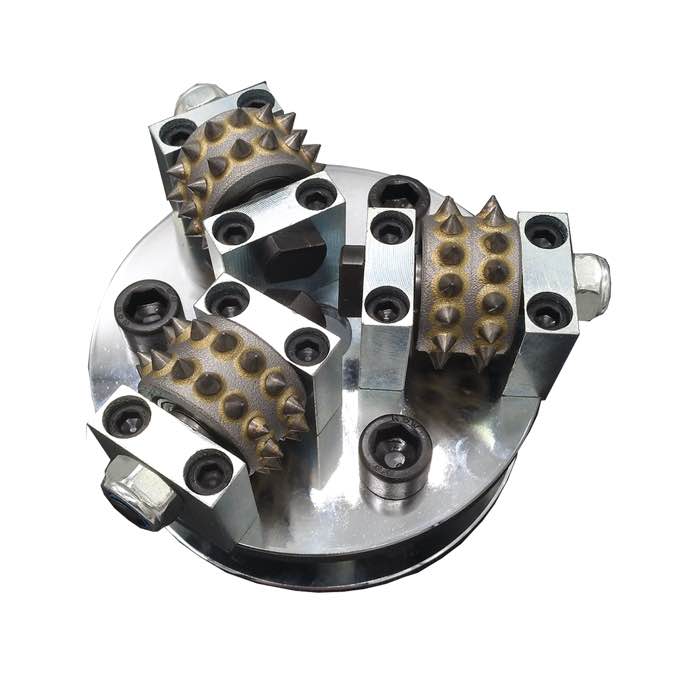
For basement waterproofing prep, grind off just 1-2 mm of concrete — enough to remove laitance, old coatings and contamination without weakening the slab. The goal is a clean, open, sound surface profile that lets the waterproofing membrane bond properly.
A waterproofing membrane only works if it bonds to sound concrete. Leftover laitance (the weak surface layer), paint, curing compounds, and oil all block adhesion and cause the membrane to peel later. Grinding removes these layers and opens the surface pores for mechanical bonding.
For a basement floor that is structurally sound, 1-2 mm is normally enough. Remove more only when:
Do not grind deep enough to expose aggregate or weaken the slab thickness — the waterproofing does not need a deep cut, only a clean bondable profile.
A>Yes — waterproofing membranes need full-surface bond. Grind the entire floor area, not just the stained or damaged spots, so the membrane adheres uniformly.
A>Yes, shot blasting creates a similar profile and is faster on large floors. Grinding is better for smaller basements, corners, and areas where you also want to level high spots.
A>Until no moisture remains — typically 24-48 hours in a dry basement. Test with a plastic sheet or moisture meter before applying the membrane.
A>For most basements, a coarse pass plus a 60/80 pass is enough. If old coatings or oil are present, add passes until clean concrete shows.
Basement waterproofing prep is about surface quality, not depth: grind 1-2 mm to remove laitance and contamination, open the profile, clean thoroughly, and dry completely. Use coarse metal-bond or bush hammer tooling plus a PCD disc for stubborn coatings from the JOY range and your membrane will have a sound base that lasts.
