Average response time: under 24 hours
To grind concrete in a basement or low-ceiling room, replace the walk-behind grinder with a low-profile handheld or single-head grinder, run a HEPA vacuum the whole time, and plan the work in short passes because fatigue is the limiting factor. A standard floor grinder needs 1 meter of headroom; a low-profile angle grinder or a single-head hand grinder works under 2 meters. Wear knee pads, use a vacuum wand to clear dust from corners, and schedule breaks every 20 minutes because overhead and bent-over work exhausts the back faster than the machine.
A basement slab is usually colder, damper, and dustier than a ground-floor slab. The ceiling is low, the light is poor, and there are obstacles: water heaters, sump pumps, pipes, and foundation walls. A 600 mm walk-behind grinder will not fit through a standard basement door, let alone around a water heater. The work is done on hands and knees or with a long-handled grinder, which means the operator fatigue is the bottleneck, not the machine speed.
Dust in a basement does not settle; it swirls in the still air and coats the furnace, the water heater, and any stored items. Without a HEPA vacuum and plastic barriers, a two-hour grinding job becomes a two-day cleanup. Plan the containment before you start, not after the dust is in the air.
For small patches, edge work, and tight corners, a 180 mm angle grinder with a diamond cup wheel is the standard. It fits under any ceiling over 1.2 meters and gets into corners a floor grinder cannot reach. The JOY CW-DR double-row cup wheel removes coating and smooths rough patches quickly on an angle grinder, and it accepts a vacuum hood that keeps dust off the operator.
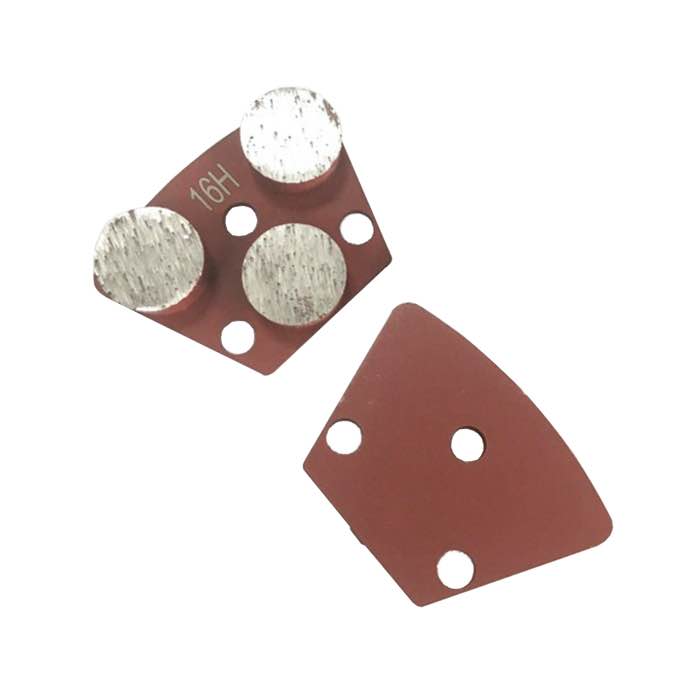
For larger basements, a single-head planetary grinder (often called a hand-push or walk-behind unit) with a 250 mm or 300 mm head works. These units weigh 30 to 50 kg, are about 1 meter tall, and grind a wider path than an angle grinder. The JOY TP-R3 trapezoid puck mounts to this style of grinder and gives a consistent profile across the slab. If the door to the basement is too narrow for the grinder, look for a unit that splits or has removable handles.
In a basement, containment starts with the HVAC. Turn off the furnace and the central air before you start grinding; otherwise the dust gets pulled into the ductwork and spread through the house. Seal the supply and return vents with plastic and tape. Close the door to the rest of the house and cover the gap with a plastic sheet. Run a portable air scrubber with HEPA filtration in the room, exhausting to the outside if possible.
Wet grinding is sometimes used in basements to control dust, but it raises moisture in the slab and can delay coating by days. If you can dry-grind with a strong HEPA vacuum, do that; the slab will be ready to coat the same day. If you must wet grind, plan on 3 to 7 days of drying before an epoxy or coating can go down.
Grind in this order to avoid rework:
Because headroom is tight, plan the route before you start. Do not back the grinder into a corner; work from the far corner toward the door so you never have to step on fresh ground dust. Keep the vacuum hose behind you, not in front, and use a hose hanger on the ceiling to take the weight off your back.
Basement grinding is hard on the body. Bent-over work for hours strains the lower back, and the noise of an angle grinder in a small room is loud even with hearing protection. Wear knee pads that do not slip, a back brace if you grind for more than an hour, and steel-toe boots. Take a break every 20 to 30 minutes; fatigue is the most common cause of a wobbled edge or a gouged patch on a basement floor.
Dust exposure is the bigger risk. Even with a HEPA vacuum, wear a P100 respirator in a basement, because the air does not clear the way it does in an open warehouse. If the basement has a gas water heater, turn it off before grinding: dust in the combustion chamber can cause a malfunction. For questions about tooling selection for a tight job, contact us and describe the headroom, the slab condition, and the coating you plan to apply; we will recommend the puck grit and cup wheel combination that fits.
Written and reviewed by JOY TECH — an SGS & BV audited, CE/RoHS certified diamond tools manufacturer founded in 2004, exporting to 50+ countries.
Our factory and QMS are audited by SGS and Bureau Veritas. Products meet CE/RoHS requirements and every piece is 100% inspected before packing.
Verified Certificates
