Average response time: under 24 hours
Choose a dust shroud with a HEPA extractor for most indoor floor grinding, and reserve wet grinding for outdoor work, delicate edges, or when the slab has a coating that must be slurried away. Dry grinding with a shroud captures silica at the source, leaves the floor walkable the same day, and pairs with a 3,000 to 4,000 CPM vacuum matched to your grinder width. Wet grinding cuts with less dust and a cooler tool, but it creates slurry you must contain, pump, and dispose of, and it delays polishing because the slab must dry for days.
Concrete dust carries crystalline silica, which causes silicosis with repeated exposure. Regulations in most markets require either engineering control such as a shroud and vacuum, or a water feed that wets the dust before it becomes airborne. A wet mop after the fact does not count; the control has to act while the tool is cutting, because that is when the fine particles fly.
A shroud plus HEPA extractor captures particles down to about 0.3 micrometers at the source, but only if the seal skirt sits flat on the floor. Water captures nearly everything heavier than a mist, but it turns into slurry that dries into a film if you leave it, and that film becomes dust later when you walk on it.
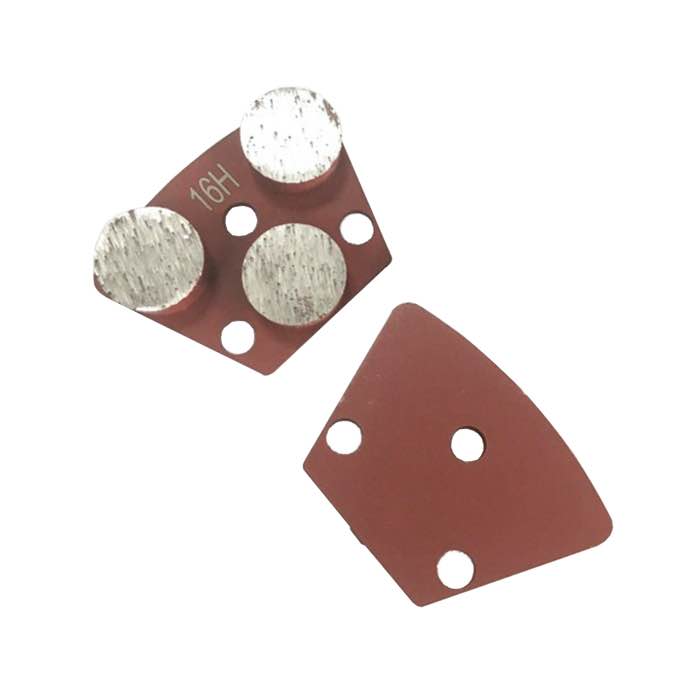
Dry grinding works best with diamond tooling designed for it, such as a JOY-TP-R3 triple-round-segment trapezoid disc, which clears chips without clogging. Pair a 230 mm single-head grinder with a 1,500 to 2,000 CFM HEPA vacuum, and a 600 mm ride-on grinder with a 4,000 to 5,000 CFM unit. If the vacuum undersizes, the bag blows and the room fills with dust within minutes.
Set up whichever method you choose in this order:
The deciding factor is often the next trade. If a coating contractor comes in the same day, dry grinding leaves the floor ready; wet grinding means waiting 24 to 72 hours for the slab to dry, which may push the whole schedule. On exterior slabs, patios, or driveway removals, wet grinding wins because dust control matters less and the slurry can run to a drain. On occupied interiors, hospitals, or food plants, dry extraction is the only realistic option.
Rule of thumb: the extractor should move about 1.5 to 2 CFM per millimeter of grinding width. A 280 mm single-head grinder wants a 500 CFM minimum; a 600 mm planetary grinder wants 3,500 CFM or more. Check the filter rating: HEPA H13 or H14 catches the respirable fraction; a shop vac without HEPA only catches the visible dust.
Wet grinding uses 2 to 4 liters per minute per grinding head, just enough to keep the tool flooded and the slurry soupy, not flooding the room. Too much water lifts paste and softens the surface; too little boils into steam and leaves a dust film. Plan a drain or a waste tote on site, because you cannot hose slurry into a storm drain.
A subtle mistake is switching methods mid-job. A floor ground partly wet and partly dry dries unevenly, and the patch lines show under sealer. Pick one method at the start of the job and stick to it across the whole area.
Wear a P100 half-mask even with engineering control, and keep the vacuum filter cleaned. Choose tooling matched to dry or wet use: dry bond discs run hotter and wear faster in water. Browse the full concrete grinding tooling category to compare bond hardness and segment shape.
If you are unsure which method fits your slab, coating, and local rules, describe the job through our contact page; we will recommend a shroud or water setup and a tooling bond that does the least damage to the slab.
Written and reviewed by JOY TECH — an SGS & BV audited, CE/RoHS certified diamond tools manufacturer founded in 2004, exporting to 50+ countries.
Our factory and QMS are audited by SGS and Bureau Veritas. Products meet CE/RoHS requirements and every piece is 100% inspected before packing.
Verified Certificates
