Average response time: under 24 hours
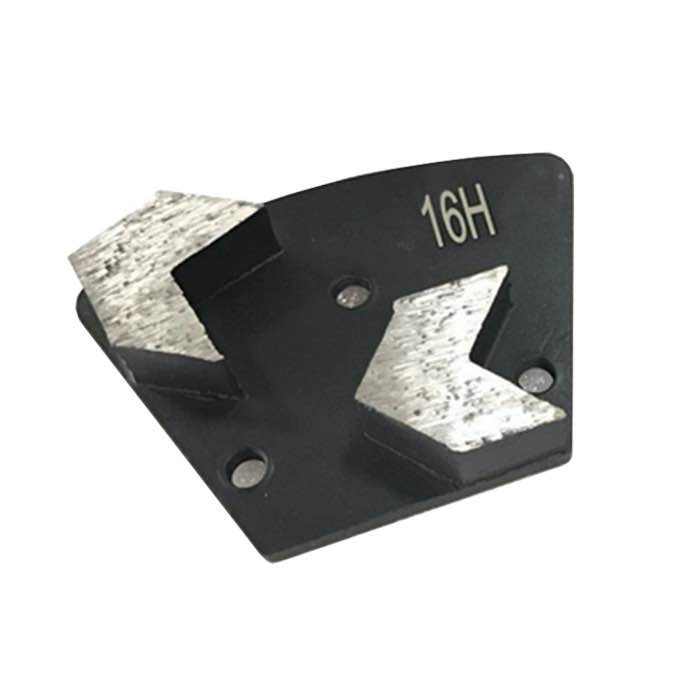
Yes, expansion joints can be ground flat for polished concrete — but only after they are properly cleaned, backer rod is set, and a compatible joint filler is installed. Never grind over old, loose joint filler or exposed backer rod: it pulls out, tears segments, and leaves the joint deeper than before. Fill and cure, then grind flush with a coarse metal disc before the polish sequence.
Coarse metal trapezoid discs handle the joint edge without chipping. Keep the machine moving across the joint — holding the disc on the joint line wears the center segments faster. A disc with a balanced segment pattern, like the Double Zigzag Segment Diamond Trapezoid Grinding Disc (JOY-TP-ZG2), spreads wear more evenly across the pass.
A: Edges chip and collect debris; the polish will not stay clean. Fill first, then grind the whole width.
A: Semi-rigid polyurea and cementitious fillers grind cleanly after full cure. Flexible sealants generally do not.
A: Only if you grind old filler, sand, or exposed backer rod. Clean joints cut fine with coarse metal.
A: Yes, same pass with the same disc keeps the joint flush with the slab instead of leaving a step.
Grinding expansion joints flat is standard practice for polished concrete when the joint is cleaned, filled, and cured first. Use coarse metal discs for the flush pass, then carry the full grit sequence across the joint. Tell JOY TECH your joint width and filler type for a disc recommendation that keeps the pass clean.
Written and reviewed by JOY TECH — an SGS & BV audited, CE/RoHS certified diamond tools manufacturer founded in 2004, exporting to 50+ countries.
Our factory and QMS are audited by SGS and Bureau Veritas. Products meet CE/RoHS requirements and every piece is 100% inspected before packing.
Verified Certificates
