Average response time: under 24 hours
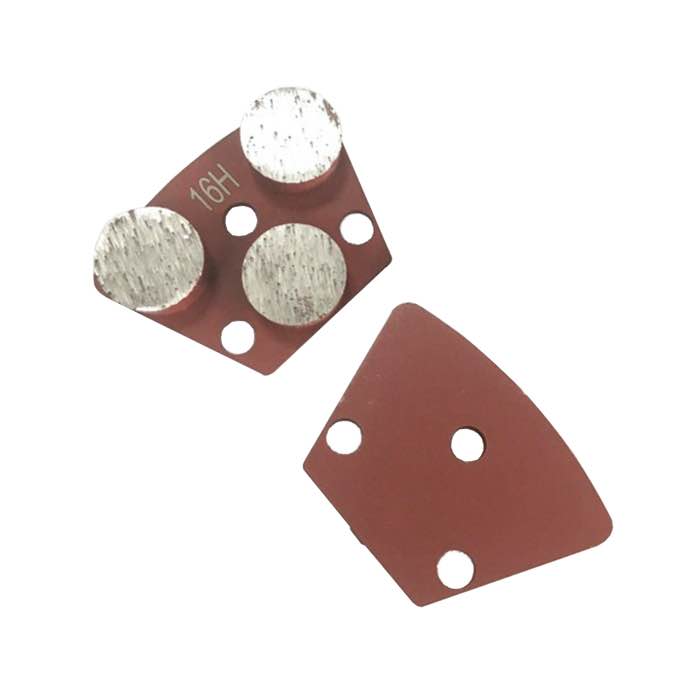
For hard concrete, use a soft (aggressive) bond at moderate speed so segments self-sharpen; for soft concrete, use a hard bond at slightly higher speed to avoid tearing and over-aggressive cut. Start coarse (30–60 grit), then progress through finer grits regardless of hardness.
| Concrete | Bond | Starting Grit | Speed |
|---|---|---|---|
| Hard / dense | Soft (aggressive) | 30–60 | Moderate, more torque |
| Medium | Medium | 40–80 | Normal |
| Soft / porous | Hard | 60–120 | Slightly higher |
A: A medium bond works as a compromise, but switching bonds for each slab type gives the best speed and cost per m².
A: Yes. Wet grinding cools and can slow bond erosion on soft concrete; adjust grit progress accordingly.
A: Move up when the previous grit's scratch pattern is uniform and no deeper scratches remain.
Hard and soft concrete need different bonds and speeds — that is normal, not a tooling fault. Choose tooling that lets you switch bonds easily, like the Diamond Trapezoid Grinding Disc (JOY-TP-R3) or the Single Rhombus Segment Trapezoid Grinding Disc (JOY-TP-RH1), and adjust on site based on wear.
Written and reviewed by JOY TECH — an SGS & BV audited, CE/RoHS certified diamond tools manufacturer founded in 2004, exporting to 50+ countries.
Our factory and QMS are audited by SGS and Bureau Veritas. Products meet CE/RoHS requirements and every piece is 100% inspected before packing.
Verified Certificates
