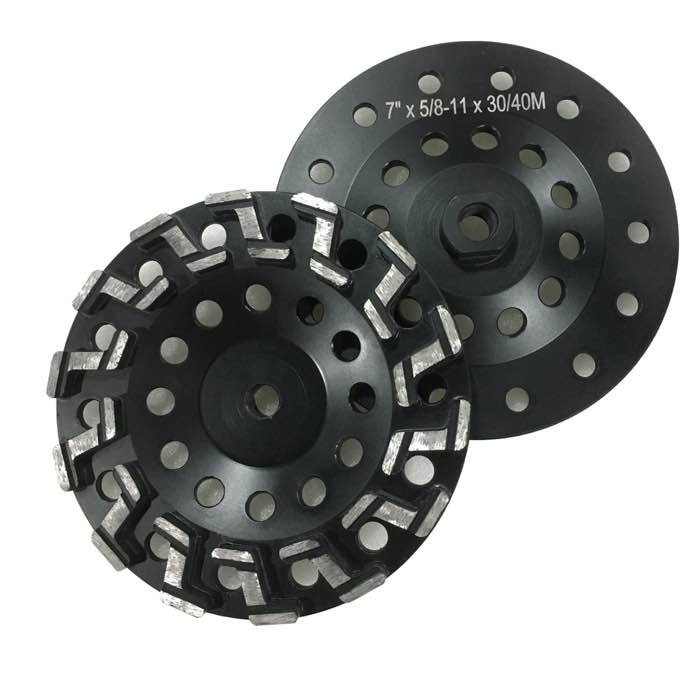
Yes — grinding can refresh an old, weathered concrete driveway by removing the thin, crumbly surface layer and revealing sound concrete underneath. It fixes rough, chalky, stained and slightly uneven surfaces. It cannot repair structural cracks, large spalls, or settled sections — those need patching or replacement. Expect to remove 1-2 mm and then seal.
If the driveway has active cracks wider than 3 mm, delaminating slabs, or settled sections, grinding will leave a visible mess. Grind off loose material first, then fill cracks with flexible concrete caulk and spalls with repair mortar before final grinding.
Use a heavy planetary disc such as an EDCO 10-inch disc for open driveways.
Bare ground concrete weathers again within a year. After grinding, apply a breathable silane/siloxane sealer. It darkens slightly, blocks water, and prevents new freeze-thaw spalling.
Old driveways often have cracks and settled sections. Grind off loose edges first, undercut cracks slightly, and fill with a flexible concrete caulk. Spalls deeper than a few millimeters need a repair mortar. Grinding over a crack just opens it wider. Fix the structure, then refresh the surface.
Use a breathable silane/siloxane sealer, not a film-forming epoxy that delaminates outdoors. It darkens the concrete slightly, repels water, and prevents freeze-thaw scaling. Reapply every 3-5 years. Avoid glossy sealers outdoors — they are slippery when wet.
Grind evenly to preserve the driveway slope. Do not dwell on expansion joints; keep them clean and re-caulk if needed. After grinding, water should run off toward the street, not pool in front of the garage.
After grinding and sealing, keep joints clean and re-caulk when flexible. Avoid de-icing salts on the driveway where possible; they accelerate scaling. Reapply sealer every 3-5 years.
If the driveway is spalling across large areas, settled, or has multiple cracks wider than a quarter, grinding is a band-aid. Budget for replacement instead. Grinding refreshes sound concrete, not damaged structure.
Grind a 1 m² hidden patch first. Let it dry and look at it the next day. If the surface looks sound and even, proceed. If it crumbles, the slab is too far gone.
A driveway is a big open area. Renting a heavy grinder is worthwhile; hand angle grinding takes forever. Pros do this in a day.
Pressure-wash and let dry. Grind 30/46 metal across and along the driveway with a walk-behind grinder. Edges by hand. Move to 80 grit. Clean. Fill cracks. Apply penetrating sealer. Block traffic for 24 hours. Expect one to two days for a two-car driveway.
Rental plus discs plus sealer is a fraction of resurfacing. If the driveway is structurally sound, grinding and sealing buys another decade.
A sound old driveway can be refreshed by grinding and sealing, but a damaged one needs replacement. Test a patch first, fix cracks, and seal for the next decade.
Grinding does not make an old driveway look new — it makes it look clean, even and refreshed. Set that expectation with photos and a sample patch.
After sealing, keep the driveway clear for 24 hours. Plan the job for a dry stretch of weather.
If large sections are settled, hollow, or cracked across joints, grinding is a band-aid. Budget for replacement. Grinding restores sound concrete; it cannot rescue a failing slab.
Call a local paving contractor for an honest assessment before you spend money on tooling.
A: Stop at 80-150 grit for a textured, slip-resistant finish; do not polish outdoors.
Usually 1-2 mm. Do not grind deeper on thin driveways or near edges.
Surface oil can be ground off; deep oil-soaked concrete must be cut out or sealed with an oil primer.
Grinding + sealing is a fraction of a resurfacing overlay, but only on structurally sound slabs.
A sound old driveway gets a new lease on life from a light grind and sealer. Fix cracks first. Contact JOY TECH for aggressive discs and cup wheels for driveway refresh.
