Average response time: under 24 hours
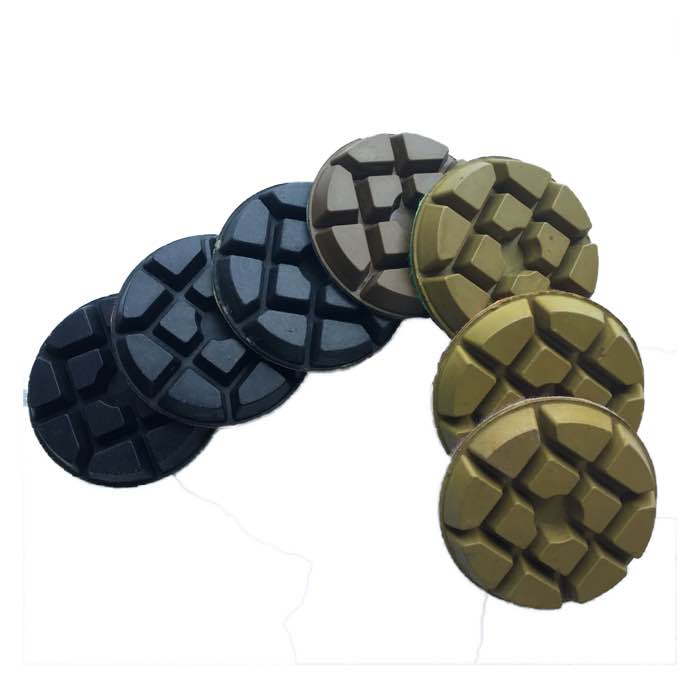
Most densifiers need 1 to 4 hours to dry and react before you continue polishing, and some manufacturers recommend waiting up to 24 hours for the chemical reaction to complete. The practical rule is: apply the densifier after the floor is ground to the final grit you plan to densify at, let it dry to the touch and react, then continue with light passes to work it in. Follow the product data sheet, because cure time changes with temperature, humidity and the floor's porosity. For the right tooling on this job, see resin polishing pads, floor polishing pads.
A densifier is a silicate or siliconate liquid that penetrates the concrete and reacts with free lime to form a harder, denser surface. It reduces dusting, strengthens the floor and prepares it for the final polishing steps. Because it is a chemical reaction rather than a drying process, the product needs both time to penetrate and time to react. Polishing too early washes the densifier out of the pores; polishing too late risks a hard, glassy surface that is hard to polish evenly. Related tooling is available in our 8-triangle resin pads range.
Apply the densifier after grinding and before the fine resin steps. A common sequence is: grind to 200 grit, apply densifier, let it cure, then continue with resin pads from 400 grit upward. Some systems apply densifier in two coats or at an earlier grit. The key is that the floor must be clean, dry and dust-free before application, and you must not grind heavily after applying it, because heavy grinding removes the densified layer you just created.
If you must finish the floor the same day, work the densifier in with light passes at low speed after it dries, and avoid water until the product has reacted. Never apply water-based densifier to a wet floor.
Heat accelerates the reaction and evaporation: in summer, a densifier can dry in 30 minutes and be ready in an hour. Cold slows everything down, and high humidity keeps the surface damp and delays penetration. Below about 10°C, some densifiers stop reacting properly. If the floor is cold or humid, extend the cure time, warm the space if possible, and test the surface: it should feel dry and slightly chalky before you continue polishing.
A: You can work it in with light passes as soon as it is dry to the touch, but heavy polishing before the reaction completes will remove the densifier. Give it at least an hour, longer if the label says so.
A: The densifier gets squeezed out of the pores and spread around instead of bonding, leaving a blotchy, under-densified floor that polishes unevenly and may dust later.
A: Not always. Densified polished concrete is sealed by the polishing process for many floors. Use a sealer only where stain protection or extra gloss is required, after the densifier has fully cured.
Densifier timing is simple once you understand it: apply on a clean, dry, ground floor, wait for it to dry and react, then polish lightly. Give it 1 to 4 hours in normal conditions, longer in cold or humidity, and always follow the product sheet. Get the timing right and the floor densifies evenly, polishes faster and stays dust-free for years.
Written and reviewed by JOY TECH — an SGS & BV audited, CE/RoHS certified diamond tools manufacturer founded in 2004, exporting to 50+ countries.
Our factory and QMS are audited by SGS and Bureau Veritas. Products meet CE/RoHS requirements and every piece is 100% inspected before packing.
Verified Certificates
