Average response time: under 24 hours
New concrete must cure 28 days before polishing is ideal; once polished and sealed, you can walk on the floor in light socks after the sealer is dry to the touch, usually 2-4 hours, and restore normal traffic after 24-48 hours depending on the sealer. Heavier loads and furniture can return sooner if the polish is not sealed, but sealing adds its own cure window. The exact time is set by the sealer manufacturer's label, not by general rules.
Polishing new concrete too early is the most common mistake. Fresh concrete needs about 28 days of cure to reach the hardness and uniform density that polishing requires; polishing a young slab pulls fines and creates a blotchy finish. In a pinch, densifier-based systems can be started after about 7 days on some mixes, but the gloss and colour uniformity will not be as good. If the slab must be used before 28 days, protect it with a curing compound and postpone the final polish stages.
Without a sealer, you can walk on a polished concrete floor almost immediately after the final buffing pass, as long as the floor is dry and the pads left no residue. With a sealer, wait until the coating is dry to the touch: water-based sealers often reach touch-dry in 2-4 hours, solvent-based in 1-2 hours, and two-part coatings can take longer. Light foot traffic in clean footwear is usually fine after touch-dry; heavy traffic, chairs, and equipment should wait until the sealer reaches full hardness.
| Stage | Typical wait |
|---|---|
| Walk after final buff (unsealed) | Immediately, when dry |
| Touch-dry after sealer | 2-4 hours |
| Light foot traffic | 4-12 hours |
| Furniture / light equipment | 24-48 hours |
| Full cure, heavy traffic | 3-7 days |
Sealer cure time depends on chemistry and film build. Water-based acrylics cure in about 24-48 hours for light service and up to a week for full hardness. Penetrating sealers and densifiers have little or no film, so traffic can resume as soon as the surface is dry, often 1-2 hours. Two-part polyurethane and epoxy coatings need 3-7 days for full cure and chemical resistance. Read the label: the manufacturer's numbers govern, and cool or humid conditions stretch every window.
Temperature is the biggest factor. Below 15 °C, sealers and adhesives cure much slower; below 5 °C many stop curing. High humidity slows solvent evaporation and water-based cure. Good airflow speeds drying but can cause skinning on some coatings. Direct sun heats the surface and accelerates cure but may cause uneven film. Ventilation, fans, and dehumidifiers help when the schedule is tight, but do not force-dry with heat guns, which can blister the coating.
Keep the floor clean during the cure window: lay protective film or ram board on traffic paths, tape the seams, and do not drag furniture or ladders across the fresh sealer. Mark the area with signs until the floor reaches full service. If the sealer gets marked during cure, wait for full hardness and buff the marks out with a diamond resin polishing pad, then re-coat the affected area. Removing protection too early is the most common cause of rework.
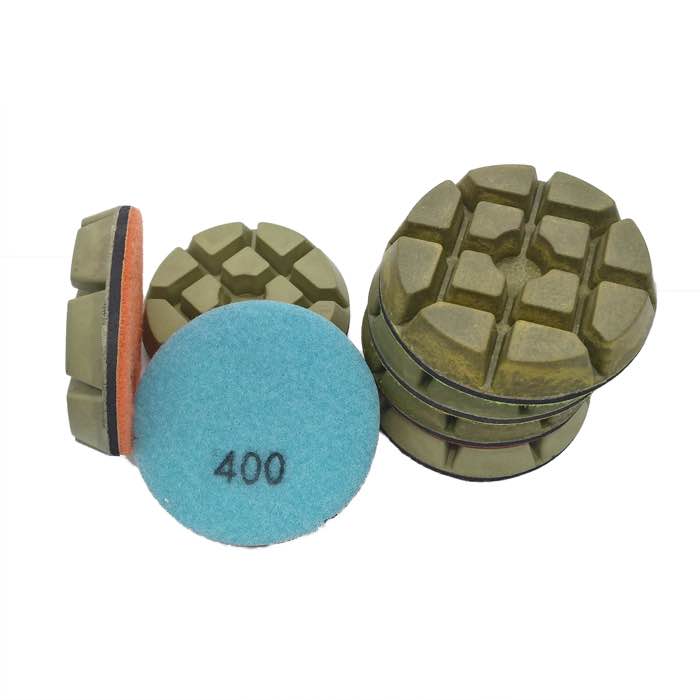
For an even gloss, work through diamond resin polishing pads in the correct grit sequence.
Keep resin floor polishing pads on hand so the finish stages of the floor stay consistent.
Written and reviewed by JOY TECH — an SGS & BV audited, CE/RoHS certified diamond tools manufacturer founded in 2004, exporting to 50+ countries.
Our factory and QMS are audited by SGS and Bureau Veritas. Products meet CE/RoHS requirements and every piece is 100% inspected before packing.
Verified Certificates
