Average response time: under 24 hours
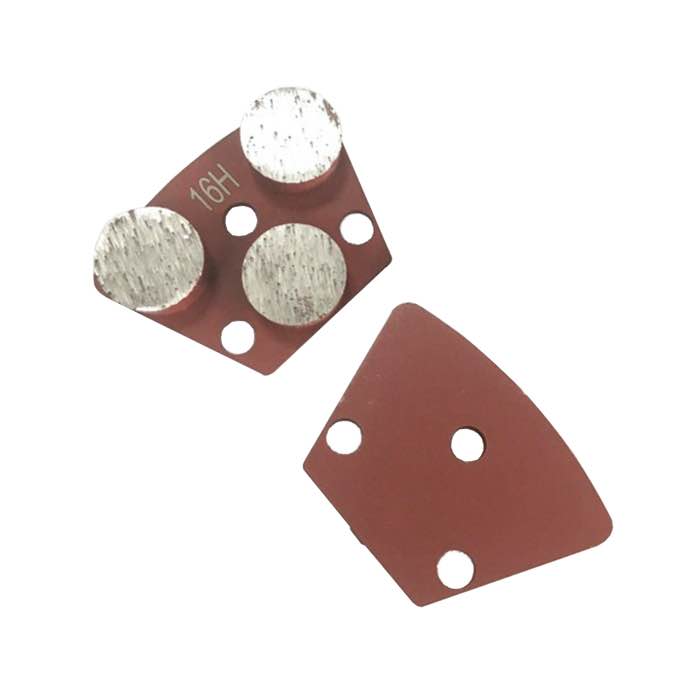
Quick Answer: A walk-behind concrete grinder with PCD tooling removes roughly 3 to 6 mm of coating or 1 to 3 mm of concrete across 15 to 30 square metres per hour; a hand-held angle grinder with a cup wheel covers. turbo cup wheel 2 to 5 square metres per hour at similar removal. The real answer depends on machine power, tooling bond, concrete hardness, and how deep you need to go.
Three factors dominate: the tool bond, the machine weight, and the concrete hardness. PCD tooling cuts fast through coatings and soft paste, metal bond removes concrete in shallow increments, and a heavy machine with high horsepower removes more per pass than a light one. Soft, freshly placed concrete grinds faster than hard, old, aggregate-rich slabs, and a single-disc machine will always be slower than a three-head planetary grinder.
PCD tooling on a 5 to 7 kW floor machine strips 100 to 200 square metres per hour of thin paint or glue, dropping to 30 to 60 square metres when the material is thick. Metal bond discs remove 1 to 2 mm per pass across 30 to 50 square metres per hour at coarse grit. An angle grinder with a double-row cup wheel manages 2 to 5 square metres per hour for patching and edge work, while a PCD cup wheel removes coatings noticeably faster on the same machine.
Multiply the floor area by the average removal depth, then divide by the machine's effective rate. A 100 square metre floor needing 2 mm of concrete removal at 40 square metres per hour with metal bond takes about 2.5 hours of grinding plus vacuum and setup time. Add 20 to 30 percent for edges, columns, and pattern changes. Track the first hour on site, then adjust the estimate from what the machine actually delivered on that slab.
Use the coarsest tooling the surface tolerates, keep the machine speed and pressure steady, and do not dwell. Step down grits only when the surface needs it. On hard concrete, coarser segments cut faster than finer ones; on soft concrete, finer segments avoid over-removal and glazing. Let the tooling cool between passes and replace worn segments before they glaze, since a dull tool cuts at a fraction of its fresh rate.
Usually the tool bond is too fine for the concrete, the machine is too light, the segments are glazed, or you are grinding dry on a surface that needs a coarser pass. Change the tooling or step up a grit before blaming the machine.
Coarse metal bond typically removes 0.5 to 2 mm per pass depending on pressure and machine weight. Plan multiple passes for deeper removal and check with a straightedge between passes.
Match the removal rate expectation to the tool: PCD for coatings, metal bond for concrete, and cup wheels for patches. Use the coarsest effective tooling, steady pressure, and fresh segments, and your square-metre-per-hour number will stay close to the machine's rated capacity.
Written and reviewed by JOY TECH — an SGS & BV audited, CE/RoHS certified diamond tools manufacturer founded in 2004, exporting to 50+ countries.
Our factory and QMS are audited by SGS and Bureau Veritas. Products meet CE/RoHS requirements and every piece is 100% inspected before packing.
Verified Certificates
