Average response time: under 24 hours
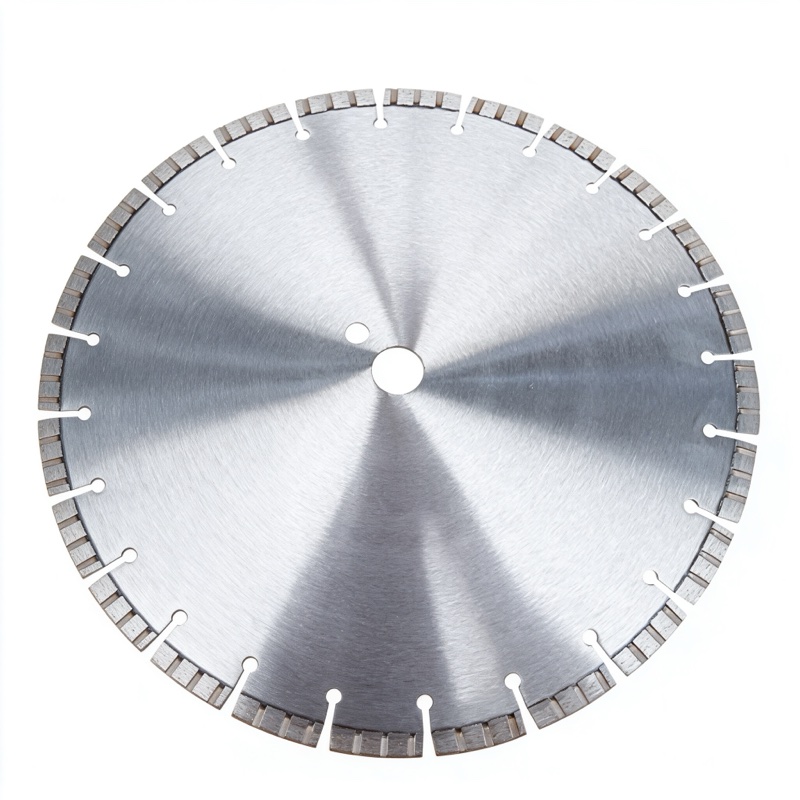
Quick Answer: For concrete with rebar, use a laser-welded segmented blade with a hard bond, and cut in light, continuous passes at the saw's rated speed. Choose the blade size that reaches the full depth you need, and let the diamonds do the work instead of forcing the cut.
Rebar is steel, and steel cuts differently than concrete. A blade that is soft-bonded for abrasive concrete will wear out quickly when it hits steel. A hard-bonded segment holds its diamonds longer, so it survives the impact of rebar without shedding grit.
This is why standard green concrete blades struggle on reinforced slabs: they are designed for fast abrasive wear, not for steel. If your job regularly hits rebar, start with a segment rim designed for mixed cutting.
Segmented rims provide the gullet space for slurry and swarf to clear, which keeps the blade cool when steel creates extra friction. Turbo rims cut fast but run hotter on rebar. For reinforced concrete, most contractors choose segmented over turbo.
Make sure the blade is laser-welded rather than sintered or brazed. Laser welding keeps the segments attached under the shock load of hitting steel bars. A blade that sheds a segment mid-cut is a safety hazard, not just a performance issue.
Blade size matters for depth. A 14-inch blade reaches roughly 5 inches deep, and an 18-inch blade reaches about 6.5 inches. Measure the thickest section of concrete plus rebar cover before you choose. For most slab work, the diamond saw blade range covers diameters from 14 to 20 inches.
For occasional rebar encounters on a wall or pavement, a laser-welded concrete and asphalt blade handles mixed cutting without switching tools.
It can cut light mesh and occasional bars, but it will wear much faster and may lose segments. A blade rated for mixed cutting is safer and lasts longer.
Not for light mesh. For structural rebar in slabs and foundations, choose a laser-welded segmented blade with a hard bond.
Steel creates sparks under a fast diamond blade. This is normal, but heavy sparking usually means you are feeding too hard or the blade is not designed for steel.
Match the rim, the bond, and the size to the concrete and the rebar in it, cut with water, and feed gently. That combination keeps your cutting tools productive and your cuts clean on every reinforced slab.
Written and reviewed by JOY TECH — an SGS & BV audited, CE/RoHS certified diamond tools manufacturer founded in 2004, exporting to 50+ countries.
Our factory and QMS are audited by SGS and Bureau Veritas. Products meet CE/RoHS requirements and every piece is 100% inspected before packing.
Verified Certificates
