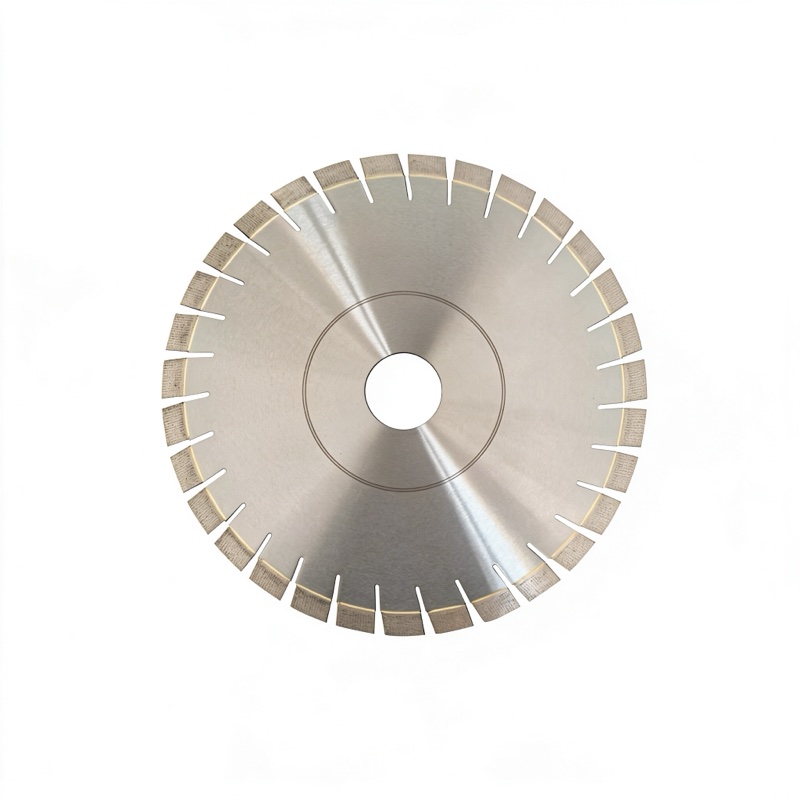
Match three things when choosing a blade: segment type and bond for the material (granite, marble, concrete, asphalt, tile), and diameter for your machine's max RPM. Hard materials need hard bonds with sharp segments; soft or abrasive materials need softer bonds so the blade keeps cutting.
| Material | Recommended Blade | Key Feature |
|---|---|---|
| Marble / limestone | Straight-slot or continuous rim | Smooth, chip-free cut |
| Granite / quartz | Long-segment, hard bond | Long life, fast cut |
| Concrete / asphalt | Laser-welded, reinforced | Survives rebar and abrasive wear |
| Tile / ceramic | Diamond rim or ultra-thin | Precision, no chipping |
A: Not well. A universal blade works in a pinch, but dedicated blades cut faster and last longer on each material.
A: Check the machine's maximum blade diameter and RPM rating — never fit a blade larger than specified.
A: It damps vibration and noise, which improves cutting control and operator comfort on large-diameter work.
Choose by material first, then bond, then size. For stone work, try the Marble Saw Blade (Straight Slot) — JOY-MS-ST for marble or the Granite Saw Blade (Long Segment) — JOY-GR-L for granite; for concrete and asphalt, the Concrete and Asphalt Saw Blade (Laser Welded) — JOY-CA-LW is built for it.
