Average response time: under 24 hours
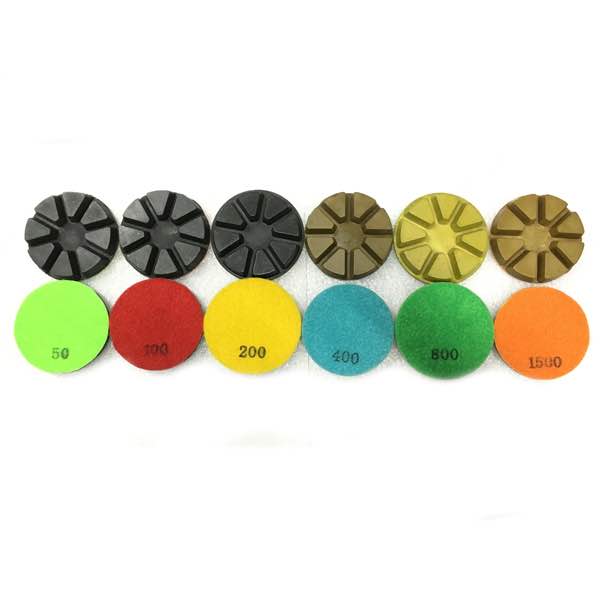
For a warehouse, satin (800 grit) is the best balance: it hides scratches and tire marks far better than gloss while still looking professional. Matte (400) hides even more but looks plain; gloss (1500-3000) is beautiful in showrooms but shows every scratch on a busy floor.
| Finish | Final grit | Gloss level | Scratch hiding |
|---|---|---|---|
| Matte | 400 | Low | Excellent |
| Satin | 800 | Medium | Good |
| Gloss | 1500-3000 | High | Poor |
A glossy floor acts like a mirror: every micro-scratch catches light and becomes a visible line. Satin and matte scatter light instead, so minor wear simply doesn't show. That's why heavy-traffic spaces choose satin even though gloss photographs better.
Work through resin polishing pads from the grit range matched to your target finish.
A: Yes — satin needs a damp mop and an occasional burnish; gloss needs regular burnishing to hide wear.
A: Yes — re-polish with 800 grit to drop the gloss, no grinding needed.
A: Usually the final pass at 800 grit, sometimes 600-1000 depending on the pad brand.
A: Yes — densifier deepens color and gloss; apply it before the 800-3000 steps for richer satin and gloss.
Pick the finish by how the floor will be used, not by looks alone: satin 800 for warehouses, matte 400 for garages, gloss 1500-3000 for showrooms. Our triangle resin pads and burnishing pads cover every finish level.
