Average response time: under 24 hours
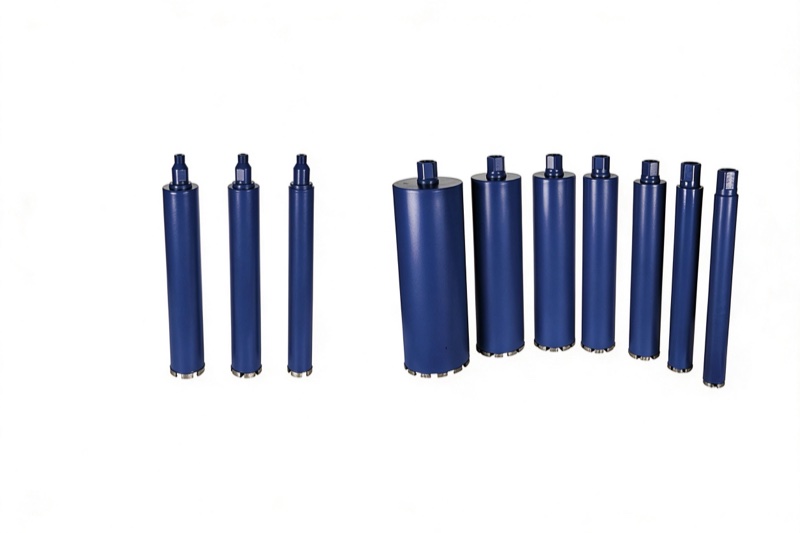
Match the bond to the concrete: use a soft bond core bit for hard, dense concrete (high-strength, low-slump, or hard aggregate) and a hard bond bit for soft, abrasive concrete (old, porous, block, or asphalt). Soft bonds expose fresh diamond faster on hard material; hard bonds hold the segment together through abrasive material. A bit chosen with the wrong bond glazes, overheats, or wears out in just a handful of holes.
The bond is the metal powder matrix (usually bronze-based) that holds the synthetic diamond crystals inside each segment. During drilling, the matrix erodes at a controlled rate, exposing new sharp diamonds as the old ones dull. If the matrix wears too slowly, used diamonds stay locked in and the bit stops cutting — this is called glazing. If the matrix wears too fast, segments disappear before the diamonds are fully used and the bit becomes uneconomical.
| Material | Recommended bond | Typical use |
|---|---|---|
| High-strength reinforced concrete (C40+) | Soft | Columns, bridge decks, heavy slabs |
| General reinforced slab (C25–C35) | Medium | Floors, walls, footings |
| Old porous concrete / block | Hard | Renovation, masonry walls |
| Asphalt / tarmac | Hard, wide segment | Roadwork, markings |
| Hard aggregate (flint, chert) | Soft–medium | Aggressive diamond concentration |
For reinforced work with frequent rebar, start with a wet, laser-welded bit such as the Diamond Core Drill Bit (Wet) — JOY-DCB-W; the cooling water keeps the bond working on dense, steel-laced concrete. For indoor dry jobs, a Diamond Dry Core Bit — JOY-DDC with a hard bond is the practical choice.
Not economically. A universal medium-bond bit works acceptably on ordinary slab, but it will glaze on hard high-strength concrete and wear fast on old block. For fleets and rental yards, carrying soft / medium / hard versions of the same diameter — or stocking replaceable segments like the Diamond Segment for Core Drill — JOY-CDS — costs less than losing half a shift on a mis-matched bit.
A: Most house slabs and driveways are C20–C30 concrete with rounded aggregate. A medium-bond wet bit handles this well; move to hard bond if you hit old porous block or asphalt.
A: Rebar itself is cut by the diamond, not the bond. Frequent steel hits generate heat, so cool the bit with water and use a laser-welded segment; do not switch bond just because rebar is present.
A: Almost always the bond is too hard for the material, not a defect. Dress it with a concrete block, brick or dressing stone, then switch to a softer bond for the next job.
A: Yes. Hard natural stone behaves like hard concrete: soft bond and lower RPM are required to keep diamonds exposed. Use a stone hole saw rather than a core barrel for small diameters.
Bond matching is the single biggest lever after RPM and water feed for core-drill productivity. Test the material, pick soft for hard dense concrete, hard for soft abrasive block and asphalt, and keep a dressing stone on site. With the right bond, a core bit cuts cleanly and predictably from the first hole to the last.
Written and reviewed by JOY TECH — an SGS & BV audited, CE/RoHS certified diamond tools manufacturer founded in 2004, exporting to 50+ countries.
Our factory and QMS are audited by SGS and Bureau Veritas. Products meet CE/RoHS requirements and every piece is 100% inspected before packing.
Verified Certificates
