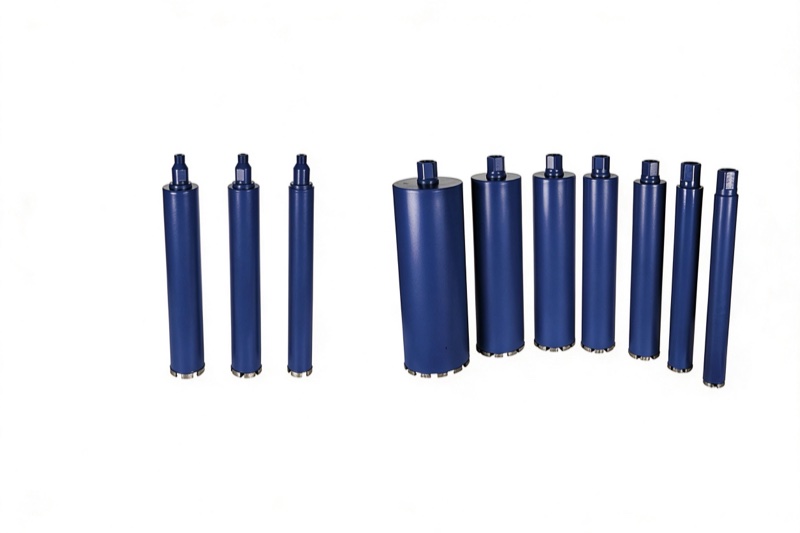
Choose a core bit diameter that is at least 10-15 mm larger than the outside diameter (OD) of the pipe or conduit passing through, so the pipe fits with clearance and a seal/sleeve can be installed. A 50 mm PVC pipe needs a 63-75 mm hole; a 100 mm waste pipe needs a 125 mm core bit. Always verify local code for sleeve and fire-stop requirements before drilling.
Our diamond core drill bits cover the common plumbing and electrical sizes. Use this table as a starting point:
| Pipe / conduit | Pipe OD | Suggested hole |
|---|---|---|
| 20 mm EMT conduit | 25 mm | 50 mm |
| 32 mm conduit | 42 mm | 63 mm |
| 50 mm PVC drain | 50 mm | 63-75 mm |
| 110 mm soil pipe | 110 mm | 125 mm |
| 150 mm storm pipe | 160 mm | 175 mm |
Fire-rated walls and floors require sleeves and intumescent seals, which add outer diameter. Size the hole for the sleeve, not just the pipe. When multiple conduits share a penetration, measure the bundle envelope and add 20 mm clearance rather than drilling several small holes.
Confirm wall or slab thickness and choose a core drill accessories extension if needed. A 150 mm bit will not core a 200 mm wall; extension rods add length but reduce rigidity, so for deep holes use a longer barrel rather than stacking extensions.
Use a detector to confirm no rebar or services lie in the path. Mark the center and scribe a circle equal to the bit OD. Starting the bit on a scribed circle prevents wandering before the pilot takes hold.
Before drilling, scan the wall or slab for rebar and conduits. A hole sized for a pipe still needs to avoid hidden steel. If your planned hole lands on a rebar grid, shift slightly rather than grinding through structural steel. Also account for the sleeve outer diameter: code often requires a pipe sleeve larger than the conduit itself.
Match bit length to wall thickness plus a margin. A bit that exactly equals wall thickness leaves you stuck halfway when you need to break through. Add extension rods only when necessary, because they flex and wander; prefer a longer single barrel for deep, straight holes.
When several conduits share one penetration, measure the whole bundle envelope plus 20 mm clearance rather than drilling separate small holes. It is cheaper, cleaner, and easier to fire-stop one large opening than many.
Size for pipe OD plus clearance, then add sleeve thicknesses. Oversize slightly; undersize means re-drilling.
| Service | Pipe OD | Hole to drill |
|---|---|---|
| 1/2 inch conduit | 20 mm | 50 mm |
| 3/4 inch conduit | 25 mm | 63 mm |
| 1.5 inch waste | 50 mm | 63-75 mm |
| 4 inch soil | 110 mm | 125 mm |
| 6 inch storm | 160 mm | 175 mm |
Always size for the sleeve and fire-stop, not just the bare pipe. When in doubt, drill slightly larger; filling an oversize hole is easier than re-drilling an undersized one.
Always scan the wall or slab with a rebar and conduit detector before marking holes. A hole that hits a live pipe or post-tension cable is a serious problem. Mark the center and a circle matching the bit OD so you can verify alignment before starting.
Mark the center and scribe the full hole circle on the wall before starting. A guide hole or starter notch prevents wandering. Scan first to avoid rebar and pipes in the planned hole.
Choose a bit longer than the wall plus margin. A bit exactly equal to wall thickness leaves you stuck halfway. Prefer a longer barrel over stacking extensions, which flex and wander.
Some codes require sleeves and fire-stop packs around pipe penetrations. Size the hole for the sleeve, not the bare pipe. Confirm local requirements before drilling.
When several conduits share one penetration, measure the whole bundle envelope plus 20 mm clearance rather than drilling several small holes. It is cheaper, cleaner, and easier to fire-stop one opening. Always scan first for rebar and existing services before marking the hole.
A: No. You need clearance to seat the pipe and fit seals; an exact hole forces the pipe and risks cracking around it.
A: A 40 mm waste typically needs a 63 mm hole to accommodate the trap and seal.
A: Yes, size to the insulated outer diameter plus clearance.
Size the hole to pipe OD plus clearance, then add sleeve and fire-stop thicknesses. Order core bits in the next standard diameter above your measurement. Contact JOY TECH for a full range of core bit diameters and extension accessories.
