Average response time: under 24 hours
For polished concrete, lithium-based densifiers are the better choice for shine: they penetrate deeper, harden faster, and react with the concrete to produce a harder, more polishable surface with less residue. Sodium (silicate) densifiers work and are cheaper, but they can leave a white efflorescence-like film if not rinsed properly and need longer curing before polishing.
| Property | Lithium | Sodium |
|---|---|---|
| Penetration depth | Deeper (reacts fully) | Shallow, surface-reactive |
| Curing time before polish | Hours – same day | 12–48 hours, needs rinsing |
| Gloss potential | Higher, easier to achieve | Good but slower to build |
| Residue / white film | Minimal | Common if over-applied |
| Cost | Higher | Lower |
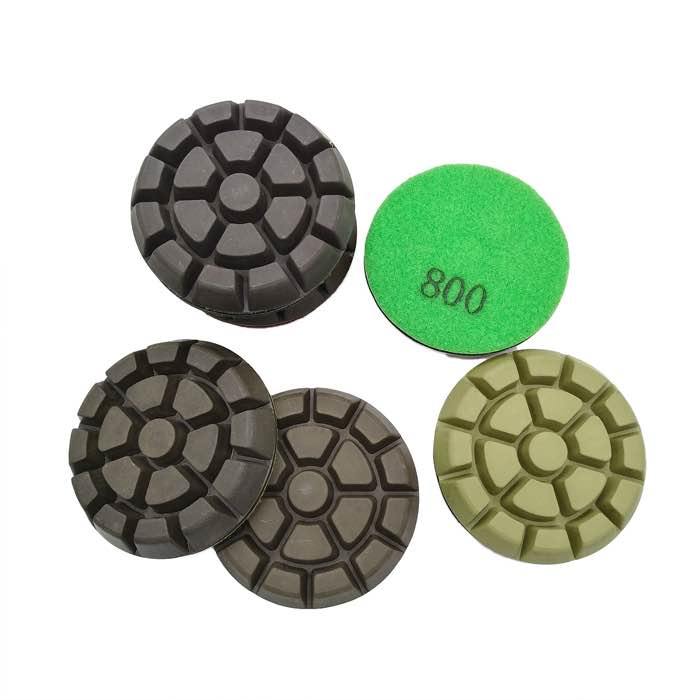
Apply the densifier evenly with a sprayer at 200–400 grit stage, spread with a microfiber or burnisher, and keep the surface wet for 20–30 minutes before letting it dry. Then continue the polishing sequence with diamond resin polishing pads from 400 up to 1500–3000. Finish with burnishing pads to lock in the gloss.
A: Apply after the 200–400 grit step, before the finer resin pads. That lets the densifier harden the surface that the fine grits then polish.
A: Yes, but lithium makes it easier. With sodium, rinse any residue off completely and wait for full cure before fine polishing.
A: Typically 0.1–0.2 L per m² for one coat, depending on porosity. Two light coats beat one heavy coat.
Lithium densifiers are the professional choice for glossy polished concrete — deeper reaction, faster cure, less residue. Apply at the 200–400 stage, then polish with resin pads and burnish to finish.
