Average response time: under 24 hours
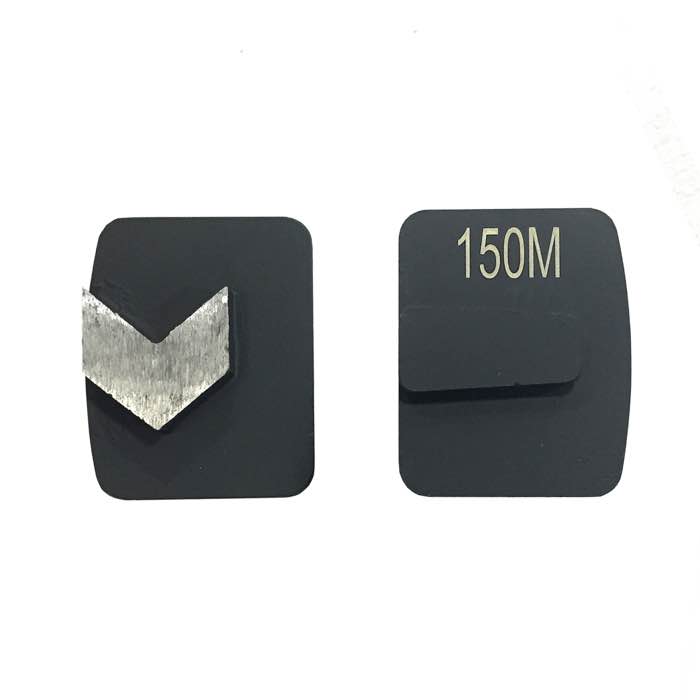
To know which diamond tools fit your grinder or saw, match three things: the mounting interface (arbor, thread or clamping plate), the machine's operating RPM against the tool's maximum speed, and the segment or bond design to the material and machine type. A floor grinder needs completely different tooling than a handheld angle grinder, even when both are grinding concrete.
The first check is mechanical: a tool that will not mount safely cannot be used, no matter how good its segment formula is. Handheld angle grinders usually accept cup wheels on an M14 or 5/8"-11 thread, with a backing flange that clamps the wheel flat. Floor grinders use quick-change systems instead: Velcro-style pods, magnetic plates, or bolt-on pucks with 10 mm or 16 mm hole patterns, and the pattern must match your machine's holder plate. Walk-behind and hand saws take blades on an arbor - commonly 25.4 mm (1 inch), 20 mm or 30 mm with reducing flanges - while core drill rigs normally use 1-1/4 inch UNC or M14 threads. A wobbling fit from the wrong arbor causes runout, vibration and premature segment loss, so confirm the interface and any required adapter before ordering.
The second check is speed. Every diamond tool is stamped with a maximum safe RPM, and your machine must run below that rating in normal use. The underlying physics is surface speed: diameter x RPM x 3.14 / 1000 gives cutting speed in meters per minute. Diamond saw blades typically want 60 to 80 m/s, and cup grinding wheels 60 to 90 m/s. Because surface speed rises with diameter, a small blade spins much faster than a large one: a 125 mm blade may be rated above 10,000 RPM while a 350 mm blade is rated around 5,000 RPM. Always compare the tool's stamped limit with your machine's no-load RPM, and remember that bigger blades on smaller saws are the most common way operators exceed a rating.
Once mounting and speed are safe, choose the tool design that matches how your machine actually works. The table below shows the standard pairing for the four most common machine families.
| Machine type | Typical speed range | Recommended tool | Segment or bond choice |
|---|---|---|---|
| Handheld angle grinder (100-125 mm) | ~10,000-11,000 RPM | Diamond cup wheel | Soft to medium bond for concrete; light stock removal only - heavy pressure overloads a small tool. |
| Walk-behind floor grinder (300-800 mm disc) | 1,500-3,500 RPM planetary | Grinding pucks or grinding blocks | Hard bond for soft, abrasive concrete; soft bond for hard troweled slabs. Grit 16-30 for coating removal, 60-120 for refinement. |
| Hand or walk-behind cutter saw (300-500 mm) | 3,000-5,000 RPM | Laser-welded diamond saw blade | Tall segmented rim for reinforced concrete; wet cutting strongly recommended to control dust and heat. |
| Core drill rig (18-300 mm diameter) | 500-1,500 RPM, geared down | Diamond core drill bit | Wet drilling with a bond matched to aggregate hardness; lower RPM for larger diameters. |
Grinding and cutting use the same diamond grit in different ways. A grinding tool wears by exposing fresh diamond points that micro-chip the surface, which is why floor prep operators often run diamond core drill bits and grinding pucks across the whole plate - the machine's own weight supplies the pressure. A cutting blade, by contrast, should never be forced: the segment enters the kerf and the saw feeds itself. Confusing the two shows up as burning segments on a forced cut or an overloaded cup wheel when pressed too hard. If your job is removing material off a flat floor, grinding tooling is faster and flatter; if you need a controlled groove or opening, cutting tooling is the right family.
A bore that is too loose lets the blade wobble, causing vibration, uneven segment wear and, in the worst case, segment loss. Use the correct reducing flange, never spacers or washers that are not designed for the spindle, and replace a blade that has run out of true.
Only if the mounting thread and the RPM rating match. Most floor grinding pucks are bolt-on systems that do not fit an angle grinder thread, and a wheel rated for a slow planetary head will shatter at angle-grinder speed.
As a rule, abrasive soft concrete wears the bond fast, so you need a hard bond that holds diamonds longer; hard, dense, troweled concrete glazes the bond, so you need a soft bond that exposes new diamonds. When the mix is unknown, start with a medium bond and adjust after the first 20 square meters.
Cutting core drilling is best done wet to control dust and extend tool life. Dry floor grinding is common indoors when a HEPA dust extractor is fitted to the machine; dry grinding without extraction is both a silica exposure risk and a way to burn the bond.
Choosing the right diamond tool comes down to three quick checks - mounting, speed and material match - and most tool failures trace back to skipping one of them. Once the concrete floor is open, the next step in the same workflow is refining the scratch pattern and polishing, where metal-bond grinding discs are followed by resin polishing pads. Browse the category pages on alzr.com to compare arbor, RPM and bond specifications against your own machine plate before you order.
Written and reviewed by JOY TECH — an SGS & BV audited, CE/RoHS certified diamond tools manufacturer founded in 2004, exporting to 50+ countries.
Our factory and QMS are audited by SGS and Bureau Veritas. Products meet CE/RoHS requirements and every piece is 100% inspected before packing.
Verified Certificates
