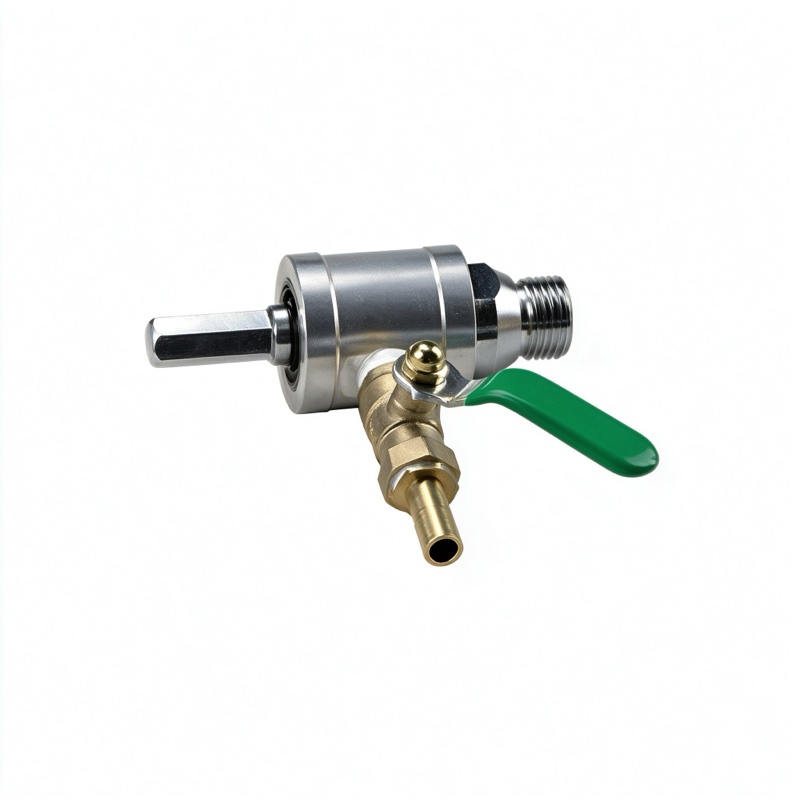
Rig-mounted coring on a concrete slab is done by anchoring the drill stand to the slab with an expansion bolt (or vacuum base on smooth surfaces), clamping the diamond core bit to the rig, feeding by a hand crank, and supplying cooling water through the bit. Use the stand for any hole over 80 mm diameter or deeper than 150 mm. Hand-held coring above that size is slow, inaccurate, and dangerous.
A core drill produces torque reaction that, on a 150 mm bit, can twist your wrist or yank the drill out of your hands. A stand:
| Method | Best surface | Pros | Cons |
|---|---|---|---|
| Expansion bolt (16 mm) | Any concrete slab | Rigid, works on rough floors | Leaves a small anchor hole |
| Vacuum base | Smooth, sealed slab | No anchor hole | Fails on rough/dusty concrete |
| Wet anchor adhesive | Thin slabs or old concrete | Strong, no blowout | Requires curing time |
Most rigs ship with a bolt anchor kit. Drill a 16 mm hole 60 mm deep next to the proposed core, insert the wedge anchor, and tighten. Position the column so the bit center lands exactly on your mark.
The golden rule: let the rig feed, not your arms. Turn the crank at a speed where the cut produces steady dark slurry, not dry dust or excessive spray. If the motor labors, back off. If the cut sounds idle, advance a little. A good operator can feel the right feed through the crank handle.
For deep holes, use extension rods. continuous threaded tube extensions are stiffer than coupled segments and keep the barrel concentric on long floor runs.
The anchor is the only thing between you and a spinning rig. For floor work, drill the anchor hole 60 mm deep, blow it clean, and set a wedge anchor with an impact wrench. Hand-tightening is not enough — the rig will walk mid-hole. For wall coring, use a vacuum base only on smooth, power-troweled surfaces with no dust. On rough walls, bolt through the wall or use a chemical anchor into a solid section. Never anchor into a hollow block; the wedge will pull out. After anchoring, give the column a firm sideways push before starting the drill. If it moves at all, reset it. A rig that shifts on the first hole will destroy the bit and possibly the operator.
With the rig anchored, lower the bit until it touches the slab. Start the drill at low speed, engage water, and feed the crank until the segments bite. Once the hole is open, turn the handle at a steady pace — about one revolution per two seconds. The slurry should look like thin chocolate milk; if it runs dry, increase water. When nearing the far face, slow the feed to let the core break out cleanly. After drilling, lift the bit while it still spins, then turn off water and motor. Blow the hole clear and inspect the finished edge. A properly rigmed hole will be straight, round, and smooth enough for a pipe sleeve with no patching.
A: On smooth, clean surfaces, a vacuum base can hold the rig. On rough or dusty slabs, always bolt — a shifting rig destroys the bit and can injure the operator.
With extension rods, 1–3 m is routine. Beyond that, use a track-mounted rig and schedule regular bit pulls to clear cuttings.
80–200 mm diameter: 600–900 RPM. 200–400 mm: 300–500 RPM. Above 400 mm: 200–300 RPM. Always check the bit label.
Yes for concrete. Dry slab coring overheats the bit and creates unsafe silica dust. Wet drilling is the standard on every commercial job.
A drill stand turns coring from a two-person brute-force task into a controlled, repeatable operation. Anchor it properly, feed the crank gently, and let water cool the bit. Contact JOY TECH for wet core bits, extension rods, and water valves matched to your rig.
