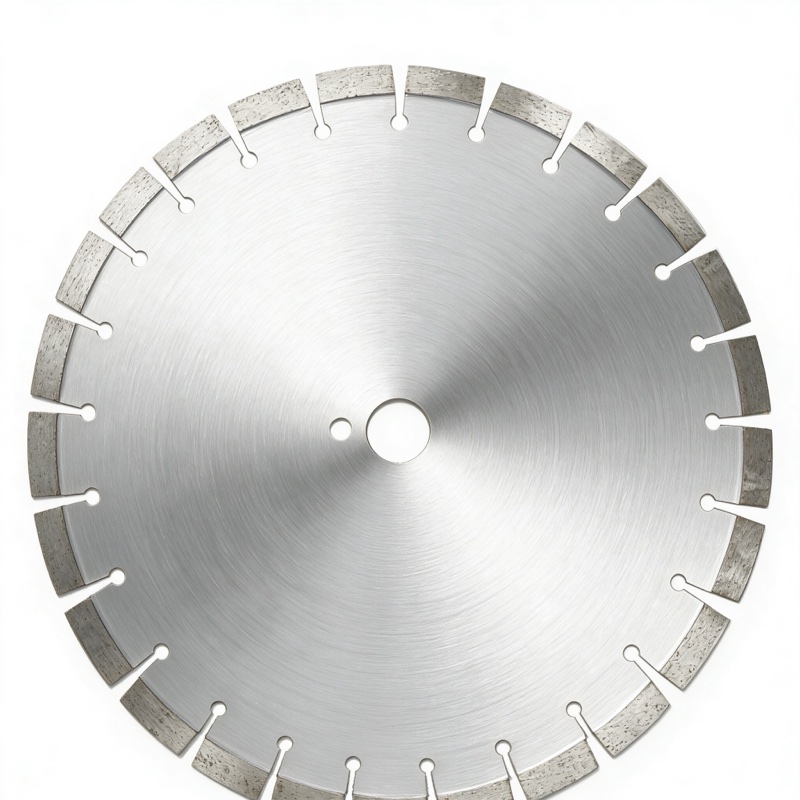
Use a laser-welded or high-frequency concrete saw blade sized to the channel width, and make two or more parallel passes with a floor saw to create a narrow trench. Cut to depth in 10–15mm increments, let water run for dust control, and switch to a rebar-cutting blade if you hit steel reinforcement.
Before cutting, mark the channel line, decide the width and depth, and check what is beneath the slab (pipes, cables, rebar). A typical drainage channel is 100–150mm wide and 50–100mm deep depending on the grate system you are installing. The blade diameter must be large enough to reach the required depth in one pass — a 350mm blade reaches roughly 120mm depth.
A Concrete and Asphalt Saw Blade (High Frequency Welded) is a reliable workhorse for slab trenching; for deep or reinforced slabs upgrade to the laser-welded version which tolerates rebar contact better.
A 300mm blade cuts about 100mm deep; a 350mm blade reaches roughly 120mm. Always confirm the maximum depth of cut printed on the blade.
Only for shallow channels. For depth over 30–40mm, incremental passes keep the blade cool and give you better control over cut quality.
Stop, switch to a rebar-capable laser-welded blade or cut the steel separately with an angle grinder and metal cutting disc. Forcing a masonry blade through steel can crack segments.
Score the outline cuts first at low feed speed, and finish the base with a diamond cup wheel. Chipping the edges with a hammer leaves an uneven seat for the drain.
Cutting a drainage channel in concrete is a two-step job: score the outline with the right concrete blade, then remove the center in controlled passes. Choose a laser-welded or HF-welded blade sized for your depth, cut wet, and handle rebar separately. JOY TECH's concrete blade range covers floor saws from 250mm to 600mm for channel work.
