Average response time: under 24 hours
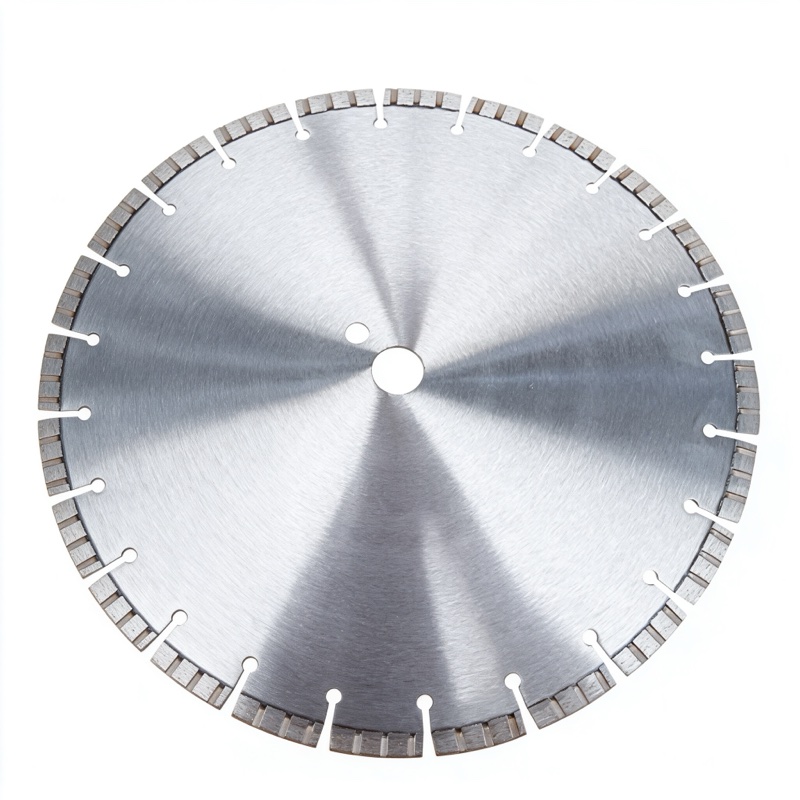
To cut a concrete slab safely, snap a chalk line, choose a walk-behind flat saw fitted with a laser-welded diamond blade sized to your depth target — such as the concrete-asphalt laser-welded blade — set the blade depth in 25-30 mm passes, run with water, and never force the saw. For a full-depth 200 mm slab, cut from both sides or use a 700-800 mm blade on a high-horsepower saw. Mark rebar with a scanner; hitting rebar at full speed can snap a segment. Wear hearing protection, eye protection, steel-caps, and avoid the saw's line of travel.
Handheld demo saws (300-450 mm blades) cut shallow openings, doorways, and 100-150 mm thick paths. Walk-behind flat saws (450-1000 mm blades, 13-27 HP) cut trenches, expansion joints, and full-depth slabs. Wall saws cut vertical openings in walls. Core drills cut round holes. Match the saw to the job: trying to cut a 250 mm slab with a 350 mm handheld saw is slow, dangerous, and burns the blade out.
| Job | Saw type | Blade dia. | Max depth |
|---|---|---|---|
| Control joints, 100-200 mm slab | Walk-behind flat saw | 350-450 mm | 120-160 mm |
| Deep trench, 250-300 mm slab | Heavy walk-behind | 600-800 mm | 240-320 mm |
| Doorway / opening, wall | Handheld cut-off | 300-450 mm | 100-160 mm |
| Round pipe hole | Diamond core drill | Bit dia. | Through |
For general concrete slab cutting, a laser-welded segmented blade is the default. The segments are 10-15 mm high, the weld is strong enough for high-horsepower saws, and the gullets clear chips. For reinforced concrete with heavy rebar, choose a blade with a softer bond and a slightly wider segment to cool faster. Our range of diamond saw blades covers 300-1000 mm. For dense, flinty aggregate, specify a hard-bond blade; for soft limestone, a soft-bond blade.
(1) Mark the cut line with chalk. (2) Run a rebar scanner along the line and mark any horizontal rebar. (3) Set up water: 5-10 L/min per blade, hoses secured away from the walking path. (4) Set blade depth to the first pass — 25-30 mm. (5) Start the saw, lower the blade gently into the cut, and walk at a steady pace. (6) After the first pass, raise the blade, reset to the next depth, and make a second pass. Most slabs need 3-4 passes to full depth. (7) Once cut through, break out the slab with a jackhammer or pry bar, staying outside the cut line.
Modern slabs are heavily reinforced. A rebar scan before cutting tells you where to slow down. When the blade hits rebar, the cut rate drops suddenly — keep the feed steady, do not force, and keep water on. If the blade grabs or chatters, back off. A segment lost at 4 000 RPM becomes a projectile. For very heavy rebar, a laser-welded blade with a soft bond and high diamond concentration is the right tool.
Concrete sawing is one of the most dangerous floor-trade jobs. Wear hearing protection (100+ dB), goggles, steel-caps, gloves, and a dust mask even with water. Keep bystanders 5 m back. Never stand in the saw's line of travel — if it binds, the saw can jump. Secure water hoses so they do not become trip hazards. When lifting the saw at the end of a cut, turn the blade off first. Use the saw's lift bail, not the engine.
Roughly 160-170 mm (one-third of blade diameter). For a 250 mm slab, you need a 700-800 mm blade, or cut from both sides and break out the middle.
Modern laser-welded blades are rated wet or dry. Wet cutting is preferred for dust control and blade life. Dry-cut blades are for outdoor emergency cuts; they cool by air and cannot be run wet.
Slow the feed and keep water flowing. Do not force through. If the blade chatters, back out and reposition. A well-made blade will cut through rebar, but it wears faster. Replace the blade when segments drop below 5 mm.
Control joints use a thinner-kerf blade (3-4 mm) for a clean, narrow groove. Full-depth demolition cuts use a standard kerf. Do not try to cut joints with a demolition blade — it will leave a wide, ragged slot.
Cutting a concrete slab with a diamond blade is straightforward when you match the saw and blade to the depth, respect rebar, run with water, and make multiple shallow passes instead of one deep cut. The right blade lasts hundreds of metres; the wrong technique burns it out in ten.
Written and reviewed by JOY TECH — an SGS & BV audited, CE/RoHS certified diamond tools manufacturer founded in 2004, exporting to 50+ countries.
Our factory and QMS are audited by SGS and Bureau Veritas. Products meet CE/RoHS requirements and every piece is 100% inspected before packing.
Verified Certificates
