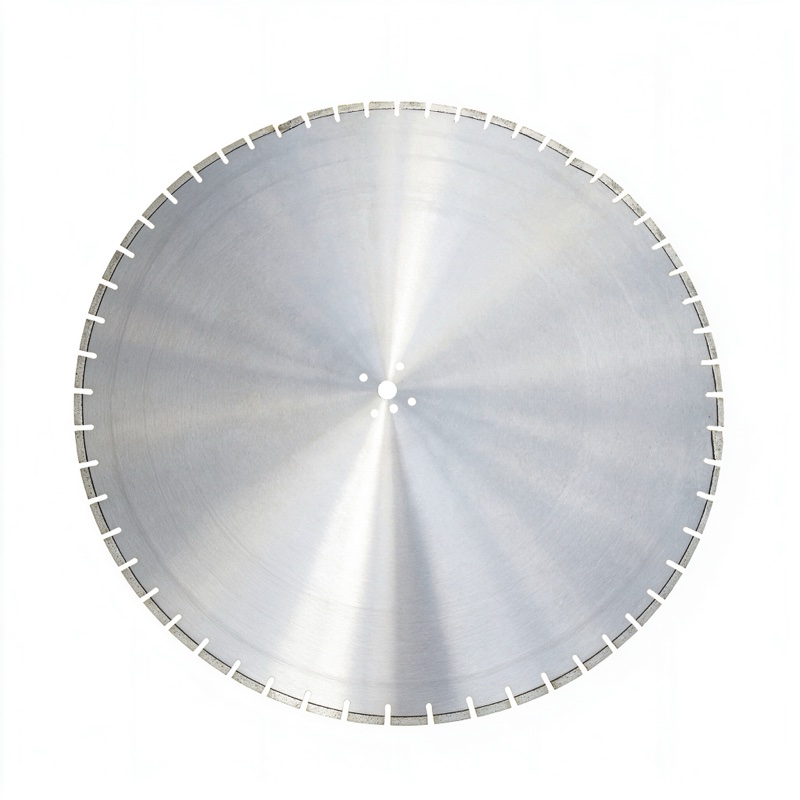
To cut asphalt cleanly, use a diamond blade with a soft metal bond and tall, wide segments, run it wet whenever possible, and cut about 50 mm deeper than the asphalt layer so you do not saw through aggregate base. Asphalt is soft and bituminous, so a hard-bond concrete blade will glaze quickly; a soft-bond asphalt or universal blade exposes fresh diamond grit at the right rate.
Asphalt is a blend of bitumen binder and stone aggregate. It cuts fast, but the oily binder packs into the gaps between diamonds and smothers them. A soft-bond blade wears back the matrix steadily, keeping new grit exposed. Our laser-welded concrete & asphalt blade is engineered for this dual duty, while the high-frequency welded version suits lighter walk-behind saws.
Mark the cut line with chalk or spray line. Set the saw depth about 50 mm below the asphalt surface so you fully sever the mat without wasting blade on base material. Start the cut at low speed, lower the guard, and feed at a steady pace. Do not drag the blade backward out of the cut; lift it clear. On long repairs, cut both sides and the ends of the patch before jackhammering out the removed section.
Wet cutting is recommended. Asphalt dust is fine and bituminous, and water suppresses it while cooling the blade. In winter or on patch jobs where water is impractical, dry cut with short passes and allow cooling intervals; expect shorter blade life.
Using a hard-bond concrete-only blade on asphalt is the number-one error; it glazes within minutes. Cutting too shallow leaves a ragged edge, and pushing the saw too fast causes segment chipping. If the blade wanders, check for a loose flange or warped blade.
On new asphalt, timing matters. Cut control joints too early and the raveling edge tears; wait too long and the pavement cracks randomly on its own. In warm weather this window is often within hours of rolling. Asphalt blades cut hot mat faster and cleaner than fully cured pavement, so crews move directly behind the paver when possible. For patch repairs, score the outline first so the removed section breaks out cleanly without chipping the surrounding mat.
It is worth understanding why a dedicated asphalt blade differs. Asphalt is softer, so the bond wears quickly; a hard concrete blade glazes. Conversely, cutting hard aggregate base or concrete with an asphalt-soft blade wears segments in minutes. If your crew switches between jobs daily, a universal blade compromises on both, but a dedicated asphalt blade pays for itself on volume road work.
For potholes and utility cuts, square the outline with straight saw lines before breaking out the asphalt. A clean sawed edge bonds far better to new hot-mix than a ragged broken edge. Cut about 50 mm beyond the damaged area on all sides, remove loose material, and the patch will not reflect cracks back through. On cold days, asphalt is stiffer and dulls the blade faster; slow the feed and expect shorter life.
Asphalt cutting rewards a soft-bond, tall-segment blade, wet operation, and clean sawed patch edges. Match the blade to hot-mix rather than forcing a concrete blade, and your pavement jobs will cut faster with fewer glaze-outs.
If the blade starts drifting, stop and check the guide and the flange; wandering is rarely the blade's fault alone. On cold mornings, let the saw warm up before the first cut, because cold asphalt is stiffer and loads the rim more.
A: Yes, a universal concrete-and-asphalt blade works on both, but for volume asphalt work a dedicated soft-bond blade lasts longer and cuts cleaner.
A: Depth is limited by blade diameter. A 350 mm blade cuts about 120 mm; for thicker pavements, cut from both sides or step down in passes.
A: The bond is too hard for the soft asphalt. Dress it on an abrasive concrete patch or switch to a softer bond blade.
Asphalt cutting rewards the right soft-bond, tall-segment blade, wet operation, and a steady feed. Match the blade to your saw diameter and horsepower, and patching, trenching, and joint-cutting jobs will go fast with clean edges. Contact JOY TECH for a quote on asphalt and all-purpose pavement blades.
