Average response time: under 24 hours
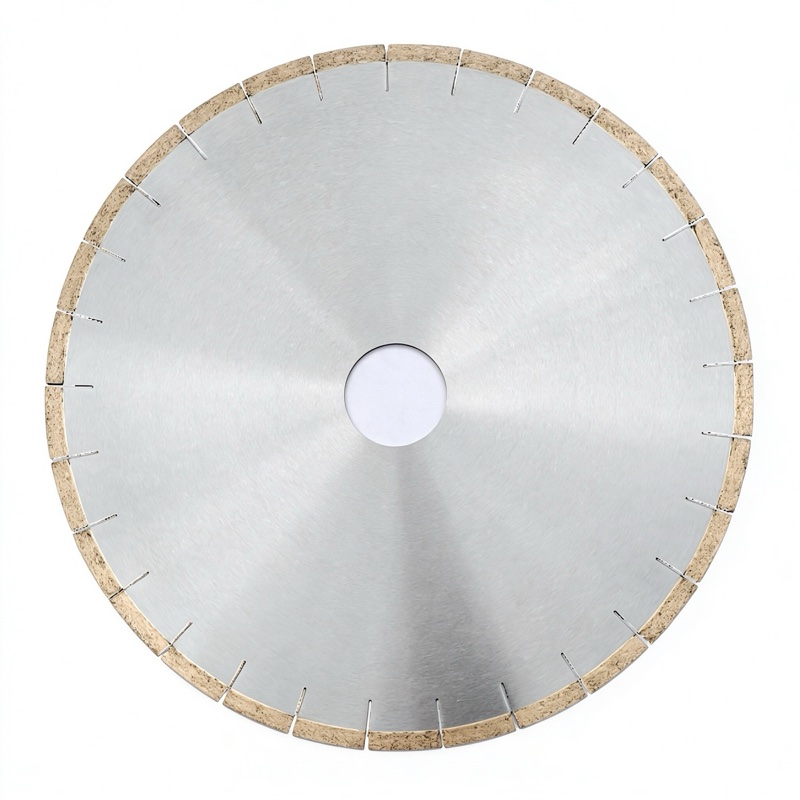
Cut brick and block with a 115-230 mm segmented diamond blade on an angle grinder or cut-off saw, cutting wet to control dust and extend blade life. Score both faces first, then cut through to depth. For fired clay brick, a continuous or turbo rim leaves a cleaner edge; for hollow concrete block, a segmented rim clears the web faster.
A segmented diamond blade has gaps between segments that eject slurry and air-cool the rim. It is the default choice for hollow concrete block, cinder block, and general brick. It cuts fast but leaves a slightly rough edge. Use a 115 mm blade on an angle grinder for single bricks, or a 230 mm blade for long wall cuts.
A turbo rim has a serrated, continuous diamond edge. It cuts fired clay brick, roof tile, and facing brick with less chipping than a segmented blade. It is slightly slower but produces an edge you can paint or render without dressing.
A continuous rim blade is designed for wet cutting of ceramic tile and thin brick. It produces the cleanest edge but must run wet; dry use glazes the rim quickly. Use it only when chipping is unacceptable, such as on face brick veneer.
Wet cutting is preferred on masonry. Water suppresses crystalline silica dust, cools the blade, and doubles or triples blade life on hard brick. Most hand-held cut-off saws accept a water hose; angle grinders can be fitted with a water feed accessory or simply sprayed periodically from a bottle.
Dry cutting is acceptable for short cuts on hollow block, where dust extraction or a P3 respirator controls exposure. Do not dry-cut fired clay brick for long periods; the rim overheats and diamonds pull out. If you must dry cut, let the blade air-cool every 30-40 seconds and never force it.
Clamp the brick or block on a workbench with the cut line overhanging the edge. Mark the line on the top and on the side face. Sight along the blade, not the guard, because the guard can flex.
Run the saw along the line at shallow depth (about 3 mm) on the top face. This creates a clean kerf that stops the blade from wandering. Flip the piece and score the opposite face. Scoring first is the single biggest trick for a clean cut; it prevents chipping at the exit side.
Lower the blade to full depth and follow the scored line. For hollow block, cut the top face, then the bottom web, then the two side webs. Do not twist the blade; let it cut straight through. If the block is thick, cut from both faces to meet in the middle.
As the cut finishes, the offcut will drop. Support it with your free hand or a spacer so it does not fall and chip the edge. Never hold the offcut in the same hand that guides the saw.
For a window or door opening, mark the rectangle on the wall. Drill a 10-12 mm pilot hole at each corner with a diamond bit. Start the saw in one corner, cut along the top line, then the sides, then the bottom. For a load-bearing wall, consult a structural engineer before removing any block; lintel size and rebar placement are critical.
If you cannot reach the middle of the opening from the outside, cut from both sides. Remove the cut-out section in chunks rather than trying to pull the whole panel free, which can break surrounding blocks.
Masonry dust is crystalline silica. Wear a P3 respirator, safety glasses, hearing protection, and cut-resistant gloves. Wet cutting makes slurry; lay a drop cloth and wear waterproof boots. A diamond blade on an angle grinder can shatter if bent, so never use a cracked blade and always run the guard in place.
After the job, flush the blade with clean water and wipe off slurry. Store blades flat and dry; electroplated rims rust quickly if left wet.
Written and reviewed by JOY TECH — an SGS & BV audited, CE/RoHS certified diamond tools manufacturer founded in 2004, exporting to 50+ countries.
Our factory and QMS are audited by SGS and Bureau Veritas. Products meet CE/RoHS requirements and every piece is 100% inspected before packing.
Verified Certificates
