Average response time: under 24 hours
Quick Answer: Mark the cut line, clamp the block so the waste side is free, and make a single steady pass with a sharp diamond blade at full speed. For clean edges, use a fine-rim blade and finish any rough spots with a rubbing stone.
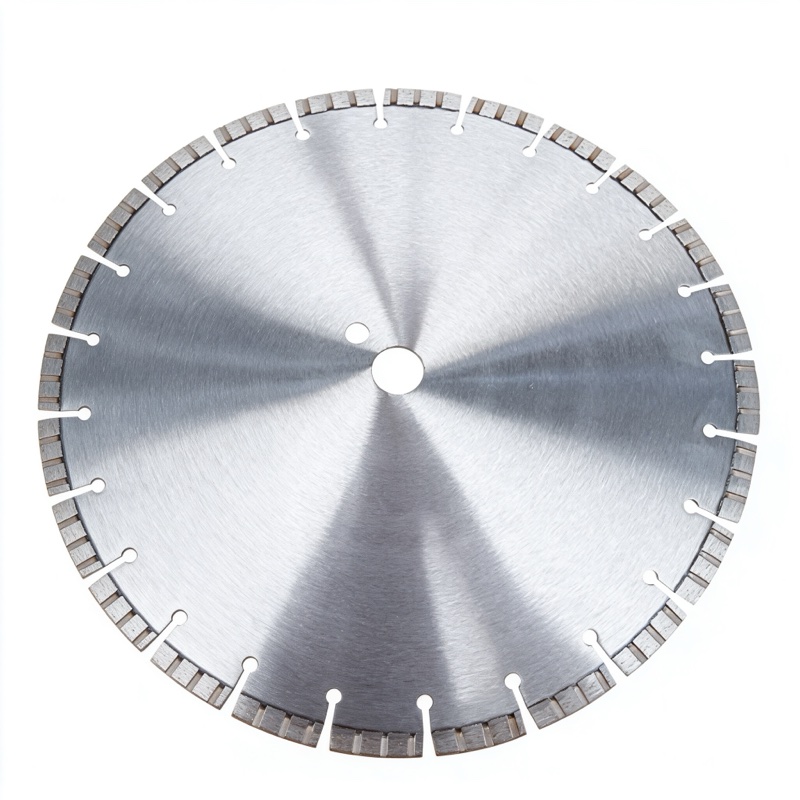
Concrete blocks are abrasive, so a segmented general-purpose diamond blade works well. A thinner continuous-rim blade gives the cleanest edge for visible work like sills and caps, while a thicker segmented rim is fine for structural cuts where the edge does not show.
Match the blade diameter to the block height. Most hollow blocks are 8 inches tall, so a blade with at least a 4-inch depth of cut (usually 9 to 12 inches) passes through in one pass. Check the diamond saw blade range for sizes that cover the block you are cutting.
Cutting a block that is not supported on the waste side pinches the blade and produces broken edges. Support matters more than blade speed.
Start the blade before touching the block, then feed the saw through in one smooth pass at full rated speed. Do not stop halfway: stopping creates a second entry mark on the face. If the block is thicker than the blade can reach, score all four sides and break along the score.
For dust, run water or a shop vacuum with a dust shroud. Blocks are very dusty because of the sand content, so protect your lungs regardless of the method.
If the cut edge has small chips or a burr, dress it with a masonry rubbing stone or a coarse cup wheel. A light pass at low angle removes the roughness without changing the block dimension. For visible blockwork, this step makes the difference between a rough cut and a professional one.
Yes. A 4.5- or 7-inch angle grinder with a diamond blade scores the block, then you break it along the score. It is slower than a cut-off saw but works fine for a few blocks.
Dry cutting works with a segmented blade, but water reduces dust and keeps the blade cool. Use it whenever the site allows.
The blade usually breaks out the bottom face when the waste piece is not supported. Support the block on both sides of the cut or cut from both ends toward the middle.
Pick a blade matched to the block, support the waste side, and cut in one steady pass. With the right diamond blade and a little setup, block cutting stays fast, straight, and clean.
Written and reviewed by JOY TECH — an SGS & BV audited, CE/RoHS certified diamond tools manufacturer founded in 2004, exporting to 50+ countries.
Our factory and QMS are audited by SGS and Bureau Veritas. Products meet CE/RoHS requirements and every piece is 100% inspected before packing.
Verified Certificates
