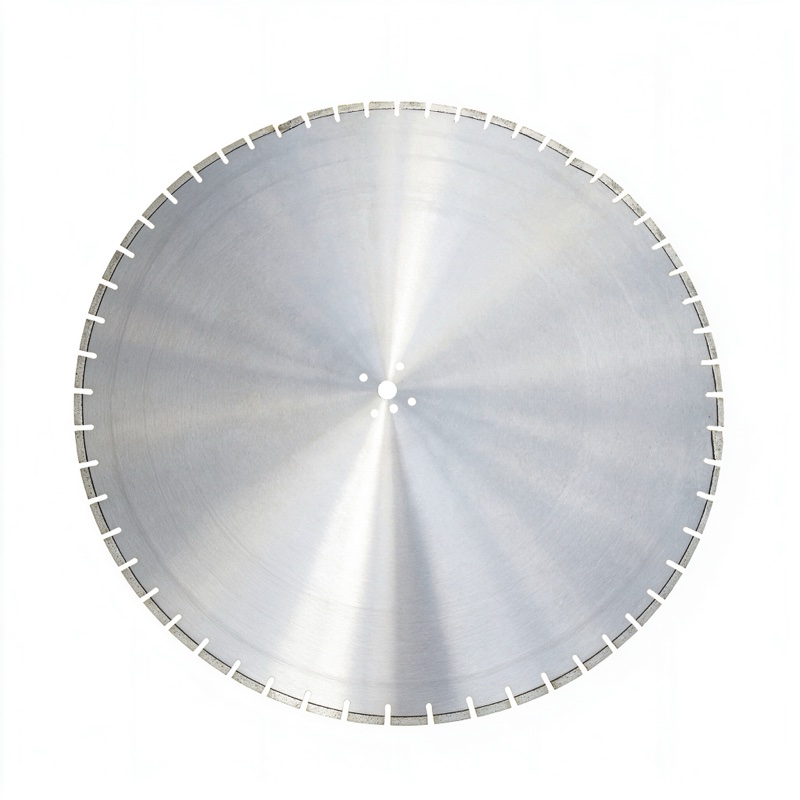
Cut control joints in concrete as soon as the slab can support the saw without raveling the edges — usually 6–18 hours after pouring (early-entry) or 1–2 days for a standard saw. Joint depth should be 1/4 of slab thickness, and spacing roughly 2–3x the slab thickness in feet. Use a 100–150mm early-entry blade or a 350mm+ blade for deeper joints.
Concrete shrinks as it cures. Control joints create a weakened plane where the slab cracks in a straight, controlled line instead of random, ugly cracks. Expansion joints (at walls, columns and slab transitions) allow movement between the slab and fixed elements.
For joint cutting, a laser-welded concrete blade in the right diameter keeps joints clean; the HF-welded blade is an economical choice for standard jobs.
About 1/4 of the slab thickness. Too shallow, and the crack wanders; too deep, and you weaken the slab structurally.
With early-entry saws, as soon as the concrete supports the saw — often 1–4 hours. With standard saws, 6–24 hours. The goal is to cut before random shrinkage cracks appear.
Early-entry blades are thin (2–3mm) and made for soft green concrete. For cured slabs, use a standard concrete blade sized to the joint depth.
Cut control joints early, to 1/4 slab depth, on the right spacing, and the slab cracks where you want it. Timing is everything — cut before random cracks form. JOY TECH's concrete blades cover early-entry and standard joint saws.
