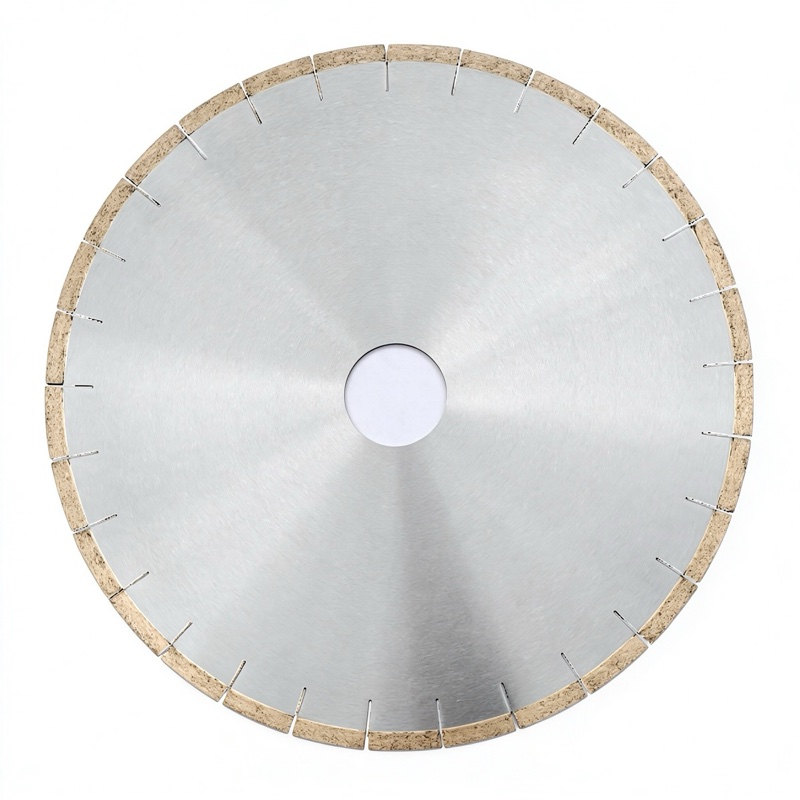
To cut marble without cracking, use a sharp, thin-kerf diamond marble blade (continuous or turbo rim), cut wet, feed slowly and steadily, fully support the slab so it cannot flex, and avoid sharp internal corners that stress the stone. Marble is softer than granite but brittle and prone to chipping, burning and cracking if forced, heated, or allowed to vibrate. The goal is a smooth, cool cut with no sudden pressure.
Marble is calcite-based, relatively soft, and full of natural veins and fissures. Cracking usually comes from three causes: mechanical stress (an unsupported slab flexing or dropping as the cut finishes), heat (a dull, dry blade burning and thermal-shocking the stone), and corner stress (a tight internal notch concentrating force). Slow, wet, supported cutting addresses all three.
Marble needs a sharp, free-cutting blade with a thin kerf and a bond that does not overheat the stone. Dedicated marble blades leave a polished edge with minimal chipping. We offer the straight-slot marble blade for general cuts, the J-slot marble blade for chip-sensitive work, and the lightning/musical-note slot marble blade for fast, clean cutting. These thin, sharp rims cut marble with minimal pressure.
| Problem | Cause | Prevention |
|---|---|---|
| Crack at corner | Stress concentration | Drill relief holes at corners |
| Burnt brown edge | Dry / dull blade, heat | Wet cut, sharp blade, slow feed |
| Chipped edge | Blade dull, fast feed | Thin sharp marble blade, tape line |
| Snaps mid-cut | Unsupported slab | Full bed support, hold waste |
Always run water when cutting marble - it prevents the characteristic burn marks and extends blade life. Use GFCI-protected power. Marble dust is fine and should be captured by the water or a vacuum; wear eye and lung protection regardless.
Marble is forgiving in some ways but sensitive to heat. A dull or dry blade quickly produces brown burn marks in the soft calcite, and those marks are hard to remove. Keep the feed slow and steady, never forcing the blade, and make sure water reaches the cut from the first second. Letting the blade spin dry even briefly can discolor a polished face.
Also mind the corner. Internal cutouts in marble are the most common failure point because stress concentrates at sharp 90-degree corners. Always drill a round relief hole at each corner before cutting. Finish the cut without letting the waste piece bind the blade. With water, support and rounded corners, marble cuts clean without the cracking that frustrates so many installers.
Marble with natural veins or fissures is even more crack-prone. Support it fully, cut slowly, and avoid forcing through veined zones where stress concentrates. If a vein looks weak, consider routing the cut to avoid it rather than risking a split slab.
Support marble on felted saw beds to avoid scratching the polished face while it feeds through the blade.
Score the underside slightly before the full pass on thin marble slabs; this reduces exit chipping on delicate edges.
Store cut marble flat and supported, never leaning on an edge, because freshly cut marble can still crack under unsupported stress.
On polished marble, tape the face along the cut line so the blade does not scratch the finish as it feeds. Small protection steps keep the slab showroom-ready.
A: Only short, careful trims. Dry cutting burns and cracks marble; a wet saw is strongly preferred.
That is heat burning. Slow the feed, ensure water flow, and use a sharp blade.
Yes. Marble blades are thinner and sharper; granite blades are harder segments. Using granite on marble can chip and burn it.
Marble rewards patience: a thin sharp marble blade, constant water, full support and relief holes at corners. Treat it gently and it cuts clean. The takeaway is that marble rewards slow, cool, supported cutting. With a thin sharp blade, relief holes at corners and steady water, it cuts clean instead of cracking. Contact JOY TECH for a quote on thin-kerf marble blades for wet saws and angle grinders.
