Dress a glazed diamond blade or core bit by cutting an abrasive material — a dressing brick, concrete cinder block, or soft abrasive stone — for 30–60 seconds. This wears away the smooth metal bond and exposes fresh sharp diamonds. If dressing does not restore cutting after two attempts, the bond is permanently over-hardened or the diamonds are spent, and the tool must be replaced.
A glazed tool has a shiny, mirror-smooth segment face instead of a rough, speckled surface. It stops cutting, screams, and heats up. Causes:
Do not use a hard material like granite for dressing — it will wear diamonds without opening the bond. A soft abrasive brick is the right tool. Our diamond saw blades are designed to dress easily and return to cutting after a short open-up cut.
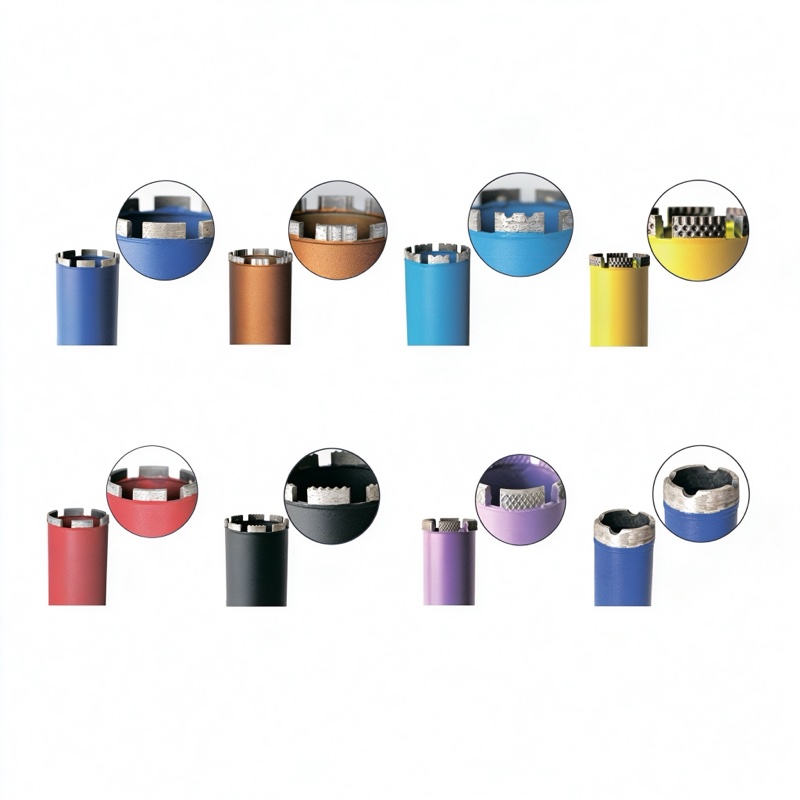
Core bits glaze the same way. To dress:
Wet core bits glaze mainly from running dry or at too low a feed. Once dressed, restore correct water flow to prevent it recurring.
If two dressing attempts do not restore cutting, the tool is finished: - The diamonds have worn flush with the bond (no fresh diamonds left to expose). - The bond has annealed blue from overheating and lost its structure. - A segment weld is delaminating. Do not keep dressing — replace the tool and review your cooling and feed settings.
How often you dress tells you something about your setup. If you dress once a week, fine. If you dress every hour, the bond is wrong for your material. A blade that glazes on soft asphalt needs a harder bond; a core bit that glazes on hard concrete needs a softer one. Dressing repeatedly with the same tool is a signal to change product, not to buy another dressing brick. Also check water flow: a blocked water port makes a healthy bit glaze as if the bond were wrong. Before you blame the tool, confirm the cooling is actually reaching the segment. Most glazing is a cooling or feed problem, not a bond problem.
Dressing has limits. If the segment has worn below 3 mm, there is not enough bond left to open new diamonds. If the steel looks blue from overheating, the welds are weakened and the tool is a safety risk. If dressing does not restore cutting after two attempts, stop. A glazed tool that refuses to cut is costing you time and labor; replacing it is cheaper than fighting it. Keep a spare on the truck so you are not tempted to push a worn tool. Knowing when to retire a tool is as important as knowing how to dress it.
A: Only if that floor is soft and abrasive. A dense polished slab will not open the bond. Buy a dressing brick.
A: Only when the tool stops cutting. A healthy blade needs no dressing.
A: No. Resin pads glaze because of heat or wrong grit; dress them on an abrasive brick gently, but most often they are simply worn out.
A: Yes, into a cinder block in short 15-second bursts to avoid overheating.
Dressing is a 60-second fix that revives a glazed diamond tool — but it is a bandage. If you dress often, the bond or the water flow is wrong. Contact JOY TECH for blades and bits bonded to your actual material.
