Average response time: under 24 hours
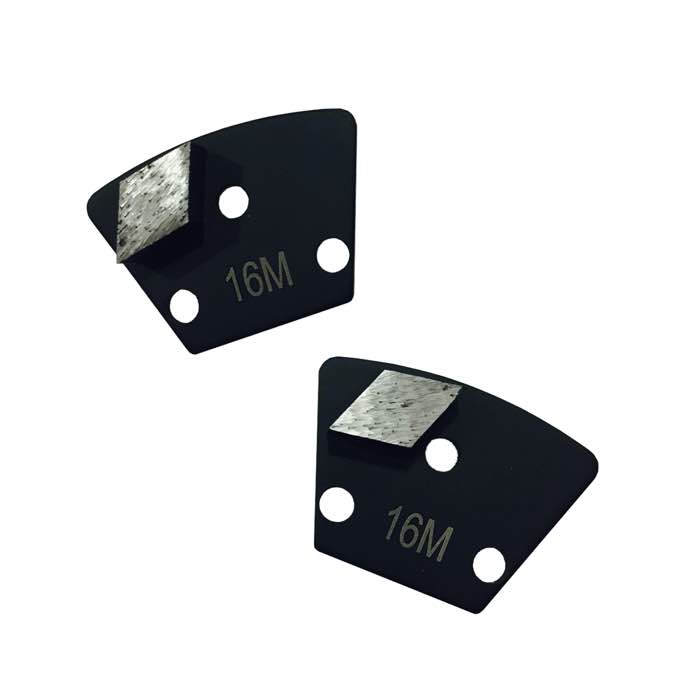
A glazed disc stops cutting because its bond face has been polished smooth, sealing diamond grains inside the metal. Dress it by grinding a soft abrasive block (dressing stone, sandstone, or a concrete curb) for 30–90 seconds with firm pressure; this wears the bond back and exposes fresh diamonds. Prevention is cheaper: match bond hardness to concrete, never grind dry on a hard trowel-finish slab, and avoid running the disc when it is already loaded.
Metal-bond grinding discs use a matrix of bronze or iron that wears away as the disc cuts. On hard concrete, the matrix wears too slowly and the exposed diamond grains wear flat instead of breaking out. The face of the disc becomes smooth, shiny, and slick — a "glaze". The disc is still perfectly usable; it just cannot cut until the bond is worn back down to fresh diamonds. This is the most common reason a buyer thinks a disc "wore out" too fast and switches brands in frustration.
| Method | How to do it | Best for |
|---|---|---|
| Dressing stone / brick | Grind the brick under the disc for 30–60 s with full pressure | Standard jobs, most portable |
| Sandstone block | Carry a 200 mm block; dress between slabs | Fleet use, predictable cost |
| Old concrete curb or slab edge | Run the grinder over an untreated curb for 1–2 min | Field dressing when no block is available |
Do not use an angle grinder wire brush, sandpaper, or acid. These do not wear the bond; they only scrub the face.
On hard concrete (C40+), dress every 1–2 hours of grinding. On medium concrete (C25–C40), dress only when the disc clearly loads, usually every half day. If you find yourself dressing every 10 minutes, your bond is too hard for the material — switch to a softer bond. Our rhombus-segment grinding disc is shipped in S, M, H bond options so you can match the slab on the first try.
Dressing costs 1–2 minutes of machine time, but the deeper cost is the bond you throw away. Each dressing removes 0.1–0.2 mm of bond. If you dress too often, you shorten disc life noticeably. Prevention comes down to three habits: choose bond hardness to match concrete (soft bond for hard concrete), start on a known sample patch before the full floor, and stop grinding the moment you see signs of glaze rather than pushing through.
Segment geometry changes how the disc loads. Arrow and rhombus shapes expose more edge and resist glazing better than flat segments. Double-S segments disperse dust and run cooler; triple-round segments produce a flatter cut but glaze more readily on hard concrete. If you constantly fight glazing, switch to a more aggressive segment shape and a softer bond together — that pair solves 80 % of loading issues.
A: No. Each dressing shortens segment height. Once segment height drops below 3 mm, retire the disc.
A: Resin pads load with concrete paste, but the fix is cleaning or moving to the next grit, not dressing.
Run the machine at normal operating pressure, not extra force. Dressing is a small job, not a grind.
A: PCD tools do not glaze the same way. If a PCD loads, dress with a concrete curb for 30 seconds.
A glazed disc is not a broken disc — it is a disc asking for 60 seconds of attention. Keep a dressing stone on every truck, match bond to concrete, and treat glazing as a tuning signal, not a wear-out. Contact JOY TECH for bond selection matched to your typical slab hardness.
Written and reviewed by JOY TECH — an SGS & BV audited, CE/RoHS certified diamond tools manufacturer founded in 2004, exporting to 50+ countries.
Our factory and QMS are audited by SGS and Bureau Veritas. Products meet CE/RoHS requirements and every piece is 100% inspected before packing.
Verified Certificates
