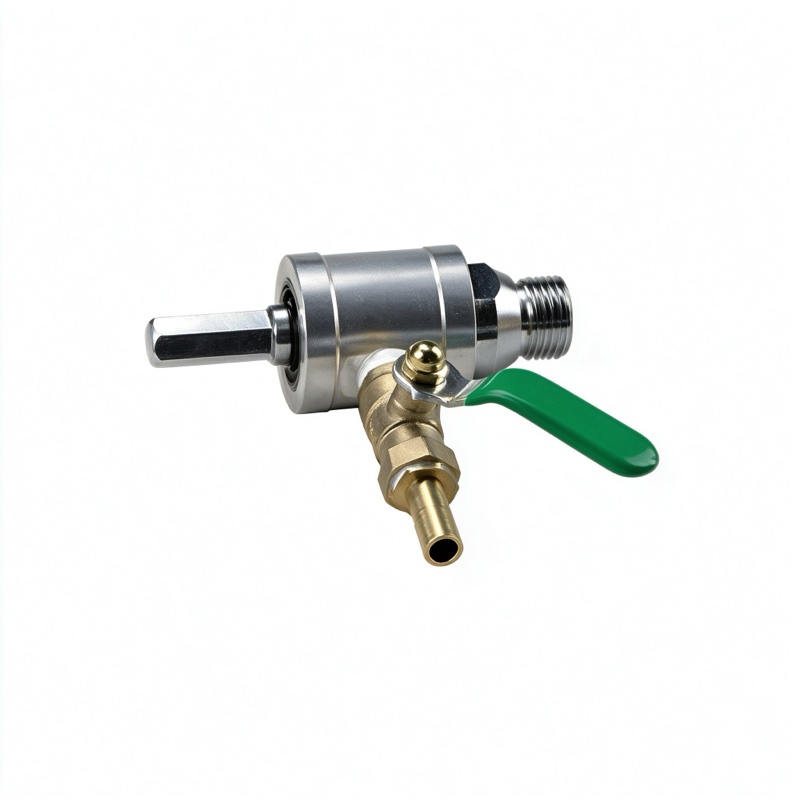
To drill a hole in a granite countertop, use a diamond core bit sized for the fitting, drill at low speed with water cooling, start at a shallow angle, and apply light, even pressure. Never use a hammer drill; granite cracks under percussion. For faucet holes (32-35 mm), a diamond hole saw gives a clean, chip-free edge without a wet saw.
Granite is hard and abrasive, so a carbide hole saw will dull in seconds. A diamond-tipped hole saw such as our stone hole saw is the right tool; the long-shank hole saw provides reach and stability for deeper holes. Match the bit to the faucet or fitting diameter, typically 32 mm for standard faucets.
Dry drilling granite overheats the diamond rim and can thermally shock the stone. Use a water feed, a sponge dam around the hole, or a helper spraying water. Wet cuts also produce a far cleaner edge.
Do not force the bit; let diamonds cut. Support the underside so the slab does not flex. Keep the drill perpendicular; angled holes chip. If drilling near an undermount sink cutout, leave enough material so cracks do not propagate to the edge.
Most standard faucets need a 32-35 mm hole; widespread faucets may need 38 mm, and filtration or soap dispensers use smaller 12-16 mm holes. Confirm the fixture template before drilling, because enlarging a hole in granite is far harder than drilling it right the first time.
Mask around the hole with painter's tape so the drill base and your hands do not scratch the polished finish. Keep water flowing to avoid heat haze on the surface, and wipe slurry immediately so it does not dry into the granite.
After drilling, deburr the cut edge with a fine diamond pad so the faucet base sits flat. A rough edge prevents a tight seal and leaks later.
Diamond hole saw, low RPM, water, light feed. Confirm fixture size before drilling the expensive slab.
Most faucets need 32-35 mm; widespread sets need 38 mm; soap dispensers 12-16 mm. Confirm the fixture template before drilling. Use a diamond hole saw at 300-800 RPM with water. A 35 mm hole in 3 cm granite takes 2-5 minutes.
Mask around the hole to avoid scratches. Keep water flowing to prevent heat haze. Wipe slurry immediately so it does not dry into the granite. Deburr the finished edge so the faucet base seals flat.
After the faucet hole, deburr and test-fit the fixture before silicone. A flat base seals properly; a chipped edge leaks. Wipe slurry immediately so it does not dry into the polished granite.
Mark the faucet template on masking tape before drilling. Drill the right size the first time; enlarging a granite hole is far harder.
Confirm faucet hole size from the fixture template before drilling. Most are 32-35 mm; soap dispensers are smaller. Deburr the edge so the base seals flat.
Drill granite at 300-800 RPM with water. High speed burns the edge. A 35 mm hole in 3 cm granite takes a few minutes; patience prevents cracks.
Tape around the hole so the drill base does not scratch the granite. Keep water flowing to avoid heat haze, and wipe slurry immediately so it does not dry into the polished surface.
Deburr and test-fit the faucet before silicone. A flat base seals properly; a chipped edge leaks. Confirm the hole size against the fixture template before drilling the expensive countertop.
A: Yes, a variable-speed corded drill works if it has torque and you run it slow with a diamond bit.
A: A 35 mm hole in 3 cm granite takes 2-5 minutes with a sharp diamond bit and water.
A: Drill from the polished top to control the visible edge, then ease through from below if needed.
Drilling granite is straightforward with a diamond hole saw, low RPM, water, and light pressure. Rushing or dry drilling cracks expensive countertops. Contact JOY TECH for diamond stone hole saws in faucet, soap-dispenser, and sprayer sizes.
