Average response time: under 24 hours
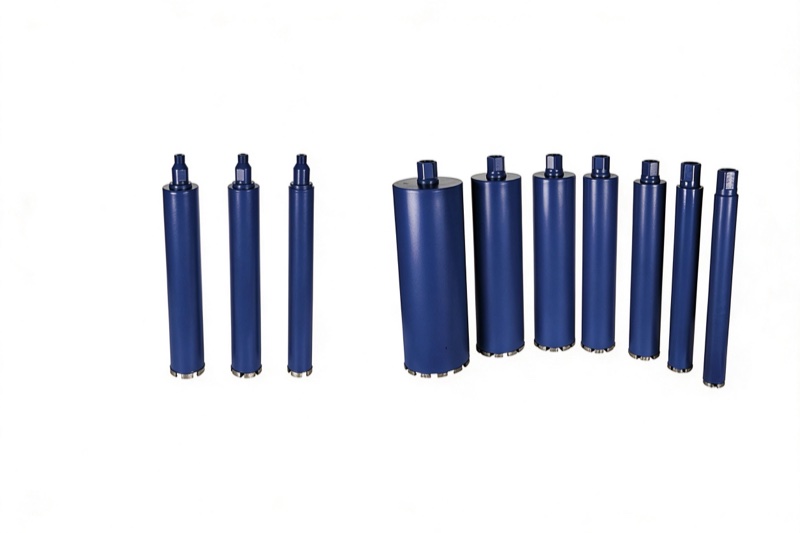
Yes, you can drill concrete with a regular drill, but it is slower and limited. Use a carbide-tipped masonry bit, start with a small pilot hole, and let the bit grind at moderate speed with firm steady pressure. For holes over 12mm or in hard concrete, a rotary hammer makes the job practical, and for large holes, a diamond core bit with a regular drill works well if the drill has enough torque. For clean large holes, a wet diamond core bit on a core rig is the professional choice. For the right tooling on this job, see wet diamond core bits.
A regular drill rotates but does not hammer. Carbide masonry bits cut concrete by scraping the aggregate, which works but is slow and hard on the bit. In hard concrete or with deep holes, a regular drill bogs down, the bit dulls and the drill overheats. The trick is to manage expectations: small pilot holes, sharp bits, moderate speed and frequent breaks. For occasional small holes in soft concrete, it is fine. For production drilling, use a hammer function.
For holes from 16mm up to 200mm, a diamond core bit removes a full plug instead of grinding everything into dust. Diamond core bits can run on a regular drill if the drill has enough torque, but they work best on a core drill rig or a rotary hammer with a core adapter. Dry diamond core bits suit shallow holes in block and soft concrete; wet bits are for deep holes in hard concrete. The diamond segment core drill range is a good fit for frequent core work.
Heat is the enemy of drilling concrete. For small holes, clear the dust often and stop if the bit discolors. For core drilling, use water where the job allows to keep the bit cool and the cut clean. Wear eye protection, and anchor the workpiece so it cannot spin. Do not force a binding bit; that is how bits snap and drills burn out. If the drill is smoking, stop, let it cool, and consider a hammer drill or core rig for the job.
A: It will dull the bit faster than a hammer drill, but with sharp bits, moderate speed and pilot holes, a regular drill is fine for small occasional holes.
A: Step-drilling with a hammer drill is practical; with a regular drill it will be very slow. For clean 20mm holes, a diamond core bit on a core rig is the better tool.
A: Moderate speed. Too fast glazes the carbide; too slow stalls the cut. A steady push at medium speed clears dust and cuts cleanly.
Drilling concrete without a hammer drill is possible with the right technique: sharp carbide bits, pilot holes, moderate speed and patience for small holes, and diamond core bits for large ones. Match the tool to the hole size, keep the bit cool, and you will get clean holes without buying a hammer drill you may rarely use.
Written and reviewed by JOY TECH — an SGS & BV audited, CE/RoHS certified diamond tools manufacturer founded in 2004, exporting to 50+ countries.
Our factory and QMS are audited by SGS and Bureau Veritas. Products meet CE/RoHS requirements and every piece is 100% inspected before packing.
Verified Certificates
