Average response time: under 24 hours
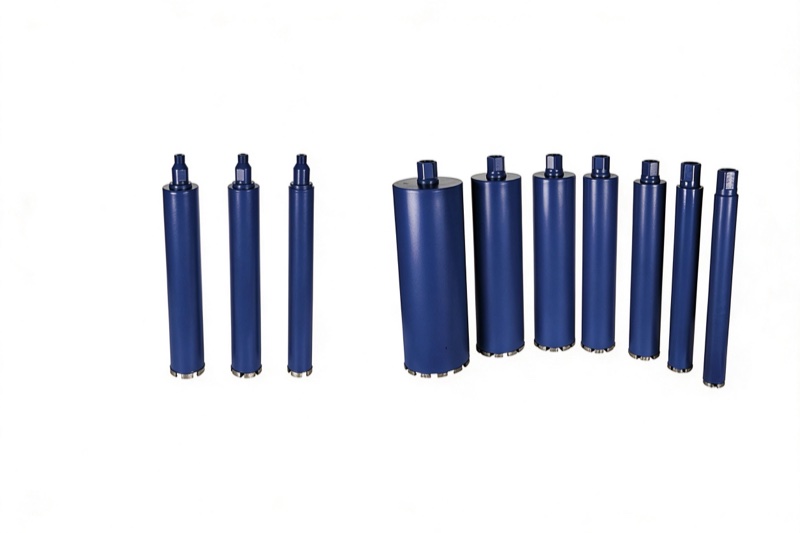
To drill a clean hole for an anchor bolt, first mark the point and scan for rebar, then drill a hole that matches the anchor's specified diameter and is 12-15 mm deeper than the anchor embedment. For small anchors (M8-M16) use an SDS-plus hammer drill with a carbide bit. For larger anchors (M20+) or when drilling through heavily reinforced walls, use a wet or dry diamond core drill bit. Blow the dust out of the hole with a wire brush and vacuum before setting the anchor. A hole drilled too shallow or full of dust is the #1 reason an anchor pulls out.
Before you drill, know which anchor you are using — the hole size is fixed by the anchor manufacturer's spec, not by the bolt diameter. A wedge anchor uses a hole equal to the bolt diameter (M12 wedge anchor = 12 mm hole). A sleeve anchor uses a hole equal to the sleeve diameter, which is often larger than the bolt. A chemical anchor uses a hole 2-4 mm larger than the bolt and requires cleaning out dust with a brush and vacuum before injecting resin.
| Anchor type | Hole vs bolt | Min embedment | Best substrate |
|---|---|---|---|
| Wedge anchor | Same as bolt dia. | 6-8× bolt dia. | Poured concrete only |
| Sleeve anchor | Sleeve dia. | 6× bolt dia. | Poured or block |
| Chemical anchor | +2-4 mm | 8-12× bolt dia. | Block, edge, thin slab |
| Drop-in anchor | Specified by mfr. | Flush set | Overhead, fixture base |
For holes up to 25 mm in diameter, an SDS-plus or SDS-max hammer drill with a carbide-tipped bit is fast and cheap. For holes above 25 mm — e.g. for M20+ anchor bolts, base plates, or railings — a diamond core drill is the right tool. A wet diamond core bit cuts smooth, accurate holes with no spalling on the back face, and it will go through rebar where a carbide bit stalls. For small-scale dry work in occupied buildings, a dry diamond core bit with a vacuum shroud avoids the wet slurry.
Mark the hole centre with a centre punch to keep the bit from walking. Run a rebar detector along the line — if you hit rebar, shift the hole 30-50 mm rather than drilling through. Start the drill at slow speed until the bit bites, then increase. Keep the drill perpendicular; use a drill guide or rig for base-plate holes. Drill to the correct depth — wrap tape on the bit as a depth stop. Pull the bit out occasionally to clear dust. At the end, blow out the hole three times with a wire brush and shop vac — an anchor set in dusty concrete loses 30-50% of its rated pull-out.
Blow out the hole again immediately before setting. For a wedge anchor, drive it flush, then tighten the nut to the manufacturer's torque — usually 40-60 N·m for M12, 80-100 N·m for M16. Do not over-tighten; wedge anchors rely on expansion against clean concrete, not on brute torque. For chemical anchors, inject resin from the bottom of the hole, insert the threaded rod slowly, and wait the cure time (typically 30 min to 12 h depending on temperature) before loading.
Hole too shallow → anchor pulls out. Hole too dusty → anchor cannot expand. Drilling too close to the edge → concrete splits out. Hitting rebar with a carbide bit → snapped bit, damaged drill. Forcing a diamond dry bit without water → overheated segment loss. And using a wedge anchor in hollow block → it spins in the cell. Match the anchor to the substrate, not just to the load.
A 12 mm hole, 70-80 mm deep (embedment ~60 mm plus dust clearance). Always check the anchor manufacturer's spec sheet, which governs the approved hole depth for each load rating.
For holes 25 mm and above, yes. For M8-M16 anchors, an SDS-plus hammer drill with a carbide bit is faster and cheaper. Diamond bits shine when you need clean, round, accurately sized holes or have to go through rebar.
Yes. Brush the hole, blow with compressed air, and vacuum. Dust in the hole prevents the wedge from expanding fully and can reduce pull-out strength by 50%.
Stop. Shift the hole 30-50 mm to the side. If rebar is unavoidable, use a diamond core bit, which cuts through rebar with water and patience. Do not force a carbide hammer bit through rebar — it will snap or the tip will shatter.
Drilling anchor bolt holes is a precision job: correct diameter, correct depth, clean hole, and an anchor matched to the substrate. Use an SDS carbide bit for small anchors, a diamond core bit for larger holes or rebar, and never skip the brush-and-vac step. A correctly set anchor holds design load for decades; a lazy hole fails on the first day of wind load.
Written and reviewed by JOY TECH — an SGS & BV audited, CE/RoHS certified diamond tools manufacturer founded in 2004, exporting to 50+ countries.
Our factory and QMS are audited by SGS and Bureau Veritas. Products meet CE/RoHS requirements and every piece is 100% inspected before packing.
Verified Certificates
