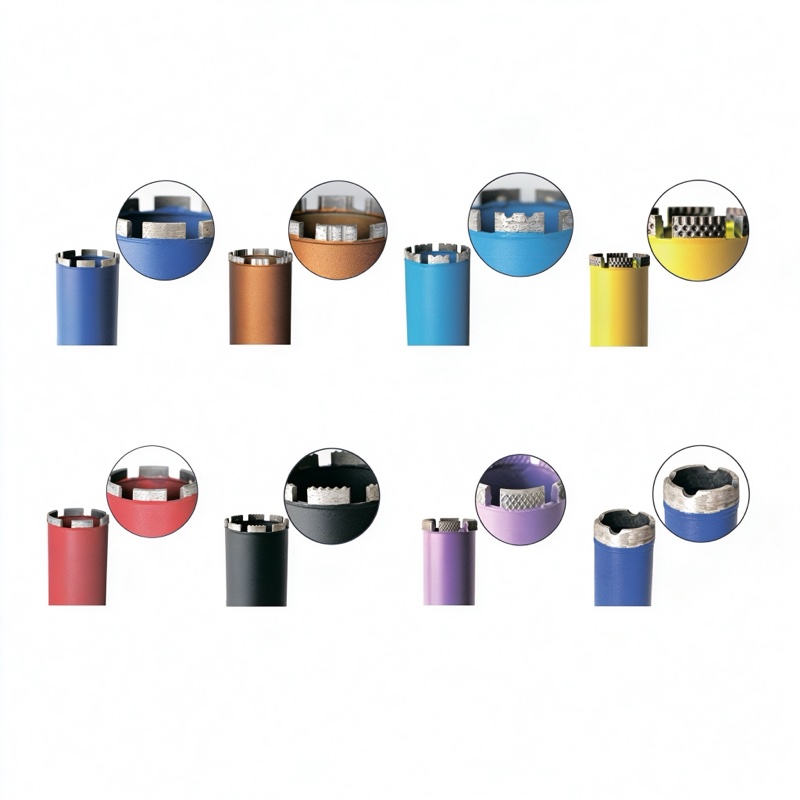
Yes, a wet diamond core bit can drill through rebar, but the moment it contacts steel you must reduce feed pressure, keep water flowing, and let the segments grind slowly. Forcing the drill through rebar overheats and glazes the bit. If rebar density is high, expect slower progress and shorter bit life; a laser-welded wet bit handles steel far better than a dry bit.
Core bits cut concrete by abrading it; the bond around diamonds wears to expose new grit. Steel does not abrade the bond, so diamonds glaze flat. Friction heat then builds until the bond loses diamond retention. Our wet core drill bit uses a tough, laser-welded segment formula designed to keep cutting through steel crossings, and replacement core segments are available to rebuild worn barrels.
Use a laser-welded segment core bit, not a brazed economy bit. Laser welds survive the side load of cutting steel. A segment with a slightly softer bond helps expose fresh diamonds in steel, but too soft wears fast in concrete; talk to your supplier about a rebar-grade bond.
If you hit thick, dense rebar mesh or post-tension cables, stop. Do not grind through unknown steel. Scan with rebar detector first, and if a hole location conflicts with critical reinforcement, consult the structural engineer rather than forcing through.
As the bit crosses rebar, torque rises and the drill slows. That is your cue to reduce feed, not to lean into the drill. Steady pressure at rated RPM grinds steel; forced pressure builds heat and glazes diamonds. Experienced corers listen to the motor and back off instinctively the moment it loads.
Heavily reinforced walls and slabs need rebar-grade laser-welded segments and slower production. If you core often in reinforced concrete, keep a couple of spare segments or bits on the truck; losing a segment mid-hole means pulling out and starting over.
After crossing rebar, withdraw the bit and knock out the core sample; a jammed core hides how much steel remains. Clear barrel swarf frequently so diamonds stay exposed.
Laser-welded wet bit, reduced feed, steady water. Scan first and respect structural steel.
If the drill hits thick, unknown steel and stalls repeatedly, stop. Do not burn through a structural member. Scan first; if rebar is denser than expected, consult the engineer. Moving the hole 100 mm is cheaper than ruining a bit and risking the structure.
Concrete gives a steady resistance; rebar adds a pulsing load. Learn that pulse and your hand will ease off before the bit glazes. Withdraw every few centimeters through heavy mesh to clear swarf.
Concrete cuts with a steady hum; rebar raises the pitch and loads the drill. Learn that transition and your hand will ease off automatically. Withdraw through dense mesh to clear swarf. If the motor strains, reduce feed rather than pushing.
Withdraw often through mesh to clear steel swarf. Packed swarf glazes the bit. Steady RPM and reduced feed beat forcing the drill.
Use a laser-welded wet bit for reinforced concrete. Brazed economy bits lose segments on steel. Keep a spare bit on the truck so a worn segment does not stop the job.
When the drill loads up on rebar, reduce feed and keep RPM. Let the segments grind slowly. Forcing heats and glazes the bit in seconds.
Concrete gives a steady resistance; rebar adds a pulsing load. Learn that transition and your hand eases off before the bit glazes. Withdraw through dense mesh to clear steel swarf often.
Scan for rebar before drilling. If the hole lands on dense structural steel, move it rather than forcing through. A slightly relocated hole is cheaper than a burned bit and a damaged slab.
A: Each rebar crossing costs segment life; expect 30-50% less life in heavily reinforced slabs.
A: It can nibble through light mesh, but it will glaze fast. Use a wet bit for steel.
A: No. Keep rated RPM, lower feed; speed without pressure is what grinds steel cleanly.
Drilling rebar is controllable with a laser-welded wet bit, reduced feed, and constant water. Scan before you drill, respect structural steel, and dress glazed segments promptly. Contact JOY TECH for rebar-tough diamond core bits and replacement segments.
