Average response time: under 24 hours
Flaking and dusting after grinding happens when the concrete surface is too soft, the grind generated too much heat, or the paste was overworked and weakened the surface. Stop the polish, harden the surface with a silicate or lithium hardener, grind with a softer-bond disc, and reseal. The powdering will not stop on its own — treat the concrete, not just the finish.
Wet a section of the floor. If water soaks in fast and the surface looks sandy, the paste is weak. Scratch a coin across it — if it leaves a white trail, the surface is dusting from softness, not from tooling.
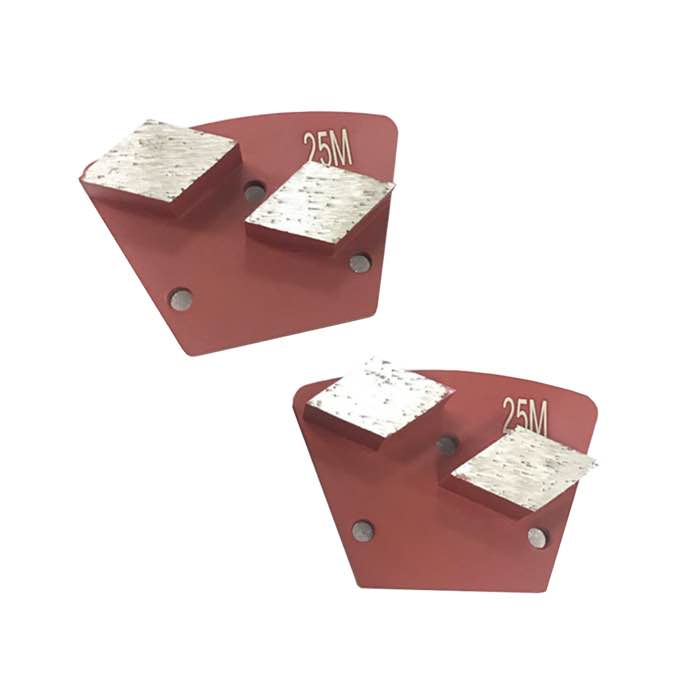
Use a softer-bond metal disc suited to soft concrete, like a balanced Diamond Trapezoid Grinding Disc (JOY-TP-R3), with light pressure and steady speed. Avoid over-polishing the same spot — two even passes beat five hard ones.
A: A penetrating sealer stops dusting but leaves the surface flat and dull. For polish, harden first, then grind lightly and reseal.
A: Typically 4-24 hours depending on the product. Check the manufacturer spec — grinding too early ruins the treatment.
A>Wet grinding reduces heat and dust, but a genuinely weak surface still powders. Harden the concrete first.
A: It depends on the slab. Verify hardness and curing before the job and document it; soft slabs need treatment before polish regardless of technique.
Flaking after grinding is a surface-strength problem, not a finish problem. Harden the slab, regrind with a bond matched to the concrete, and reseal. JOY TECH can recommend a soft-concrete bond set — like the Double Rhombus Segment Diamond Trapezoid Grinding Disc (JOY-TP-RH2) family — so your next polish does not powder. Share your floor's age and hardness test results.
Written and reviewed by JOY TECH — an SGS & BV audited, CE/RoHS certified diamond tools manufacturer founded in 2004, exporting to 50+ countries.
Our factory and QMS are audited by SGS and Bureau Veritas. Products meet CE/RoHS requirements and every piece is 100% inspected before packing.
Verified Certificates
