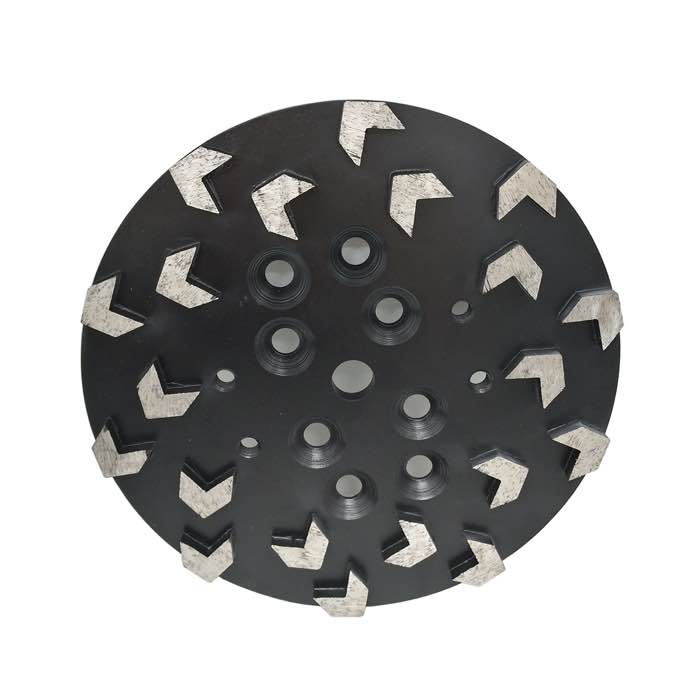
Yes — grinding fixes a dusting (powdering) concrete floor by removing the weak, chalky laitance layer and exposing sound concrete underneath. Grind off the top 0.5-1 mm with a 30/46 metal-bond disc, clean thoroughly, then apply a lithium or sodium silicate densifier. The densifier reacts with free lime to harden the surface. Without densifier, the floor will just start dusting again.
Dusting (also called laitance dusting or cementitious powdering) happens when the top cement paste is weak. Causes include too much water in the mix, over-troweling while bleeding, poor curing, or de-icing salts. The surface is a soft, chalky layer that rubs off as powder under foot or tire traffic. Grinding alone exposes stronger concrete below, but to stop it permanently you densify.
Densifier soaks into the porous concrete and reacts with calcium hydroxide to form calcium silicate hydrate (C-S-H), which fills surface capillaries and hardens the paste. This is what turns a powdering slab into a hard, dustproof wear surface. Skipping it means you have simply removed the weak top — the new surface can still chalk.
If the floor is spalling, delaminating, or crumbles when scratched hard, the problem is deeper than laitance. In those cases, grind off the weak layer and apply a cement-based self-leveler or epoxy overlay rather than relying on densifier alone.
Before grinding, scratch the floor hard with a screwdriver. If it leaves a deep groove and loose crumbs, the slab is structurally weak, not just surface-dusting — grinding will not save it, and an overlay is needed. If only the top powder rubs off and the concrete below is hard, grinding + densifier will work.
Apply densifier to a clean, dry floor. Spray on, broom in, and keep the surface wet for 20-40 minutes. Do not let it puddle or dry white. Lithium densifier cures quickly (hours); sodium needs overnight. After cure, wash off any residue and continue to polish. Densifier does not wash off — it is a permanent chemical reaction.
If the floor is dusty, uneven, or has low spots, grinding alone leaves a lumpy result. A cement-based self-leveler over a profiled, primed slab gives a flat fresh surface that you then grind and densify. This is the standard fix for badly deteriorated garage and basement floors.
Densifier penetrates and hardens; sealer sits on top and protects. A dusting floor needs densifier first, then optional sealer. Using only a sealer over a dusty floor peels in months because the weak layer is still there. Do not confuse the two products.
Dusty concrete is worse in dry climates. After densifying, keep the floor damp-cured for the manufacturer's recommended time. In humid basements, ensure good ventilation so densifier reacts properly rather than staying wet too long.
A properly ground and densified floor stops dusting permanently. If it still powders months later, either densifier was skipped or applied too late, or the slab is structurally weak. Re-open to 80 grit, densify again, and reseal. If the concrete still rubs off, it needs an overlay, not another round of grinding.
Use a neutral pH cleaner. Acidic products etch the hardened surface and bring the powdering back. Dust-mop regularly; grit underfoot wears the surface over years.
A: A sealer will hold the dust temporarily, but it sits on a weak layer and will peel. Grind off the laitance first.
Until the powder stops and the surface feels hard and uniform — usually 0.5-1.5 mm. If you still see cream cement powder, keep going.
A: No, densifier hardens; shine comes from polishing pads run after the densifier cures.
A: Properly ground and densified, the floor will stop dusting permanently and hardens further over years.
Dusting is a surface-hardness problem, and the fix is mechanical removal plus chemical densification. Do both, and the powder stops. Contact JOY TECH for the metal-bond disc set to open the slab and resin pads to finish it.
