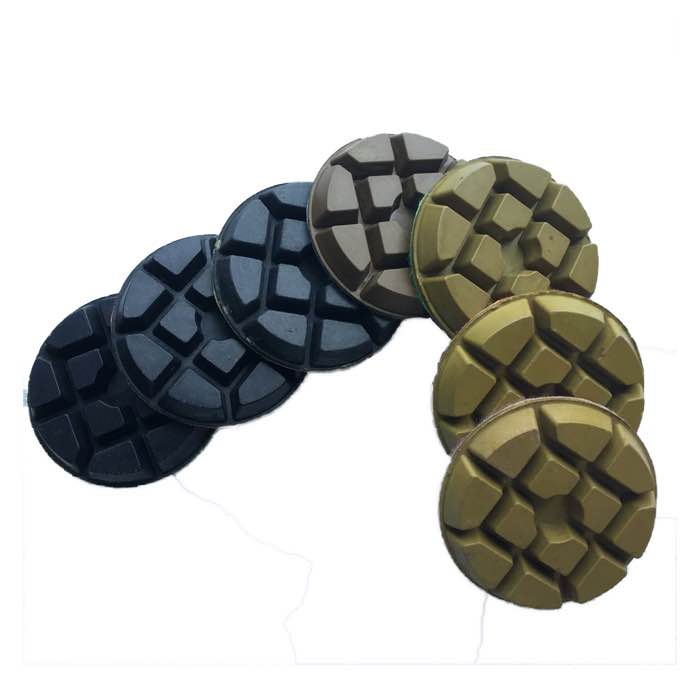
A high-gloss concrete finish comes from a disciplined sequence: grind flat → densify → polish through 50–3000 grit → burnish. The gloss is built in the finer grits (800, 1500, 3000) and locked in by a burnishing pad — skipping grits or grinding before densifying will leave a dull, patchy surface.
| Stage | Grit | Tool | Goal |
|---|---|---|---|
| Level | 50–100 | Metal bond | Flat surface, open pores |
| Harden | After 200 | Densifier | Surface densification |
| Polish | 400–800 | Resin pads | Satin sheen |
| Gloss | 1500–3000 | Resin pads | Mirror finish |
| Seal | — | Burnishing pad | Final deep gloss |
A: Yes, on most concrete. Densifier hardens the surface so the finer grits can build a durable gloss instead of polishing a soft, dusty layer.
A: You can, but scratches from 800 grit may remain. For a true mirror finish, step through 1500 before 3000.
A: Uneven passes, missed grits, or patchy densifier. Re-polish the dull areas through the finer grits and keep a consistent machine speed.
A high-gloss floor is a sequence, not a single product: grind, densify, polish 50–3000, then burnish. Start with a quality resin pad set like the Diamond Resin Polishing Pads for Concrete & Terrazzo Floor (JOY-RFP-01) or the Diamond Resin Floor Polishing Pads (JOY-RFP-02), and finish with Burnishing Pads for Concrete Floor Polishing (JOY-RFP-BP2) for that glass-like sheen.
