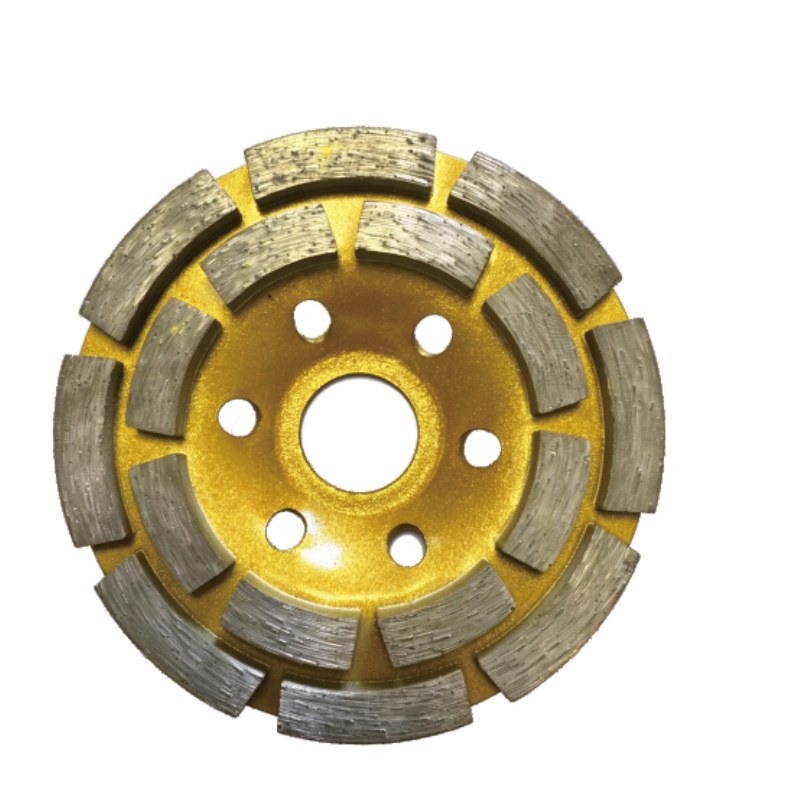
Grind around pipes and posts with a dedicated edge grinding wheel, a hand-held angle grinder with a double row cup wheel, and feathered passes near penetrations. Do not try to push a 10-inch planetary grinder into tight corners — switch to hand tooling for the last 10–15 cm.
Floor penetrations are the most common cause of rework. A sloppy grinder pass chips the pipe collar, leaves a ridge around the drain, or burns the segment on a tight corner.
Grind around pipes and posts with a dedicated edge grinding wheel, a hand-held angle grinder with a double row cup wheel, and feathered passes near penetrations. Do not try to push a 10-inch planetary grinder into tight corners — switch to hand tooling for the last 10–15 cm.
Use a soft bond on hard, dense concrete; use a hard bond on soft, abrasive concrete. When segments glaze over too fast you need a softer bond; when they wear in minutes you need a harder bond.
No — aggressive metal-bond shoes are for early grinding, and resin-bond pads are for polishing stages. Mixing them wastes diamonds and ruins the scratch pattern.
Yes. JOY TECH manufactures trapezoid grinding shoes, PCD grinding shoes and cup wheels in custom bonds, sizes and segment shapes for global distributors and floor prep contractors.
Getting consistent results on a concrete floor comes down to matching the right diamond tool, bond and grit sequence to the job — and avoiding the common mistakes that scratch, glaze or gouge the slab. For OEM/ODM grinding shoes in your own brand, contact JOY TECH today.
