Average response time: under 24 hours
Quick Answer: For hand-held grinders, use overlapping circular passes that move the tool in small figure-eights so the disc wears evenly and you do not dig a groove. For floor machines, work in straight overlapping passes or wide arcs with consistent overlap; the goal on both is even contact time so the surface stays flat and the diamonds wear uniformly.
The pattern controls two things: how flat the surface stays and how evenly the diamonds wear. Grinding in the same line repeatedly digs a channel, while random scrubbing leaves high and low spots. A round pattern spreads the work over the full face of the disc, which evens out segment wear and keeps the machine contact constant. Contractors use predictable patterns so they can track coverage and avoid missing any patch of the floor.
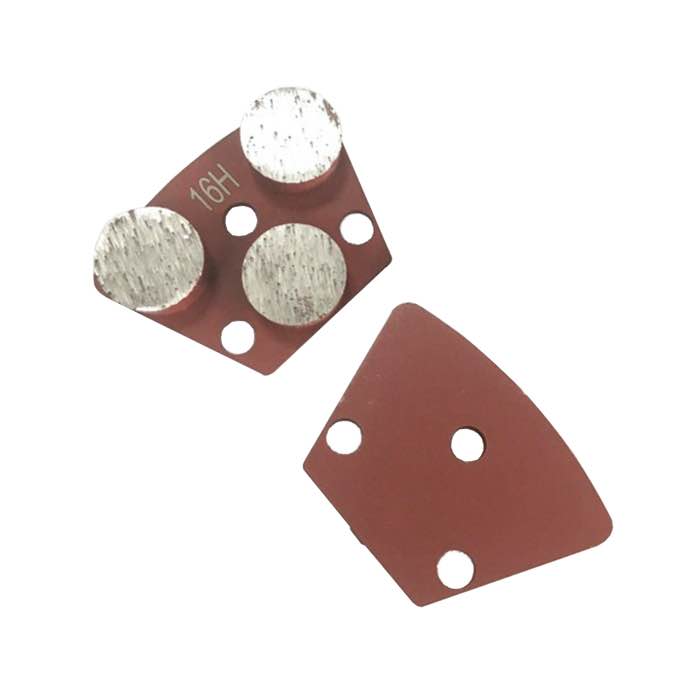
Hold the grinder flat and move it in overlapping circles about the size of the disc, letting the next circle cover a third of the previous one. Then change direction every few minutes so the disc wears symmetrically. Figure-eight motion works best for blending edges and for removing coatings, because it constantly changes the angle of the disc to the surface. Keep the pressure light and let the round-segment grinding disc or cup wheel do the cutting, and check the floor with a straightedge after the first pass.
On a walk-behind machine, run straight overlapping passes down the floor, overlapping each pass by half the head width, then come back at 90 degrees on the next step. For tight spots, small circular motions with the machine's edge work well near walls and columns. Overlap percentage is the key number; too little leaves grinding lines, too much over-cuts and polishes a band before the rest catches up.
Switch pattern as you switch grit. Coarse metal bond needs slow, deliberate passes to remove material; fine resin pads need lighter, faster passes to refine the scratch pattern. A resin polishing pad set is easier to control with circular motion on hand tools, while the HTC-style resin tooling follows the same rule on floor machines: consistent contact, even overlap, no dwelling.
Only if you stop circling and dwell in one spot, or if the disc is finer than the surface needs. Change direction frequently and finish with straight passes at 90 degrees to the last pattern to blend away any arcs.
Roughly one-third for hand tools and one-half of the head width for floor machines. More overlap slows the job; less leaves uneven material removal.
Grind in overlapping circles or figure-eights with hand tools, straight overlapping passes with floor machines, and keep the overlap consistent at every grit. Even pattern, even contact, and even diamond wear are what keep the floor flat and the job predictable.
Written and reviewed by JOY TECH — an SGS & BV audited, CE/RoHS certified diamond tools manufacturer founded in 2004, exporting to 50+ countries.
Our factory and QMS are audited by SGS and Bureau Veritas. Products meet CE/RoHS requirements and every piece is 100% inspected before packing.
Verified Certificates
